
Ik Kil
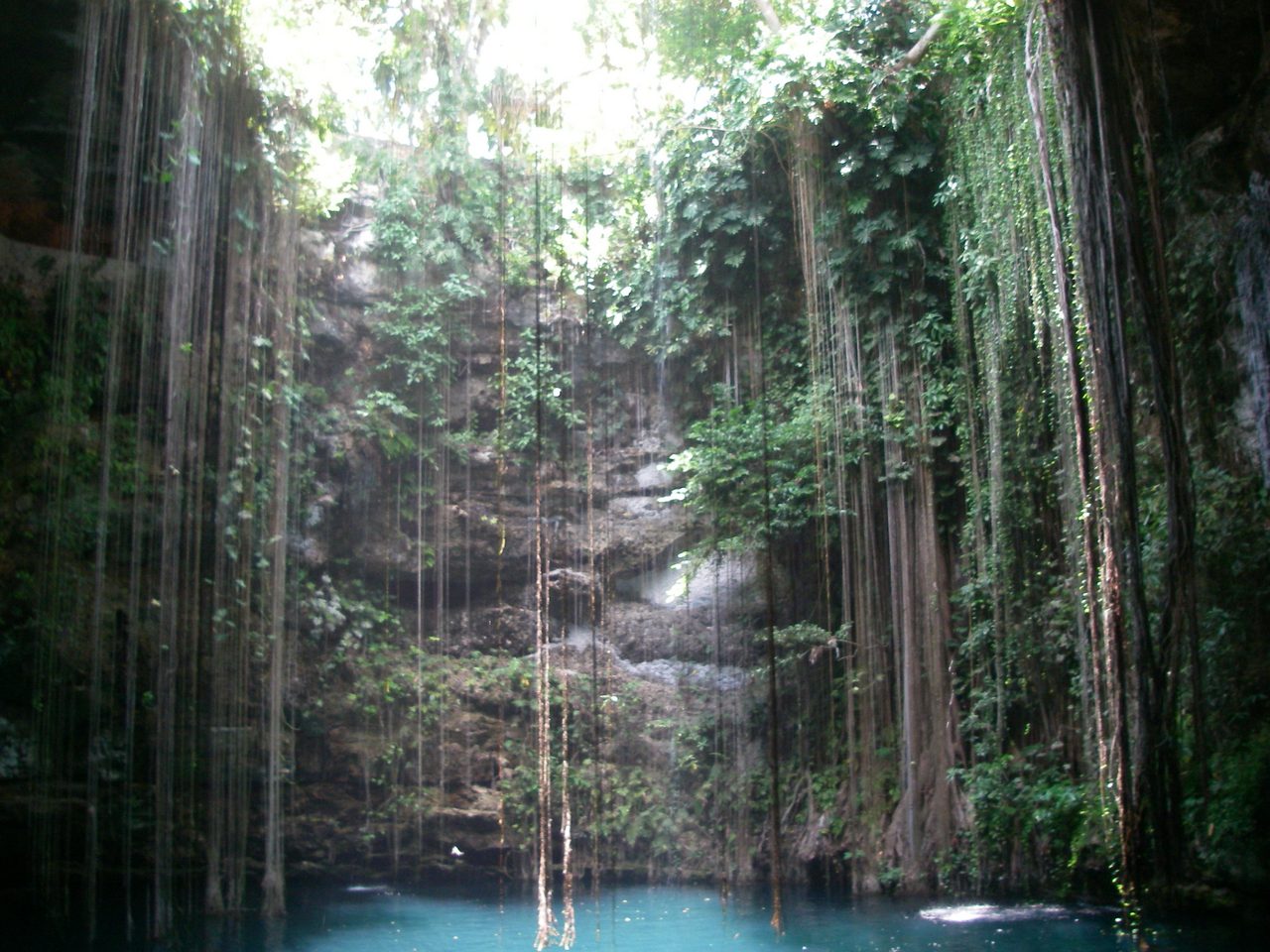
Revered by the ancient Itza Maya as a portal to *Xibalba*, the underworld, this monumental sinkhole held immense ritual significance during Chichén Itzá’s Terminal Classic apogee (circa 800–1000 CE). Underwater archaeological surveys conducted by Mexico’s National Institute of Anthropology and History (INAH) have recovered jade beads, ceremonial pottery, and skeletal remains from its floor—tributes cast into the abyss to appease Chaac, the god of rain. Structurally, Ik Kil is an open-type karst cenote formed by the collapse of a porous limestone cavern roof, creating a perfectly sheer, cylindrical chasm that plunges twenty-six meters from the jungle floor into a reservoir nearly fifty meters deep. Visitors reach the water via a damp, tunnel-like staircase carved directly into the bedrock, punctuated by arched stone lookout windows that reveal dramatic perspectives of the chasm below. At the bottom, cool air hangs heavy with subterranean moisture, scented with moss and humid limestone. Massive aerial roots and lianas drape down the circular precipice like living curtains, brushing against the glassy, sapphire-hued surface. Floating in the mineral-rich water and looking upward, travelers are dwarfed by the sheer verticality of the earth: sunlight pierces the opening in golden shafts, delicate waterfalls cascade over the ferns, and tiny black catfish glide through the deep, shadowy realm beneath one's feet.
More in Valladolid
Photo credits (3)
- Dmadeo, CC BY-SA 3.0, via Wikimedia Commons
- Photo by Dorothy Beals and Sarah Martin Original uploader was Elijahmeeks at en.wikipedia, CC BY-SA 3.0, via Wikimedia Commons
- Daniel Schwen, CC BY-SA 4.0, via Wikimedia Commons