
Valladolid
Valladolid rests flat amid the dry tropical forest of the eastern Yucatán Peninsula, anchored directly over an underground labyrinth of limestone sinkholes. Walking its grid feels unhurried and grounded in rural rhythm. Low-slung colonial facades painted in faded ochre, dusty rose, and terracotta line the stone pavements, where the scent of woodsmoke and ground corn drifts through the humid air as grackles chatter noisily in the laurel trees. Established by Spanish conquistador Francisco de Montejo in 1543 and relocated to its current inland site atop the Maya settlement of Zací in 1545, the city witnessed intense combat during the nineteenth-century Caste War. In the central plaza, the twin spires of the seventeenth-century Iglesia de San Servacio overlook shaded stone benches. A stroll southwest down the quiet corridor of Calzada de los Frailes leads to the fortified Convento de San Bernardino de Siena, a massive Franciscan complex founded in 1552. Just blocks away, Cenote Zací sinks dramatically into a cavernous, fern-hung pool right in the urban center. At the Mercado Municipal Donato Bates Herrera, vendors sell smoked pork longaniza sausages, black recado paste, and bowls of lomitos de Valladolid stewed with tomatoes and chopped eggs. Evenings bring residents out to the main square to converse during Sunday municipal band concerts, while late January welcomes the pilgrimage dances of the Fiesta de la Candelaria. The historic core is best explored on foot or by single-speed bicycle during the dry, cooler months between November and February, ideally in the early morning before the equatorial sun peaks.
Read more
What to see in Valladolid
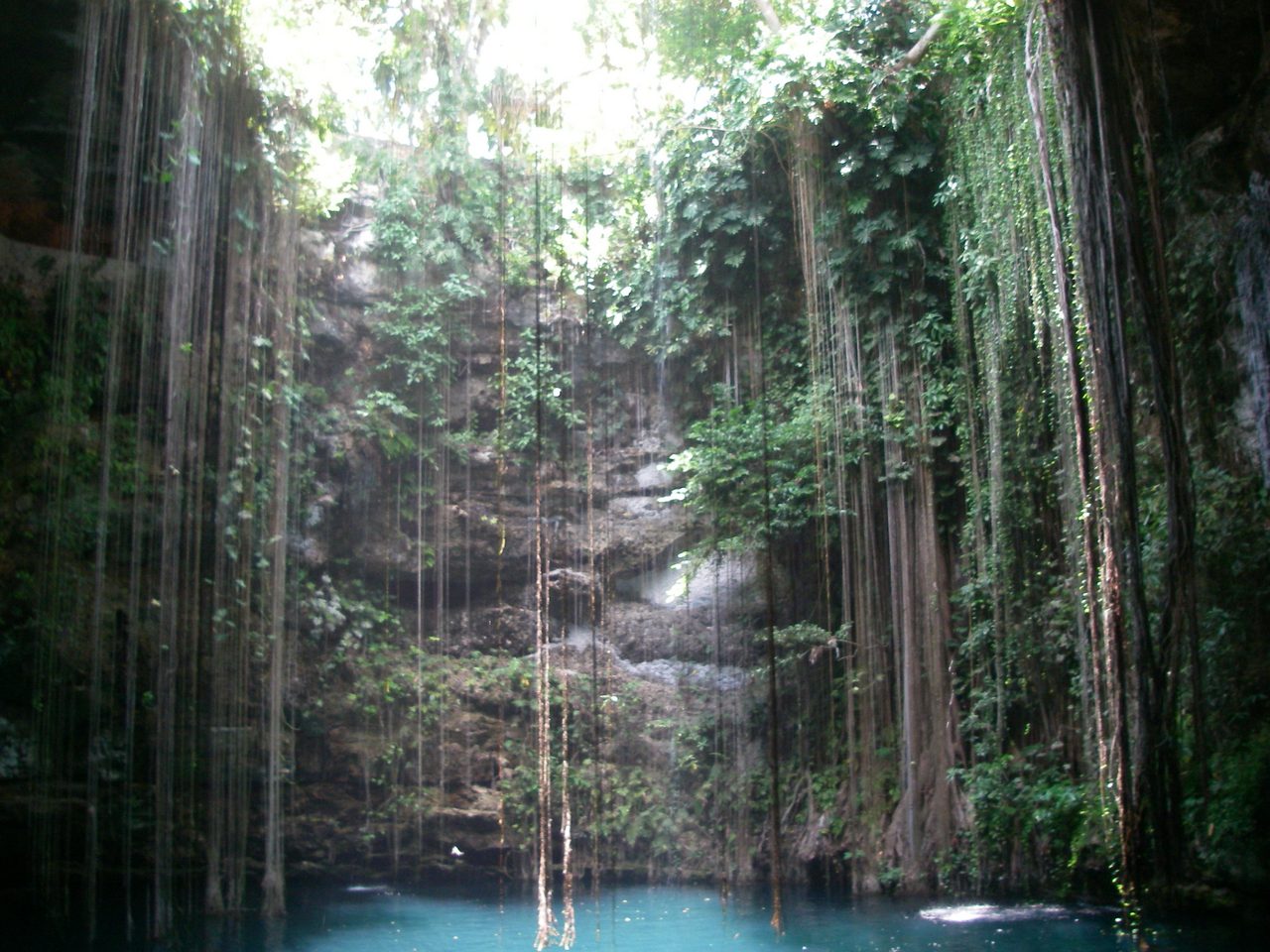
Photo credits (3)
- Daniel Schwen, CC BY-SA 4.0, via Wikimedia Commons
- Dmadeo, CC BY-SA 3.0, via Wikimedia Commons
- Photo by Dorothy Beals and Sarah Martin Original uploader was Elijahmeeks at en.wikipedia, CC BY-SA 3.0, via Wikimedia Commons