
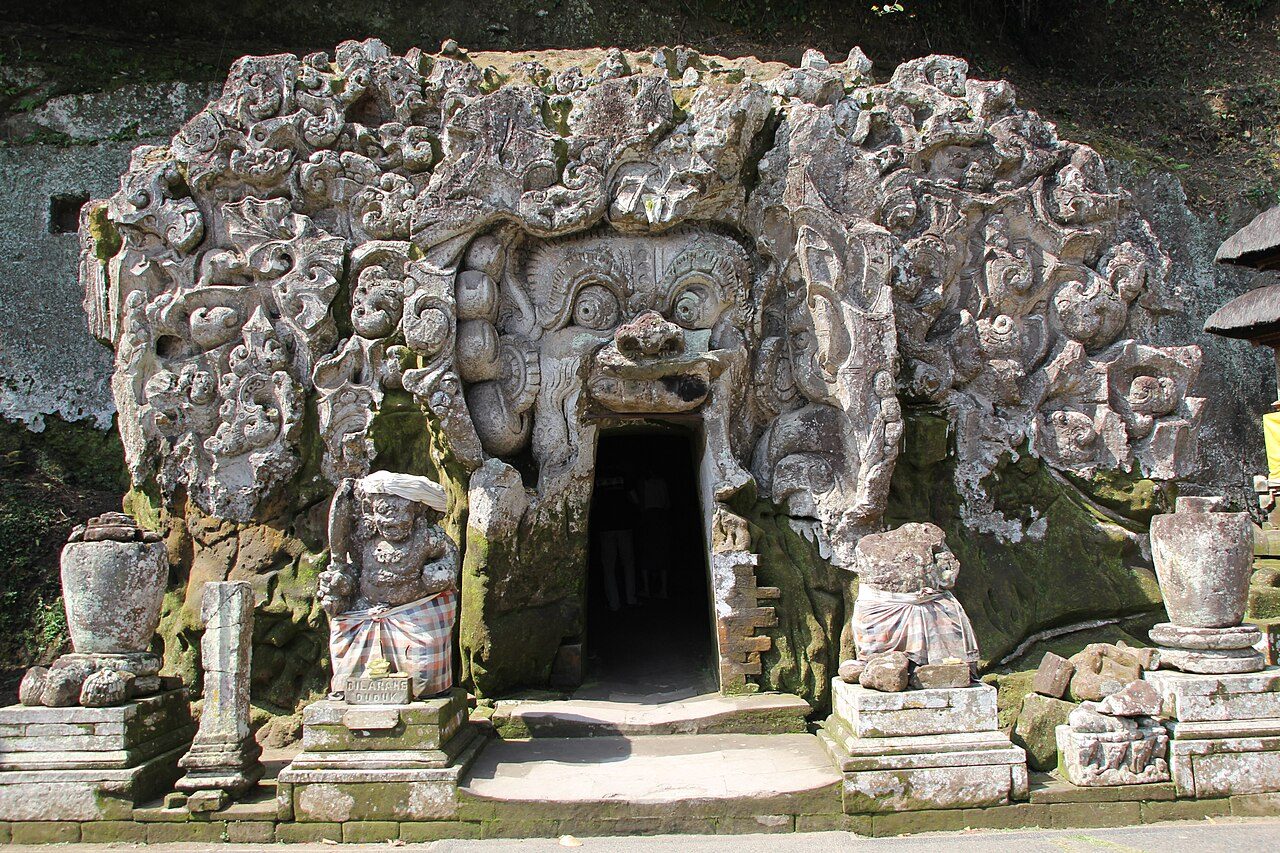
Goa Gajah
Descending moss-draped stone stairs into the Petanu River valley, visitors come face-to-face with a monstrous, wide-eyed earth demon carved directly into the dark rock face, its stone hands appearing to prise open the underworld. Dating to the 11th century during Bali’s Warmadewa Dynasty—and recorded in the 1365 Javanese poem *Nagarakretagama*—Goa Gajah served as a profound sanctuary of Hindu-Buddhist syncretism. Flanking the menacing portal lies a courtyard anchored by two sunken bathing pools, excavated in 1954, where freshwater pours perpetually from earthen vessels cradled by six life-sized stone *apsara* (celestial nymph) statues. Crossing the threshold plunges travelers from blinding tropical heat into a cool, dim, T-shaped subterranean gallery carved by ancient ascetics. The damp air hangs thick with the fragrance of smoldering sandalwood incense and damp volcanic tuff. Narrow alcoves, once occupied by meditating monks, flank the central passage: to the left rests an oil-sheened statue of Ganesha, the elephant-headed remover of obstacles, while the right terminus shelters three stone *lingam-yoni* shrines dedicated to the Hindu trinity of Shiva, Vishnu, and Brahma. Beyond the cave, jungle trails wind past colossal banyan roots to a shadowed ravine where shattered stone bas-reliefs and remnants of a Buddhist stupa lay tumbled among trickling streams, preserving a thousand-year-old aura of sacred retreat.
More in Bali
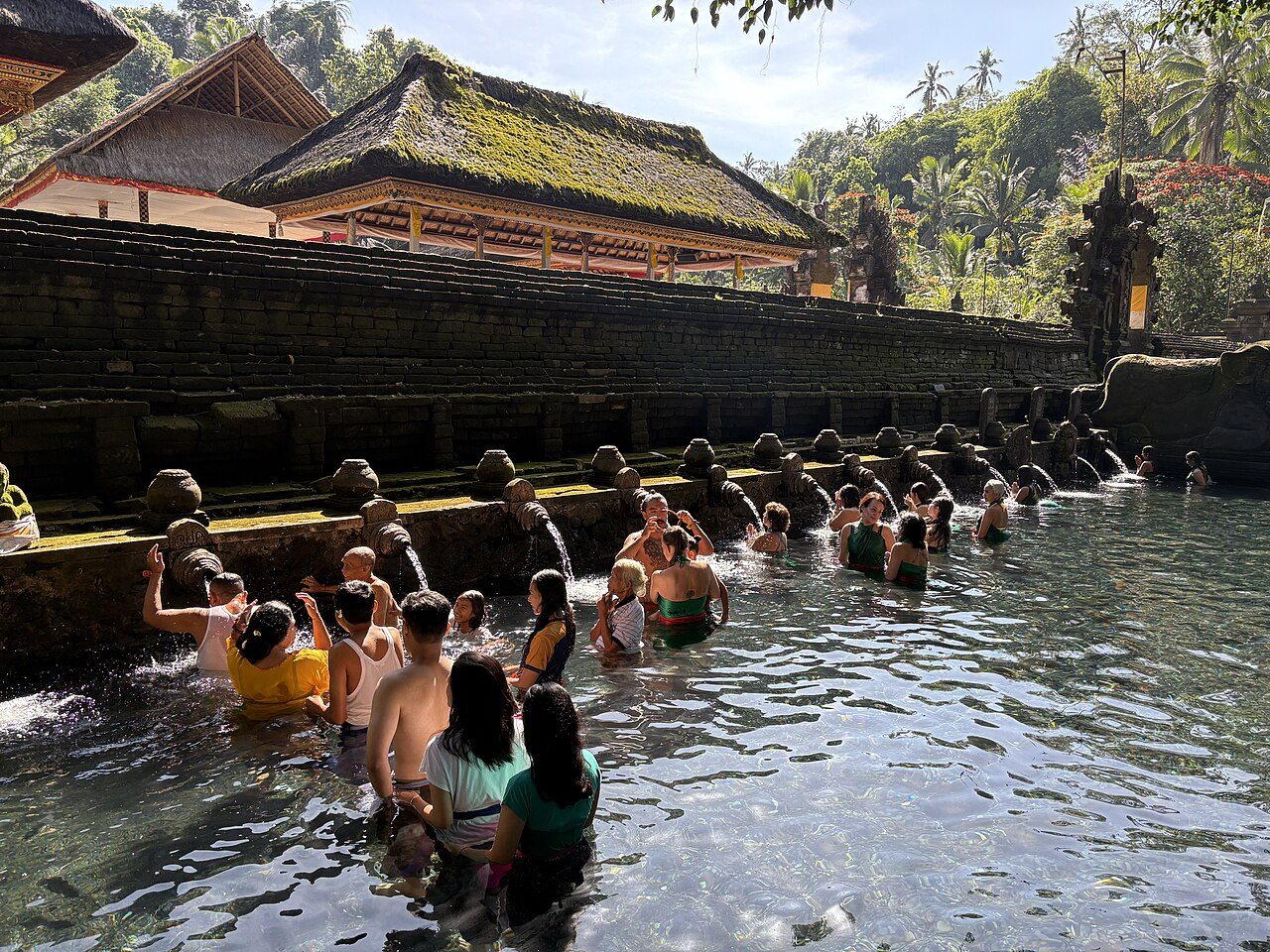
Photo credits (2)
- DerGenaue Allrounder, CC BY-SA 3.0, via Wikimedia Commons
- Chainwit., CC BY 4.0, via Wikimedia Commons