
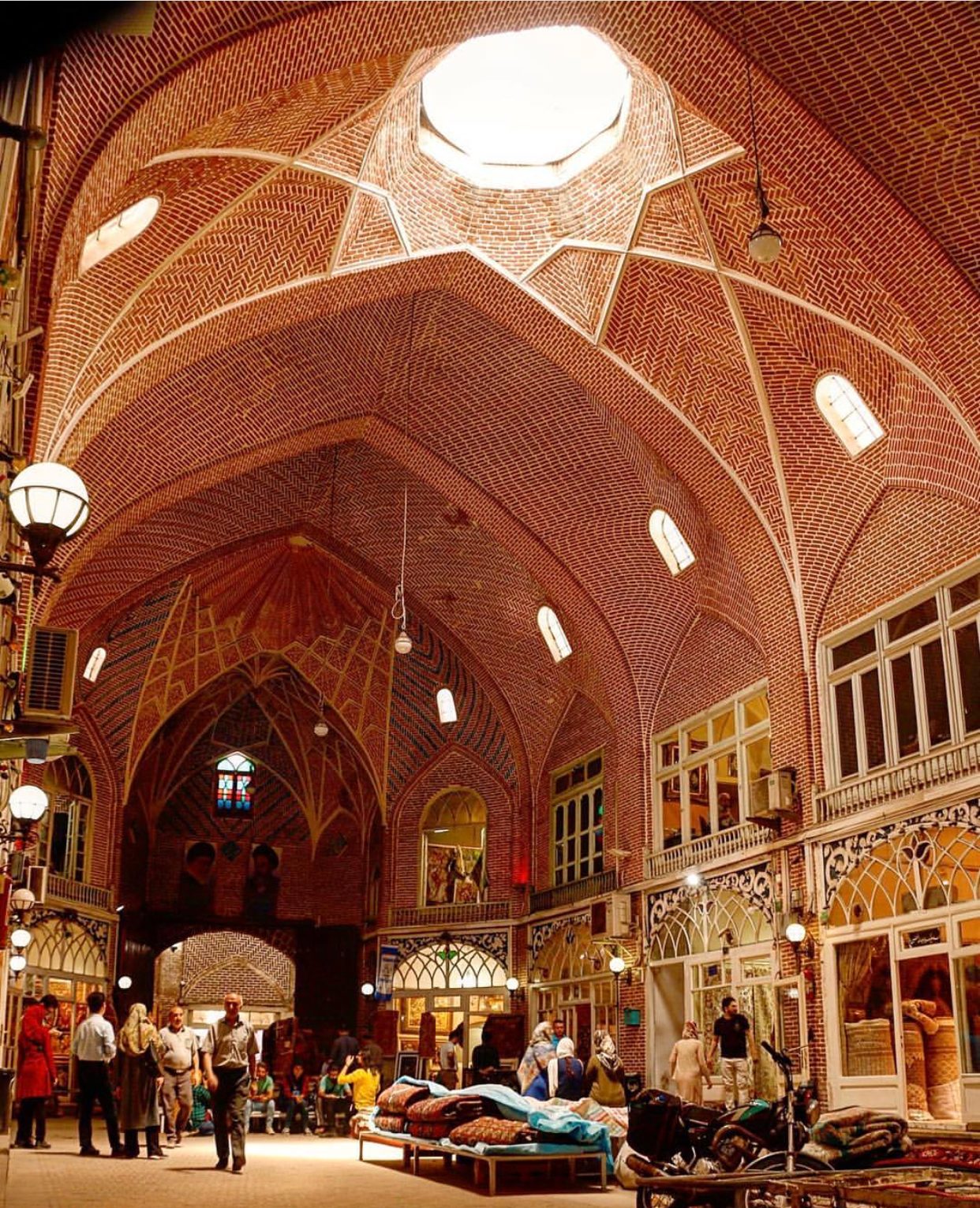
Tabriz Bazaar
Thriving as a crucial nexus along the ancient Silk Road, this sprawling labyrinth of red-and-ochre brickwork reached peak prominence in the thirteenth century under the Ilkhanids and later as an early Safavid capital. Chronicled in the travelogues of Marco Polo and Ibn Battuta, the existing complex represents a masterclass in post-1780 Qajar reconstruction, preserving the world’s largest vaulted covered market. Miles of contiguous brick archways and soaring rib-vaulted domes connect historic caravanserais, madrasas, and bathhouses into a self-contained city. Its architectural zenith is Timcheh-ye Mozaffariyeh, a carpet hall crowned by yellow-brick muqarnas vaulting and high clerestory windows that cast dust-moted beams of sunlight across cool flagstones. Stepping into the bazaar's corridors plunges visitors into an authentic, multisensory theater of commerce. The subterranean air carries the dry warmth of hand-spun wool, pungent mountain thyme, and sumac spilling from woven sacks in the spice alleys. In the coppersmiths’ quarter, the percussive clang of hammers shaping samovars reverberates off cavernous masonry, periodically punctuated by the shouts of porters maneuvering two-wheeled wooden handcarts through the crowds. Within the quieter alcoves of the carpet arcade, shopkeepers sip cardamom tea from delicate glasses, flicking their wrists to unroll heavy woolen rugs that reveal dazzling turquoise arabesques and floral medallions dyed from crushed walnut husks and wild madder root.