
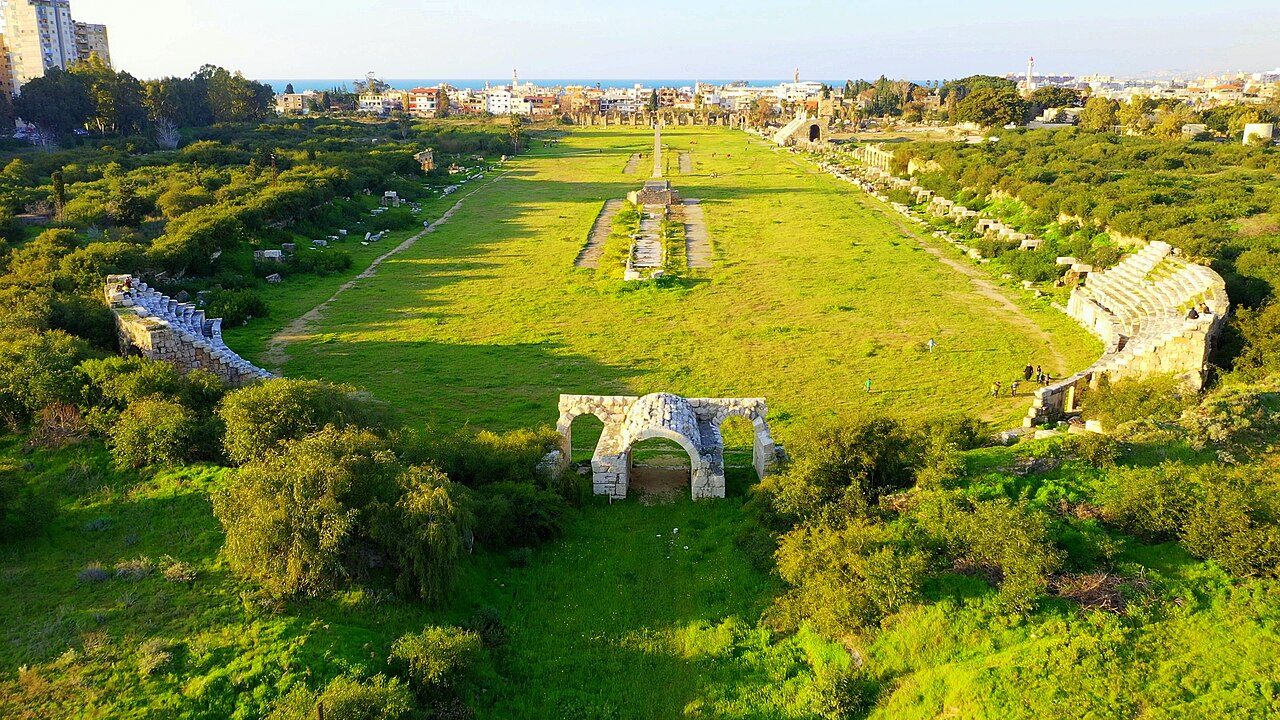
Tyre Hippodrome
Commissioned in the second century AD during the Roman golden age in the Levant, this colossal circus was engineered to host the perilous spectacle of four-horse chariot races. Stretching an astonishing 480 meters in length and 90 meters across, it stands as one of the largest and best-preserved Roman hippodromes ever excavated, once holding over 30,000 spectators. The classical Roman arena is defined by its sweeping U-shaped *cavea* of honey-hued limestone seats and the long central *spina*—the raised dividing median around which charioteers navigated lethal turns. At each end, fragments of the conical turning posts, or *metae*, mark the exact crucibles where ancient drivers risked collisions to secure victory. Today, visitors enter through the adjacent Al-Bass necropolis, walking along a monumental paved avenue flanked by sarcophagi before the immense expanse of the arena unfolds beneath the Mediterranean sun. Standing within the bowl of the stadium, you can still trace carved Greek inscriptions along the lower bleachers, marking reserved seats for local guilds and supporters of rival factions like the Blues and the Greens. A quiet breeze carries the scent of sea salt and wild thistles through the vaulted gallery arcades, leaving travelers to absorb the scale of an amphitheater where the roar of wheels and thundering hooves once reverberated across Phoenicia.