
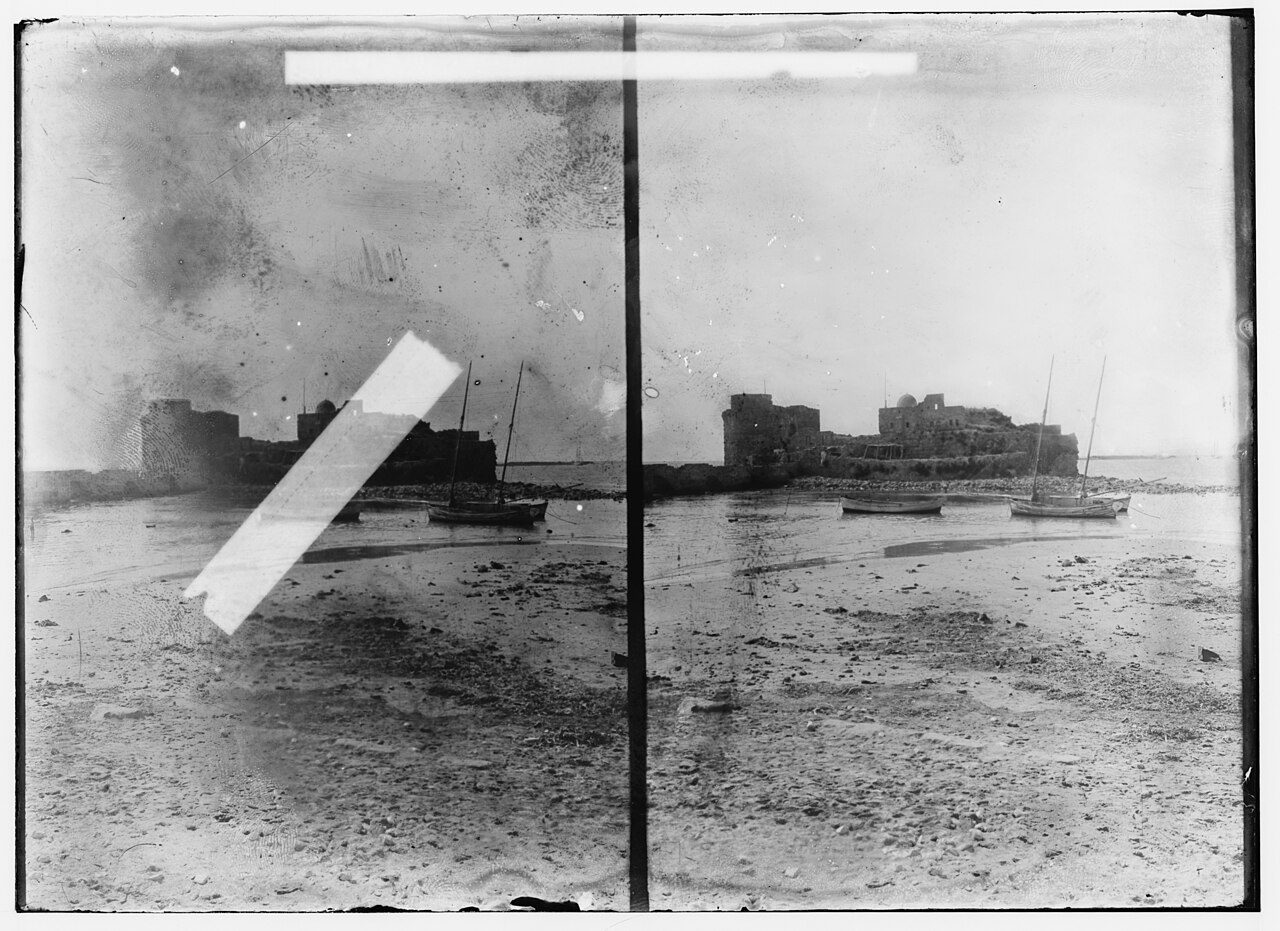
Sidon Sea Castle
Anchored to a wave-battered limestone reef, the fortress rises directly from the Mediterranean, reached only by an eighty-meter arched stone causeway. Built during the winter of 1227–1228 by French Crusaders of the Sixth Crusade—and later refortified by the Mamluks after the fall of the city in 1291—the stronghold occupies an islet once dedicated to the Phoenician god Melqart. Its weathered sandstone walls vividly showcase the medieval practice of spolia: dark Roman granite columns lie embedded horizontally into the ashlar masonry, repurposed as structural tie-beams to reinforce the ramparts against battering winter swells and seismic tremors. Inside, the sharp tang of sea salt permeates the vaulted lower halls, where water regularly churns through submerged breachways. Visitors can inspect arrow slits in the surviving West Tower before climbing worn stone stairs to the battlements. At the summit, a small domed mosque, commissioned in the seventeenth century by the Druze ruler Emir Fakhr al-Din II, sits in stark juxtaposition atop the Frankish fortifications. Standing beside its whitewashed cupola, buffeted by coastal winds, you gaze back across the turquoise shallows toward Sidon’s vibrant fishing harbor, the labyrinthine alleys of the historic souk, and the rising terraces of the Mount Lebanon range.