
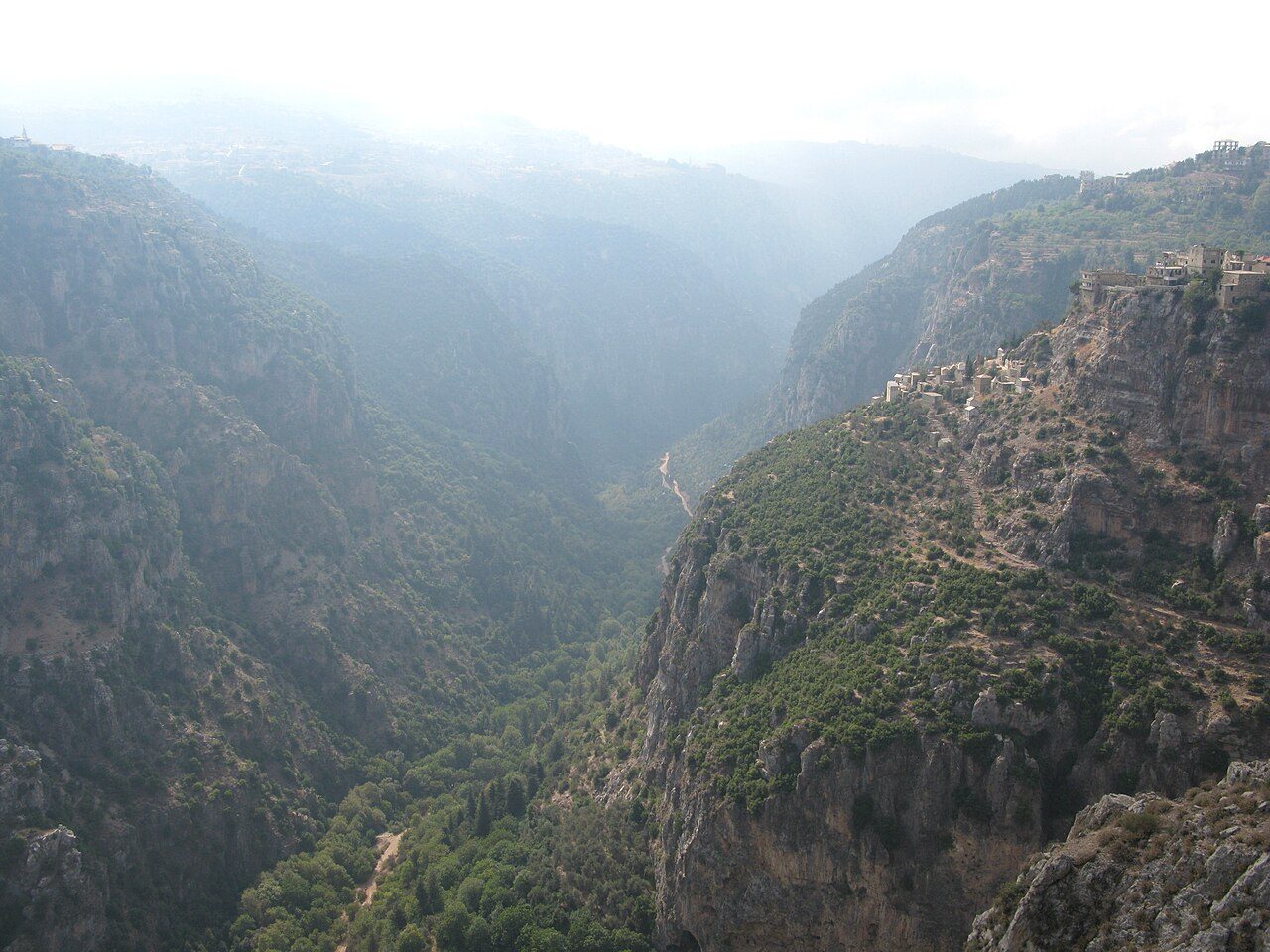
Kadisha Valley
Carved deep into the Mount Lebanon range below Bsharri, the Kadisha Valley served as a remote sanctuary for Christian monasticism beginning in the seventh century. Seeking refuge from imperial Byzantine persecutions and later Mamluk incursions, Maronite ascetics hollowed out grottos along the sheer limestone precipices. Monasteries such as Deir Qannoubine—the historic seat of the Maronite Patriarchs from 1440 to 1823—exemplify this dramatic subterranean architecture, where natural caverns were retrofitted with ashlar masonry, timber roofs, and barrel-vaulted chapels. Deep within these cliff-clinging sanctums, surviving seventeenth- and eighteenth-century frescoes depict Byzantine-influenced iconography, their ochre, charcoal, and lapis lazuli pigments still clinging to raw, damp stone walls. Descending the vertigo-inducing footpaths, travelers leave behind alpine orchards to enter a sun-bleached gorge echoing with the distant rush of the Holy River below. The air cools instantly as you cross the threshold of hermitages like Deir Mar Elisha, carrying the sharp fragrance of crushed mountain thyme, wild pine, and smoldering beeswax. Stepping into the monastic cells, visitors trace rough chisel marks gouged into the rock and pass through low archways framed with ancient cedar lintels. Standing on the narrow, stone-paved terraces cantilevered over the abyss, one confronts the staggering verticality of the ravine, surrounded by absolute stillness and the austere architectural defiance of a mountain redoubt.
More in Bsharri
Photo credits (2)
- Vyacheslav Argenberg, CC BY 4.0, via Wikimedia Commons
- BlingBling10 at English Wikipedia, CC BY-SA 3.0, via Wikimedia Commons