
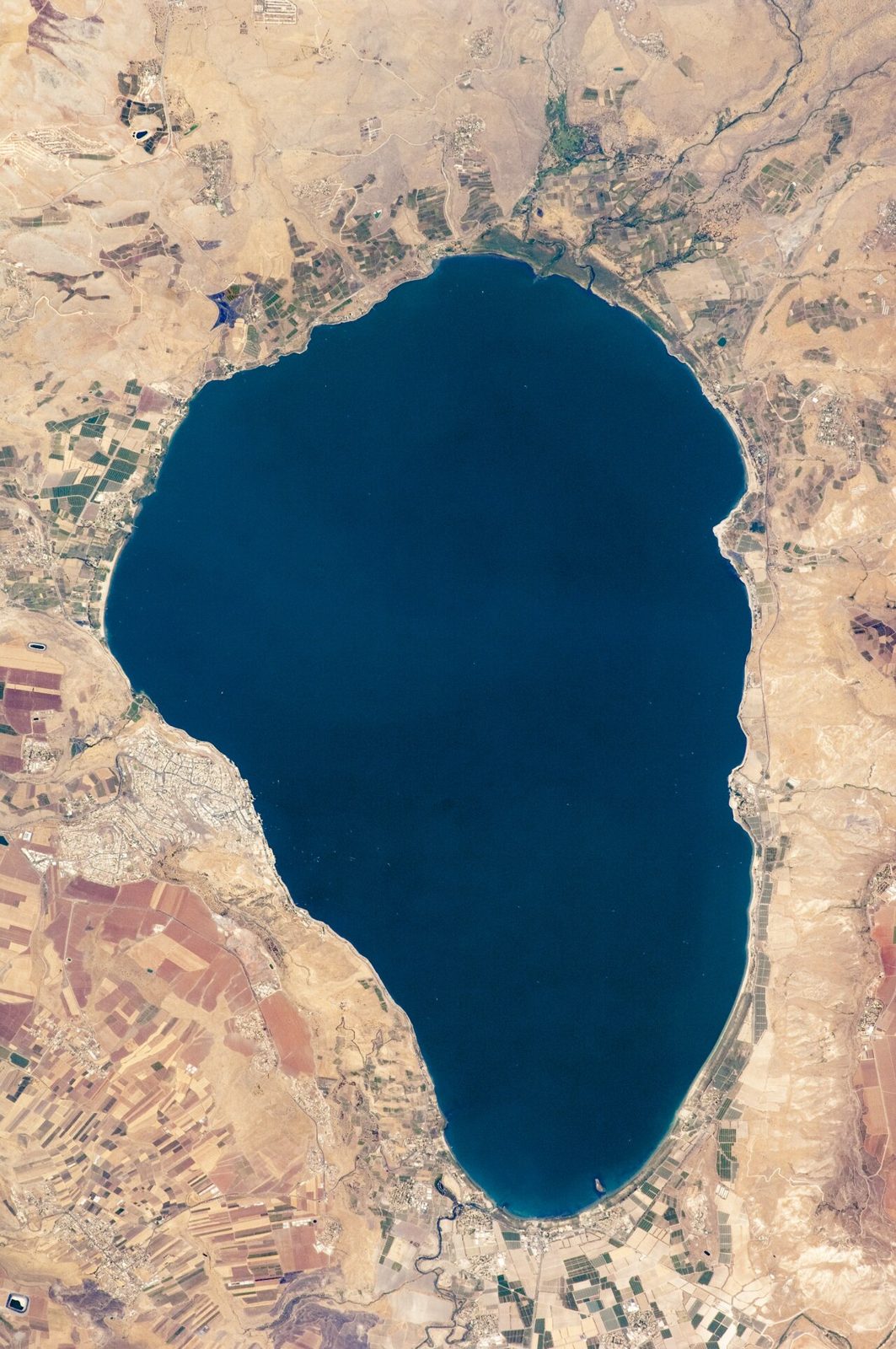
Sea of Galilee
Cradled 214 meters below sea level within the volcanic folds of the Jordan Rift Valley, the harp-shaped freshwater expanse of the Sea of Galilee—locally known as Lake Kinneret—has anchored empires and faiths for millennia. Along its western flank rests Tiberias, founded in 20 CE by Herod Antipas and constructed from deep-charcoal local basalt stone. It was along these shores and across these mirror-like shallows that Jesus of Nazareth conducted the core of his first-century ministry, calling the fishermen Simon Peter and Andrew from Capernaum, commissioning apostles at Tabgha, and delivering the Beatitudes on the rolling northern hills. Standing along the Tiberias shoreline, travelers encounter the stark chromatic clash of dark Ottoman and Crusader-era basalt ramparts set against pale jade water and the sun-bleached, terracotta ridges of the Golan Heights. The air carries the sharp scent of wild eucalyptus and freshwater brine, underscored by the rhythmic clatter of gravel under gentle surf. As late afternoon settles, sudden katabatic winds frequently descend from the surrounding plateaus, whipping the calm surface into crested whitecaps—a visceral reminder of the sudden, fierce tempests chronicled by ancient Roman historians and early gospel writers alike.
More in Tiberias
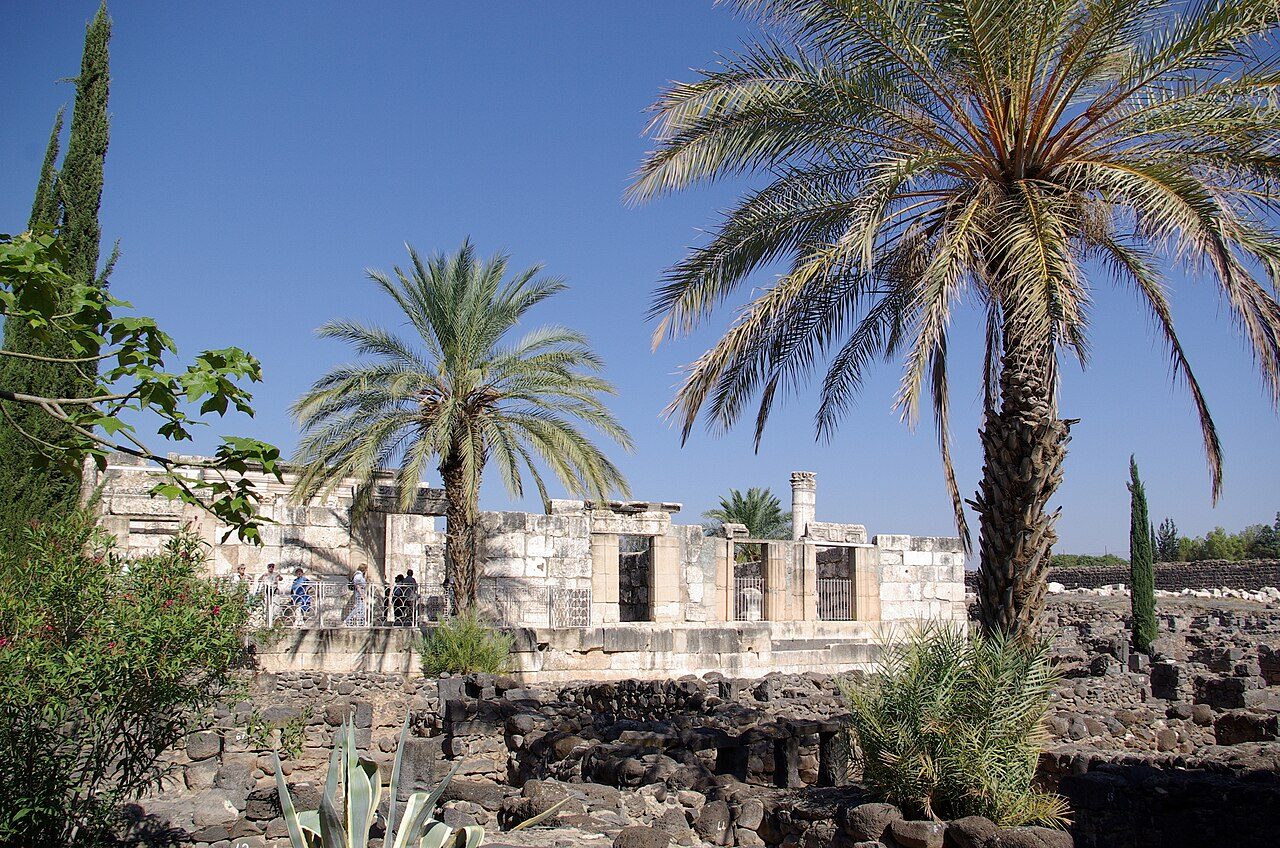
Photo credits (2)
- This image was taken by the NASA Expedition 20 crew., Public domain, via Wikimedia Commons
- Berthold Werner, Public domain, via Wikimedia Commons