
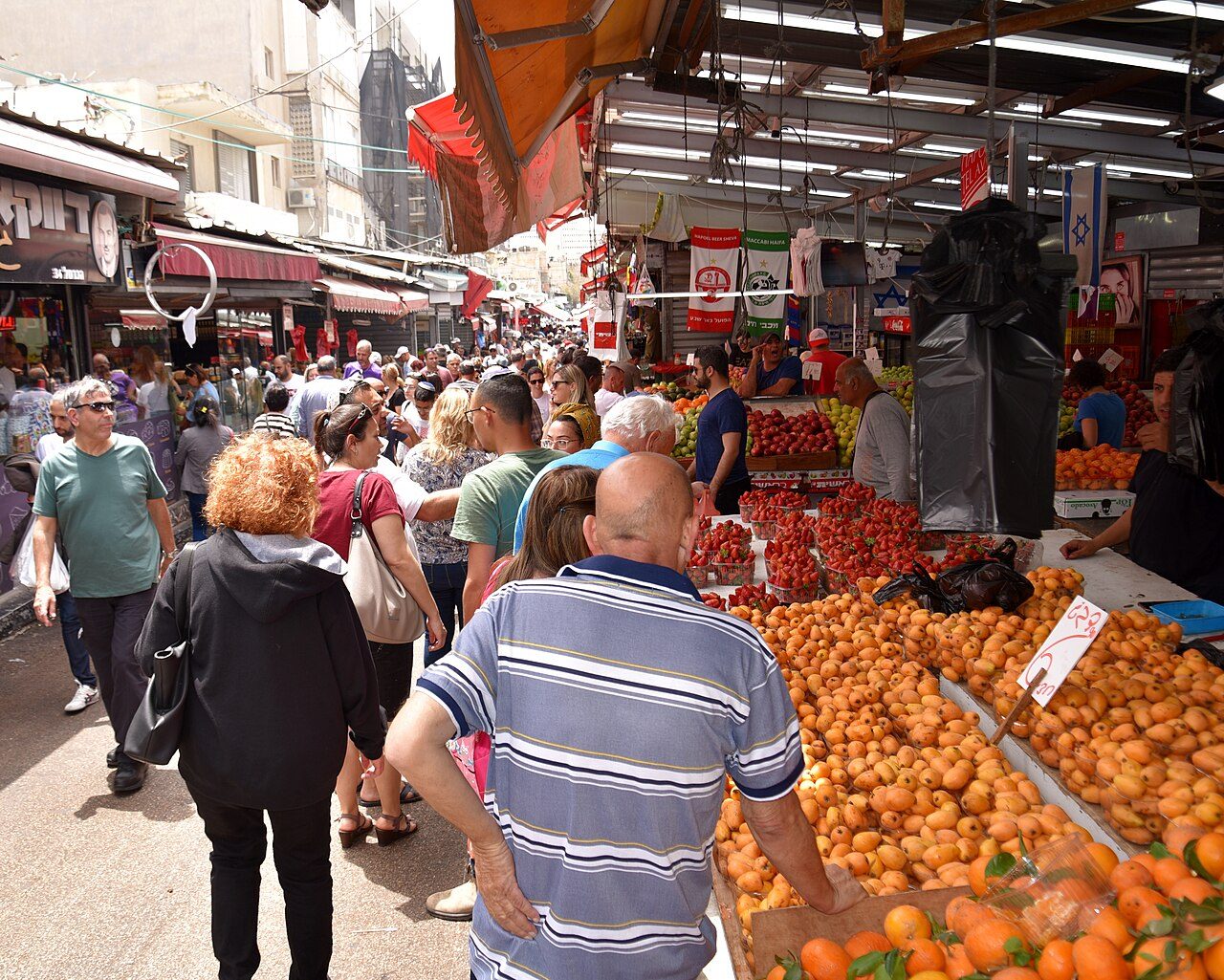
Carmel Market
Conceived in 1920 under the guidance of Zionist pioneer Arthur Ruppin, Shuk HaCarmel originated as a makeshift trade depot established by Russian Jewish immigrants fleeing Bolshevik upheaval. Despite early resistance from British Mandate municipal planners, Tel Aviv’s first mayor, Meir Dizengoff, formally sanctioned the open-air bazaar in the late 1920s, cementing its position between the bustling intersection of Magen David Square and the stone cottages of Kerem HaTeimanim (the Yemenite Quarter). Architecturally, the market forms a long, descending central spine sheltered beneath a jury-rigged canopy of corrugated tin sheets, weathered canvas, and blue-and-orange tarpaulins that cast a dappled, kaleidoscopic shade over the paved alleyway. Stepping onto the wet flagstones immerses visitors in a relentless sensory gauntlet driven by the melodic, rhyming shouts of third-generation *bastonerim* (stall owners) hawking seasonal produce. The heavy Mediterranean air hangs thick with the fragrance of ground sumac, brined olives, and bubbling oil from street-side *boureka* ovens. Travelers brush past wooden crates piled high with cracked pomegranates and mountains of soft Medjool dates, stopping before deli windows where massive wheels of marbled tahini halva are carved with iron spatulas. Hidden between the textile stalls and spice pyramids dusted in za’atar, tiny open-flame kitchens serve hot, cumin-spiced shakshuka and pita overflowing with fried eggplant and pickled mango *amba*.
More in Tel Aviv
Photo credits (2)
- Bahnfrend, CC BY-SA 4.0, via Wikimedia Commons
- Godot13, CC BY-SA 4.0, via Wikimedia Commons