Hegra
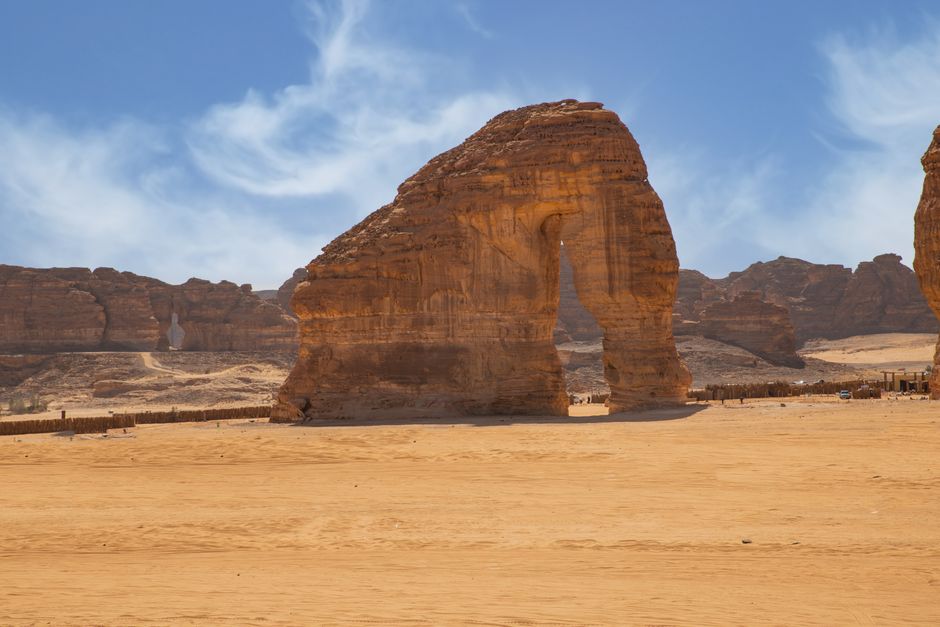
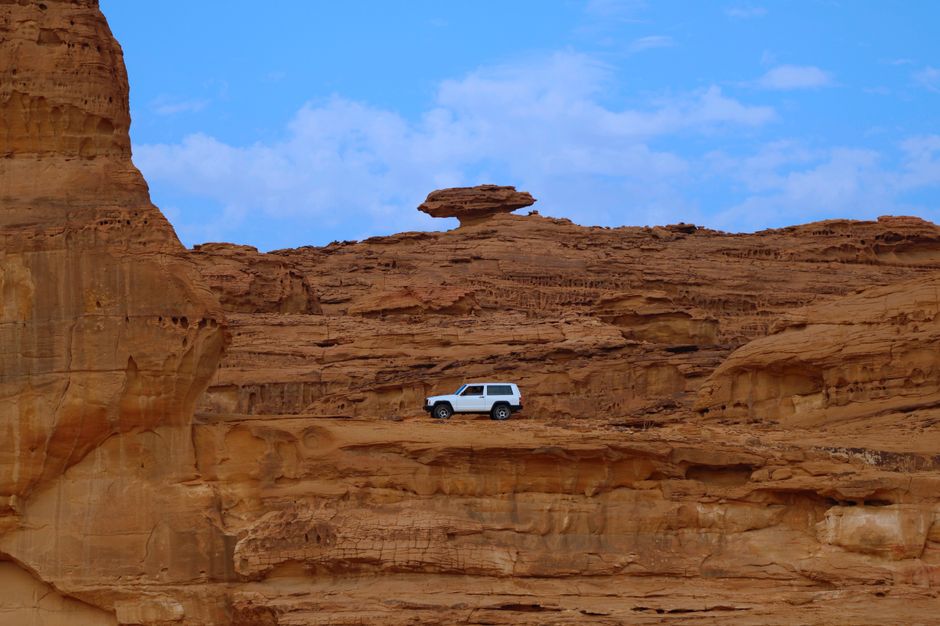
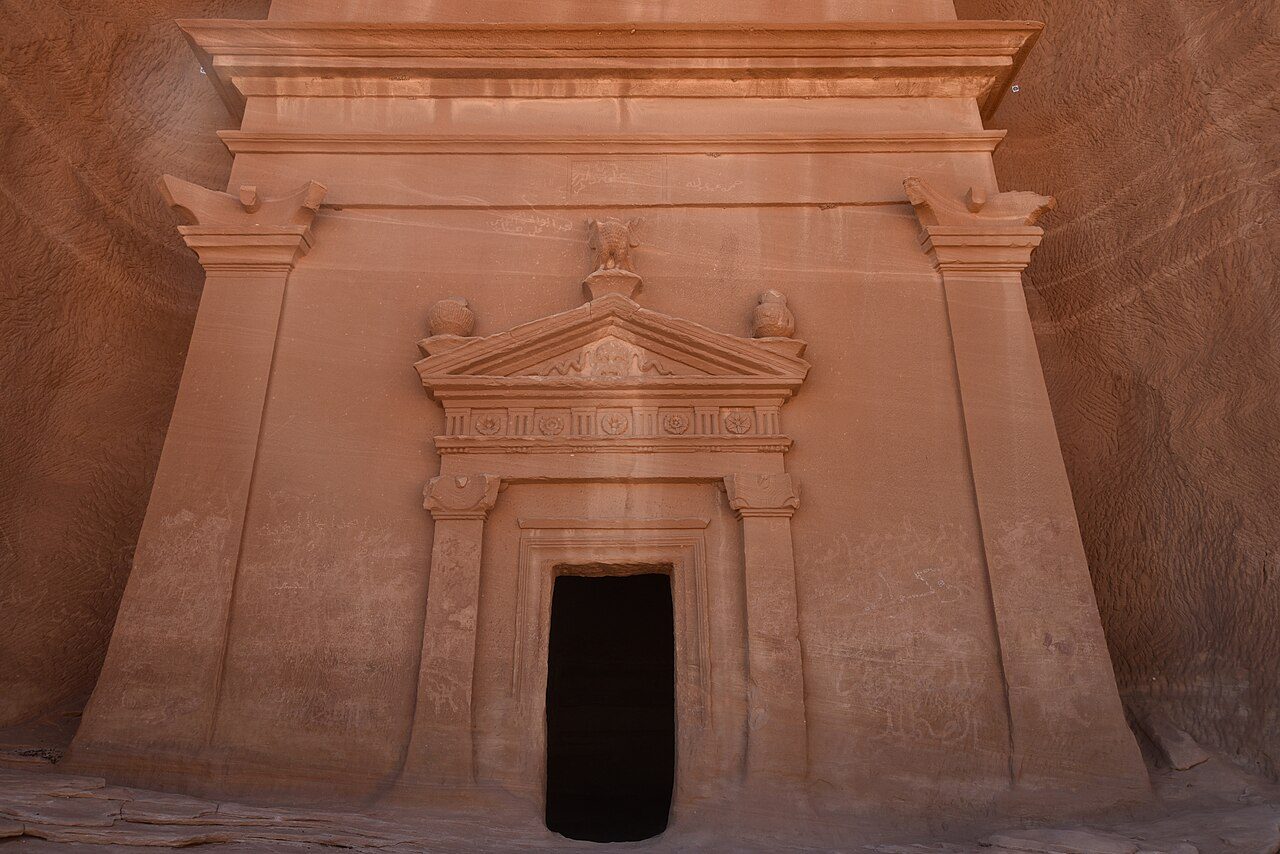
Carved directly into the sweeping sandstone outcrops of AlUla, the ancient necropolis of Hegra served as the southern commercial powerhouse of the Nabataean Kingdom, flourishing from the 1st century BCE until the Roman annexation in 106 CE. Along these lucrative incense and spice trade corridors, master stonemasons sculpted over 110 monumental tomb facades directly into the cliff faces. Commissioned by military commanders and wealthy elites during the reign of King Aretas IV, the architecture displays an intricate fusion of global styles: classical Greco-Roman pediments and pilasters crowned with Nabataean capitals merge seamlessly with stepped Assyrian merlons, sphinxes, and Egyptian winged sun-disks. Approaching Qasr al-Farid—the "Lonely Castle," a four-story-tall monolithic tomb standing solitary in the desert expanse—visitors encounter an astonishing level of preservation, where ancient chisel marks remain distinctly visible across the ochre rock face. A vast, reverent silence settles over the landscape, broken only by desert breezes funneling through the narrow canyon of Jabal Ithlib, home to rock-cut altars and the shaded banqueting chamber known as the Diwan. As late-afternoon light sets the cliffs ablaze in shades of bronze and apricot, carved guardian eagles and Medusa-headed masks atop the burial portals cast sharp, evocative shadows across the desert floor.