
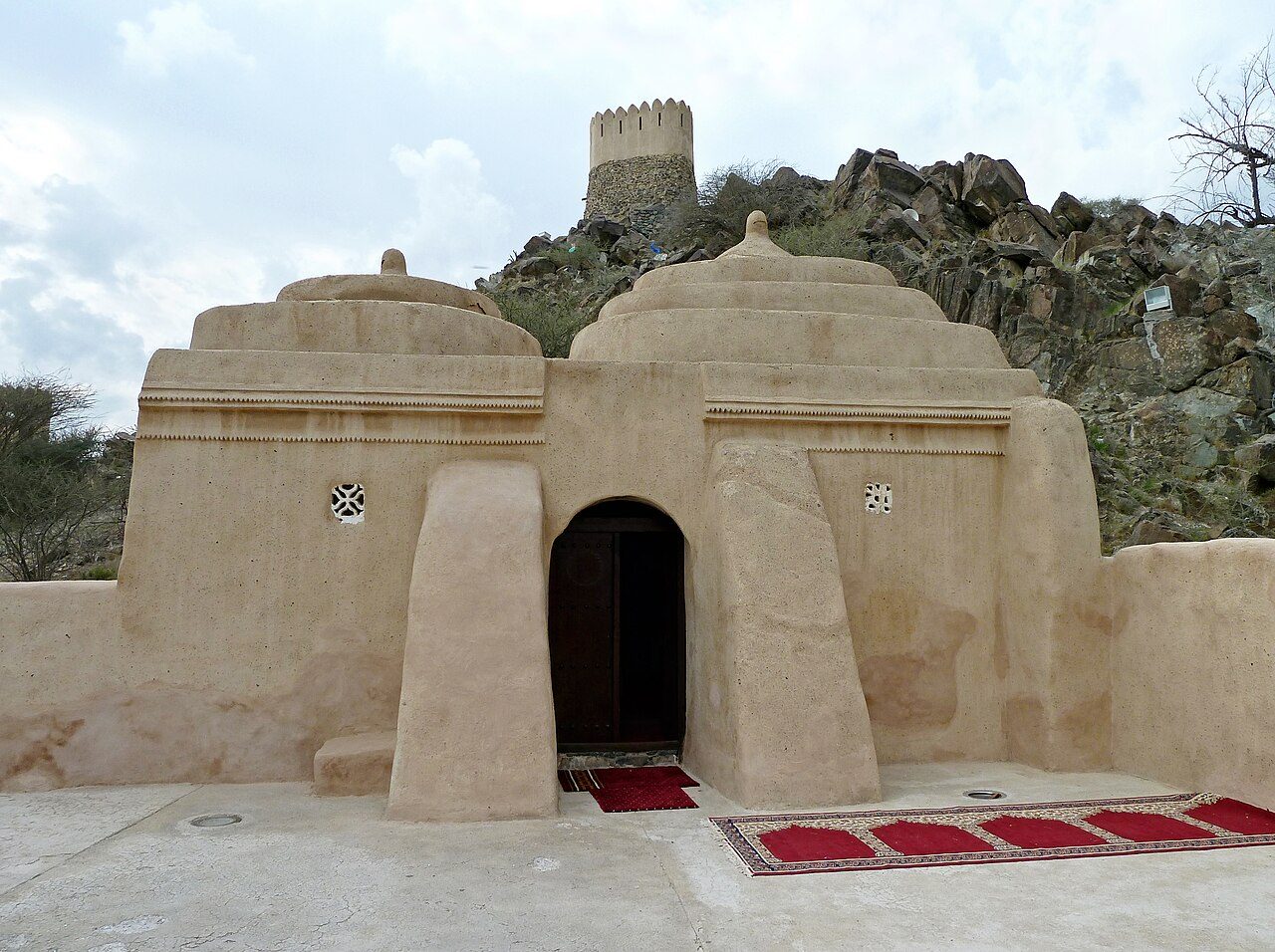
Al Bidya Mosque
Radiocarbon dating places the origins of Al Bidya Mosque around 1446 CE, cementing its status as the oldest standing house of prayer in the United Arab Emirates. Defying the grand scale of modern regional monuments, this compact sanctuary showcases ingenious vernacular engineering adapted to the harsh coastal climate. Its most arresting feature is the roof: four spiraling, uneven domes cascade downward in concentric tiers, supported internally by a single monumental central pillar rather than timber beams. Sun-baked mud brick, local fieldstones, and layers of pale gypsum plaster give the squat exterior an organic, hand-sculpted presence against the rugged backdrop of the Hajar foothills. Crossing the low threshold into the 53-square-meter prayer hall, visitors are enveloped in a cool, contemplative gloom scented faintly of dried earth and stone. Natural light filters through narrow, unglazed embrasures carved into the thick masonry, illuminating a modest recessed *mihrab* oriented toward Mecca and the rhythmic ribs radiating from the central column. Outside, a rough stone staircase ascends the craggy ridge directly behind the mosque, leading to twin watchtowers erected to safeguard the fertile settlement below. Standing beside these battlements, travelers look out over a timeless tableau where the whitewashed sanctuary rests between emerald ribbons of date palms and the shimmering expanse of the Gulf of Oman.
More in Fujairah

Photo credits (2)
- Bobak Ha'Eri, CC BY 3.0, via Wikimedia Commons
- Ulises Icardi, CC BY-SA 4.0, via Wikimedia Commons