
Fujairah
Fujairah occupies the eastern wedge of the United Arab Emirates, pressed between the rugged, sun-scorched Hajar Mountains and the open waters of the Gulf of Oman. Unlike the glass-towered cities to the west, daily life here unfolds against a backdrop of dark rock faces and quiet coastline. Walking along the waterfront or through the older residential quarters, you encounter a steady, unhurried rhythm shaped by working fishing harbors, date plantations, and the scent of salt spray. The city preserves deep tribal history, anchored by Fujairah Fort, a sixteenth-century mud-brick stronghold restored after sustaining heavy damage from British naval bombardments in 1925. Nearby, the white granite domes of the modern Sheikh Zayed Mosque accommodate thousands of worshippers, serving as an architectural counterpoint to the desert stone. North along the coastal highway sits Al Bidyah Mosque, an ingenious four-domed mud-and-stone sanctuary dating to the fifteenth century, while the inland redoubt of Al Hayl Castle guards the seasonal wadis where the ruling Al Sharqi family once summered. On Friday afternoons in the cooler months, locals gather on open dirt pitches near the corniche to watch traditional bull butting, an inherited contest between massive Brahman bulls that relies on raw pushing power rather than bloodshed. Mornings belong to the harbor fish market, where catches of kingfish and tuna are auctioned straight from wooden dhows. Plan your visit between November and March to avoid extreme heat, and rent a car, as the major sights are separated by rocky ridges that public transit does not serve.
Read more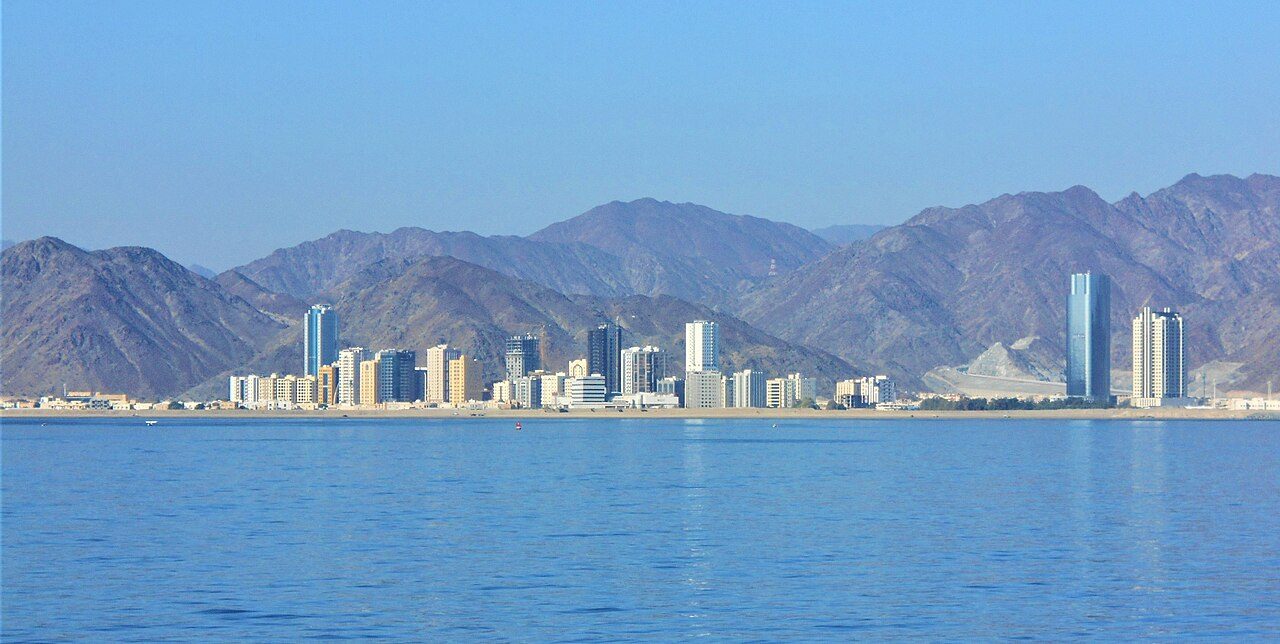
What to see in Fujairah
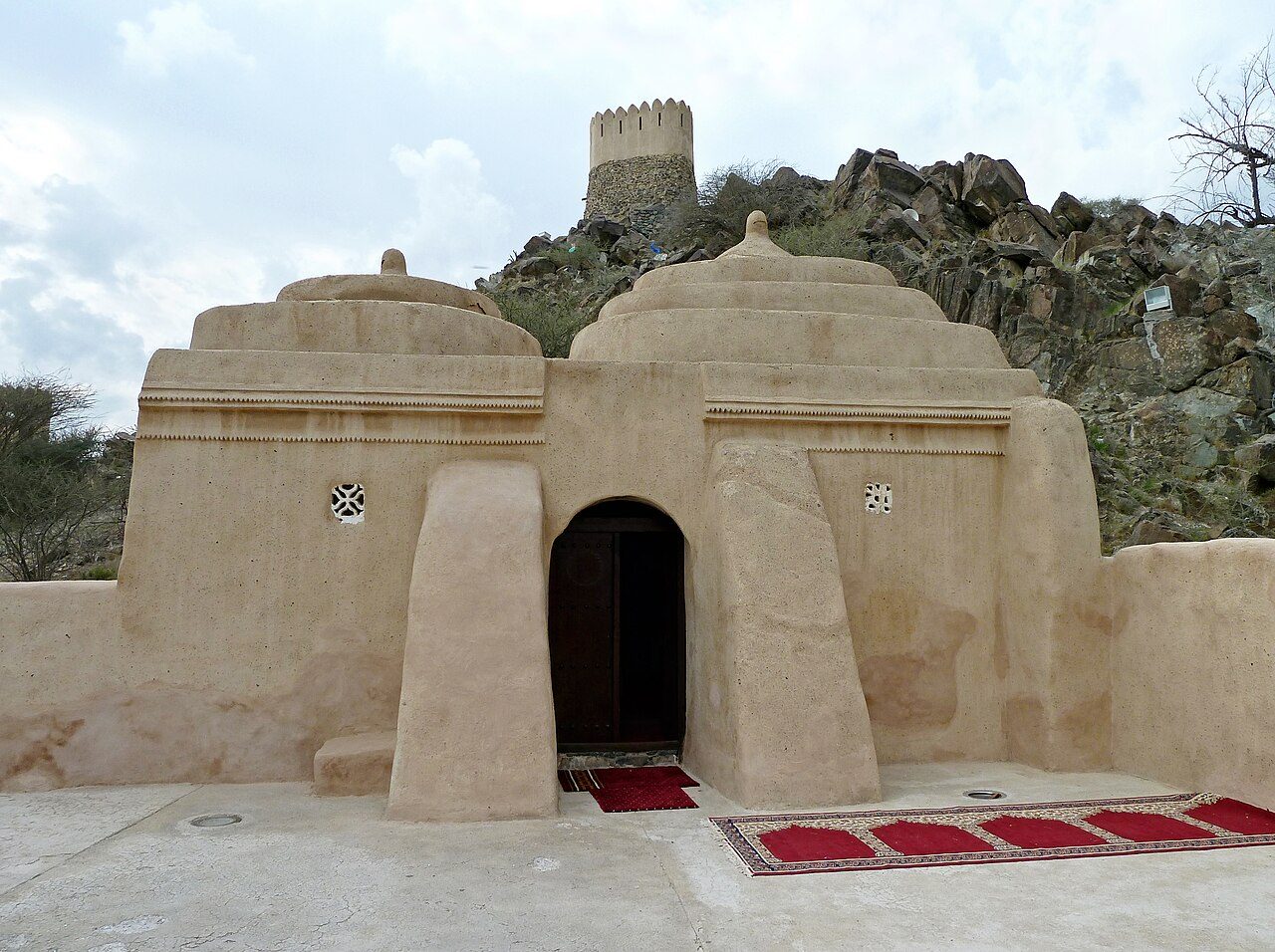
Photo credits (3)
- Ulises Icardi, CC BY-SA 4.0, via Wikimedia Commons
- Bobak Ha'Eri, CC BY 3.0, via Wikimedia Commons
- Ulises Icardi, CC BY-SA 4.0, via Wikimedia Commons