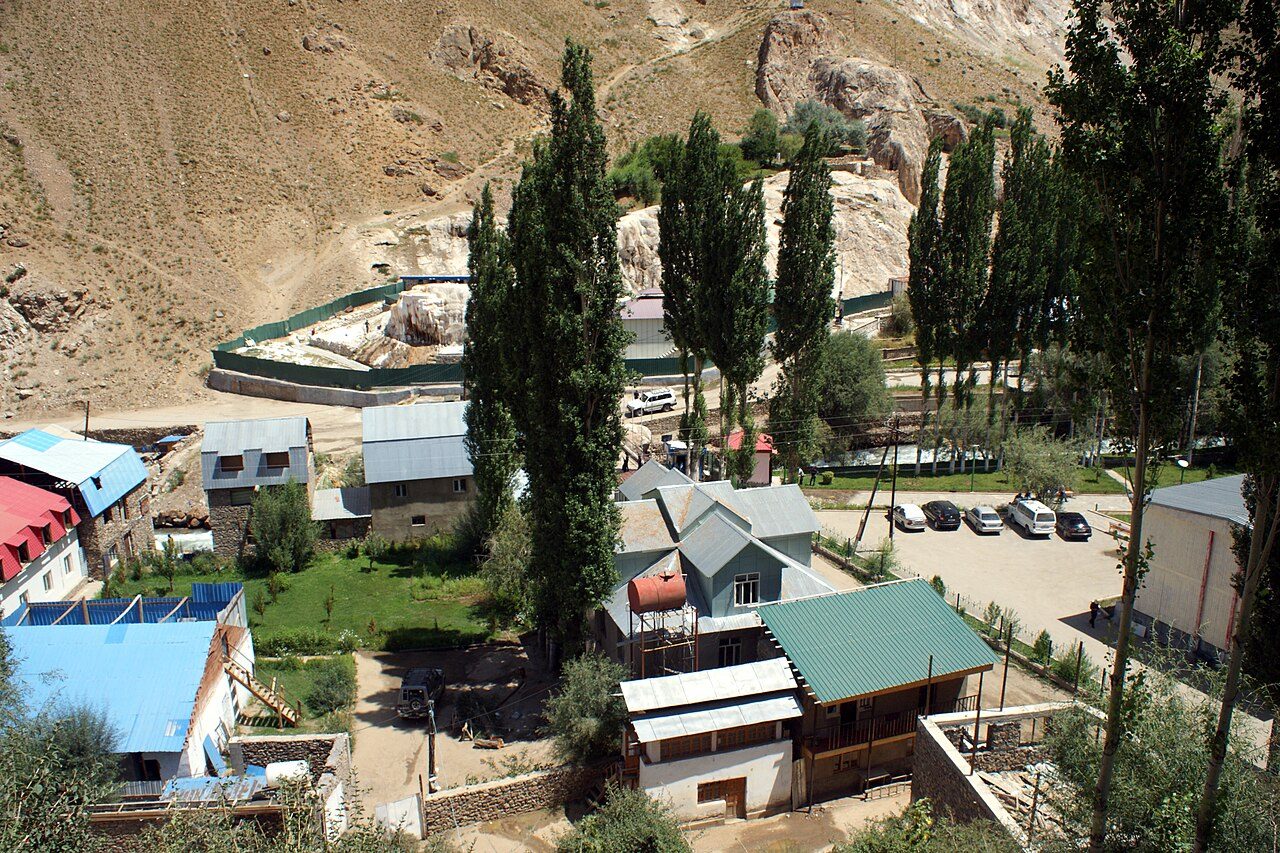
Wakhan Valley
Carved by the churning Panj River between the high Pamirs and the snow-capped Hindu Kush, this windswept corridor served as a pivotal Silk Road artery traversed by Buddhist monks, Chinese emissaries, and Marco Polo in 1271. Above Ishkashim, the valley’s strategic legacy manifests in the dramatic stone-and-mudbrick ramparts of Yamchun Fortress, a 12th-century citadel anchored upon 3rd-century BCE Kushan foundations. Its rounded watchtowers, slit arrow-loops, and teardrop-shaped bastions cling to a triangular ridge overlooking the river canyon. Across the arid slopes, centuries of syncretic faith survive in sacred Ismaili *mazars* (shrines), marked by whitewashed stone cairns topped with curving Marco Polo sheep horns and petroglyph-covered river stones honoring both Muslim saints and pre-Islamic solar spirits. Standing upon Yamchun’s crumbling upper parapets, travelers confront a staggering cross-border panorama: just a few hundred yards across the riverbed lie the emerald poplars and mud-brick hamlets of Afghan Wakhan, set against the towering, glaciated 7,492-meter massif of Mount Noshaq. The thin, high-altitude air carries the pungent scent of burning wild rue and woodsmoke drifting from flat-roofed, five-pillared Pamiri homes (*chids*) below. Down the mountainside, the physical rigor of navigating the bone-dry scree is rewarded at the Bibi Fatima hot springs, where mineral-rich waters cascade over slick calcium formations inside a sheltered limestone cave, enveloping bathers in therapeutic sulfur steam beneath the colossal mountain silence.