
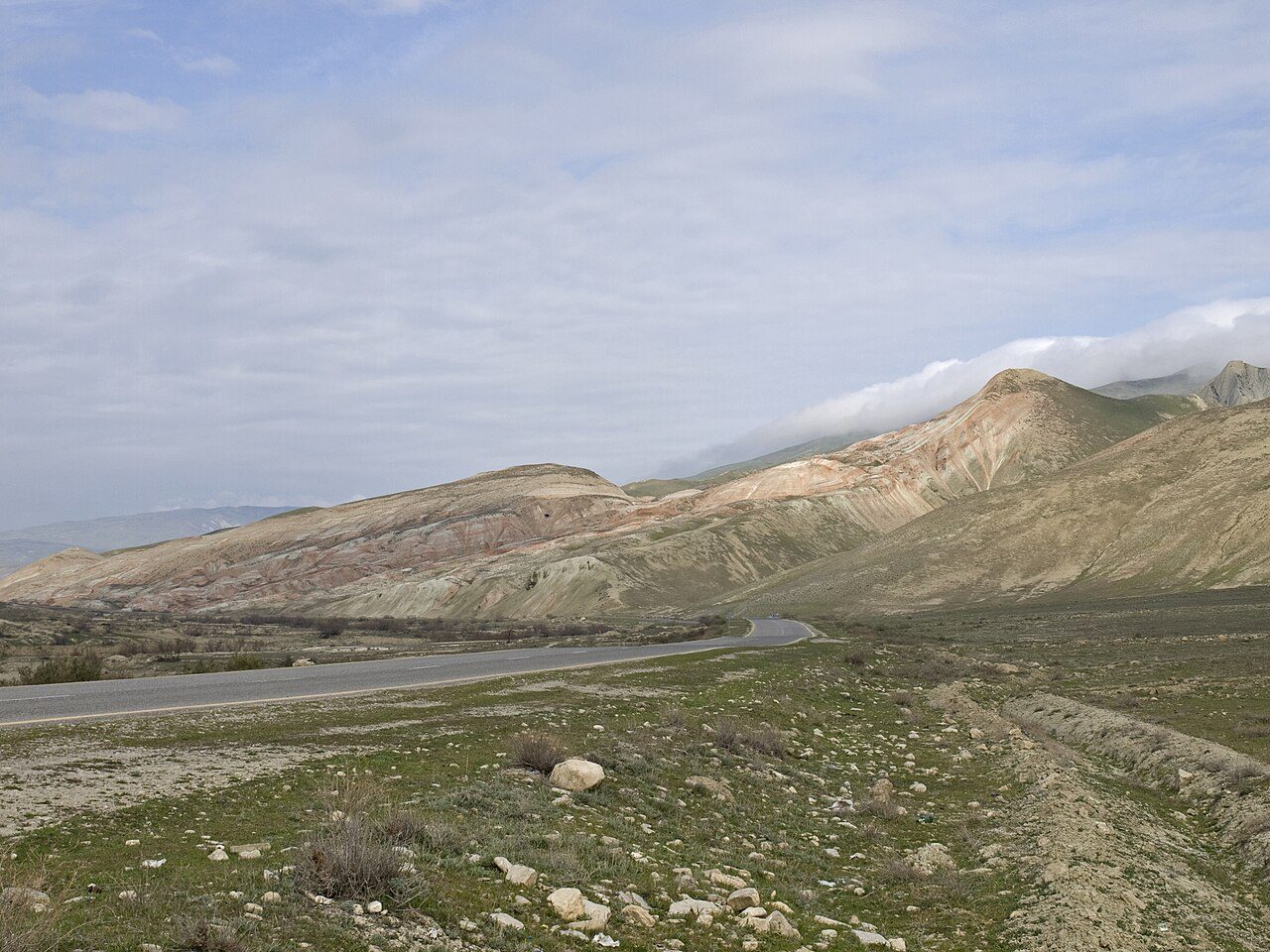
Khizi Candy Cane Mountains
Rippling across the arid foothills en route to the highland redoubts of Quba, the Khizi Candy Cane Mountains resemble a vast canvas washed in rhythmic bands of magenta, rust, chalky alabaster, and burnt ochre. This striking geological tapestry took shape during the Cretaceous and Jurassic periods, when shifting tectonic pressures compressed alternating layers of marine shale and clay. The vibrant coloration results from groundwater chemistry that cyclically oxidized the bedrock's abundant iron compounds over millions of years. Embedded throughout these striped folds lie the calcified guards of belemnites—bullet-shaped, extinct cephalopods that medieval Silk Road caravans traversing these rugged Caspian flanks frequently collected as protective talismans. Standing among these barren, windswept mounds, travelers encounter a silent, alien topography stripped of vegetation. Underfoot, fragile sheets of weathered shale crumble with a dry crackle, exposing glinting veins of crystalline gypsum alongside millennia-old marine sediments. The sensory experience is dictated by the arc of the sun: harsh midday light bleaches the terrain into gentle pastel ribbons, but the low-angled sun of late afternoon sets the hills ablaze in saturated crimsons and deep plum tones, casting elongated shadows that accentuate the corrugated ridges and render the horizon like a sea of frozen waves.
More in Quba


Photo credits (3)
- Ymblanter, CC BY-SA 4.0, via Wikimedia Commons
- Irada, CC BY-SA 3.0, via Wikimedia Commons
- David Uriarte, CC BY-SA 4.0, via Wikimedia Commons