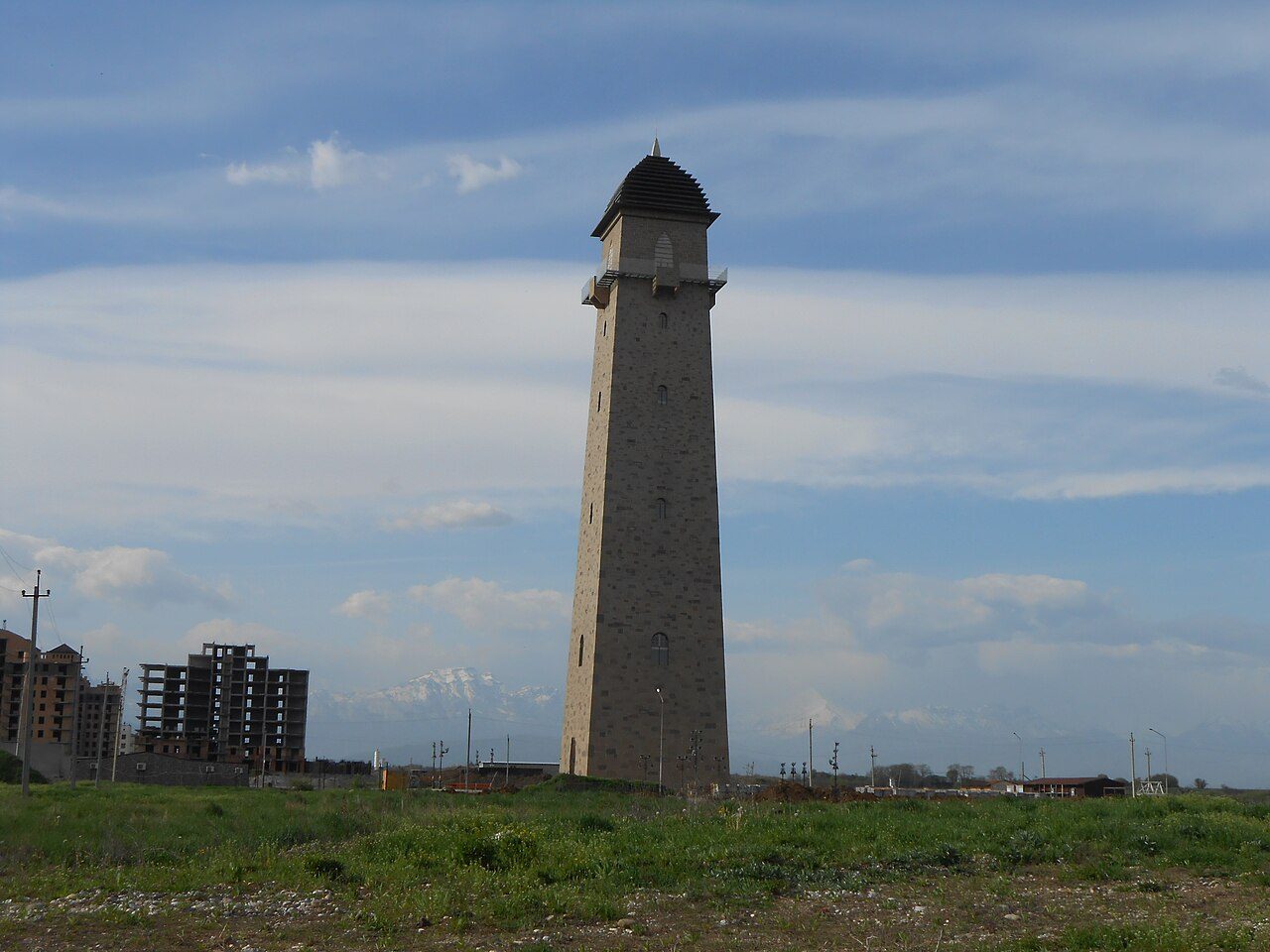
Egikal Tower Complex
Clinging to the wind-scoured southern flanks of Mount Tsey-Loam, the medieval citadel of Egikal stands as an open-air testament to classical Vainakh stone architecture. Developed between the 12th and 17th centuries as an ancestral cradle for prominent Ingush clans, this mountain stronghold controlled vital strategic passages through the Assa Gorge until its abrupt, forced abandonment during the 1944 Soviet deportations. The settlement's skyline is dominated by a slender, five-tiered combat tower (*vov*) soaring nearly thirty meters, topped with a stepped pyramidal roof of black slate and overhanging defensive machicolations. Clustered below this sentinel are dozens of two- and three-story flat-roofed residential complexes (*gala*) and gabled above-ground stone crypts, their dry-laid limestone blocks still marked by ancient petroglyphs and the handprints of master masons. Walking the unpaved terraces between these skeletal ruins, you are immersed in a profound alpine silence occasionally cut by the high-altitude winds channeling through the valley. The weathered ochre and grey stone walls cast long, dramatic shadows against the emerald slopes, contrasting sharply with the snow-capped Caucasus peaks in the distance. Peering through the narrow arrow slits of the combat tower or standing beside the dry mortar of the ancestral crypts, the tactile weight of isolation and resilience is palpable, offering an unfiltered encounter with a fortress society built entirely to master an unforgiving landscape.