
 New added
Uplistsikhe Cave
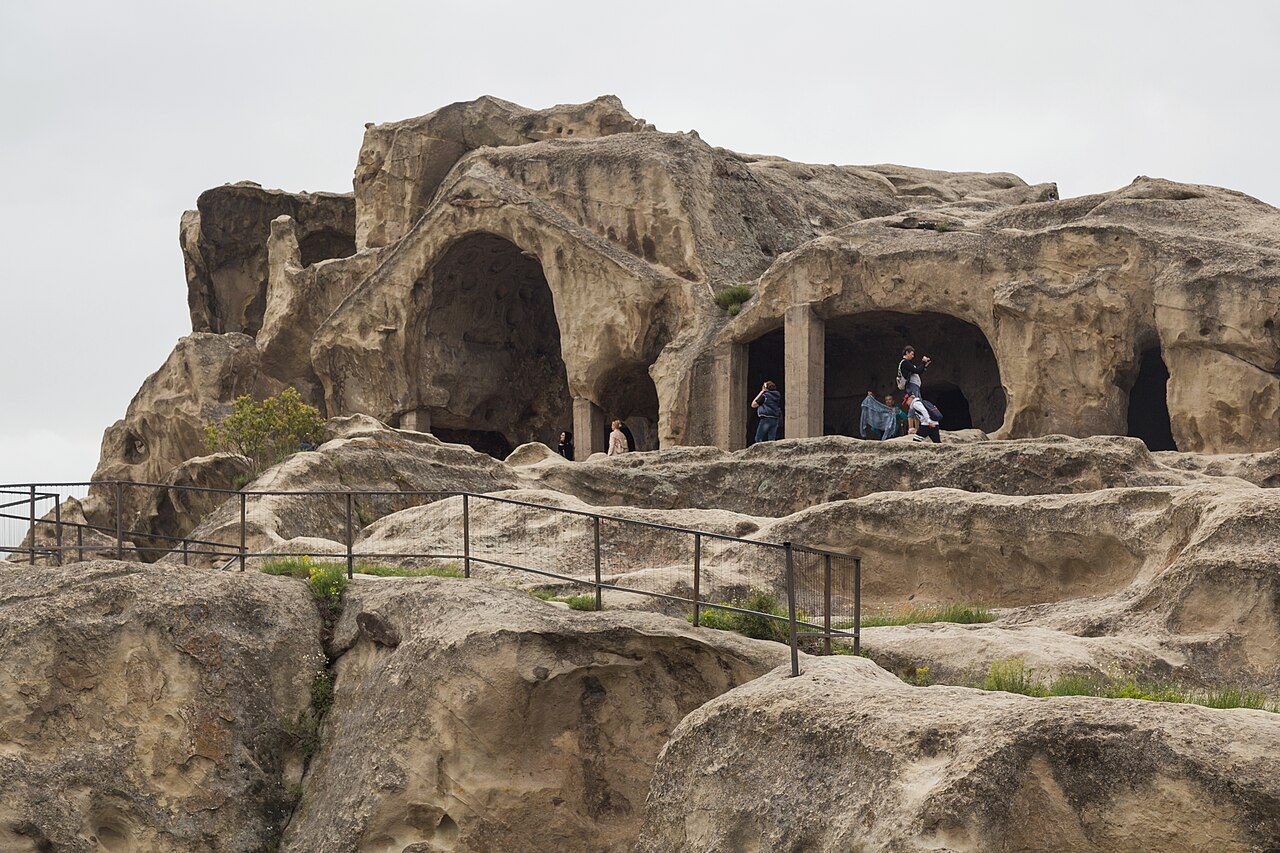
Carved into a high rocky massif above the Mtkvari River near Gori, Uplistsikhe—the "Lord’s Fortress"—dates to the late Bronze Age, around 1000 BCE, flourishing for centuries as Caucasian Iberia’s premier pagan sanctuary. Long before Christianity took root in the 4th century, this rock-cut settlement served as a major trade nexus along the northern Silk Road, later becoming a fortified redoubt for medieval monarchs, including Queen Tamar, during the 13th-century Mongol incursions. At its zenith, the complex encompassed over 700 chambers hewn directly into the pale, calcified sandstone, though only 150 survive today. Dominating the pagan caves stands the 10th-century Uplistsuli Church, a stark basilica of red brick and fieldstone erected atop an ancient temple foundation. Ascending the tiered terraces, visitors trace deep parallel ruts carved into the rock by ancient chariot wheels before stepping into Queen Tamar’s Hall. Inside, the ceiling reveals intricate faux-coffered vaulting chipped entirely by hand from the bedrock, complete with a central aperture designed to vent hearth smoke. A brisk wind whips up from the river gorge as travelers descend through a narrow, 30-meter escape tunnel hollowed through the mountain’s core down to the water’s edge. Standing along the exposed upper precipice, one is surrounded by sacrificial pits, grooved wine presses, and arched subterranean vaults, all overlooking the sweeping, arid expanse of the Shida Kartli valley.