 New added
Church of St George Lalibela
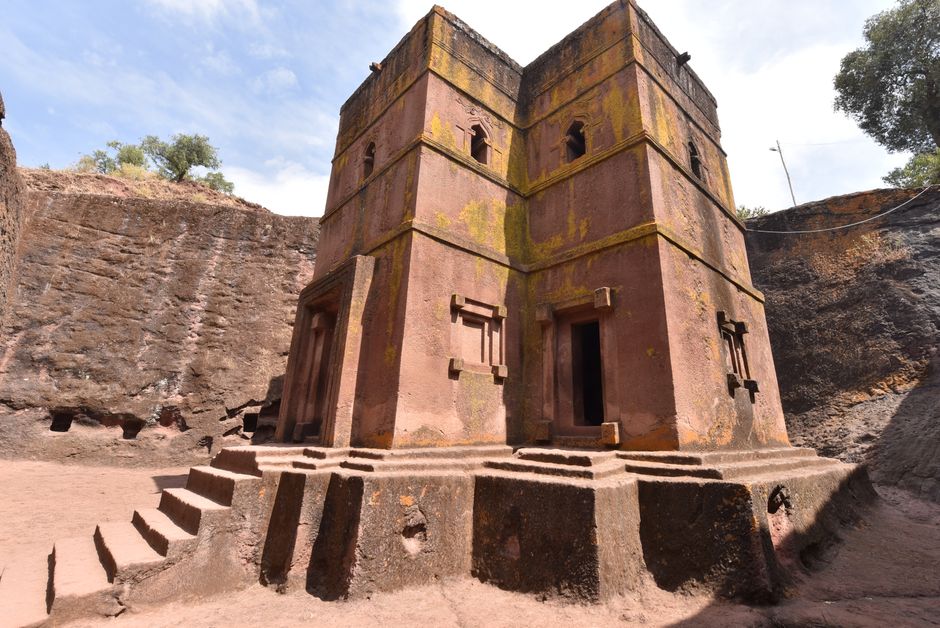
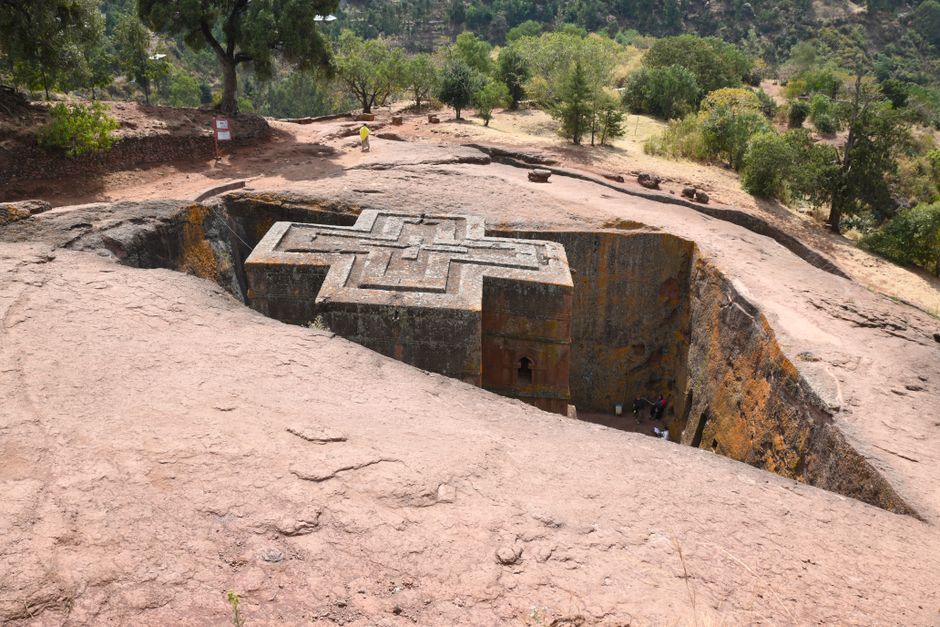
Carved directly downward into a deep trench of reddish-pink volcanic tuff, the early 13th-century Church of St. George (Bete Giyorgis) represents the architectural zenith of the Zagwe dynasty under King Gebre Mesqel Lalibela. Local lore holds that Ethiopia's patron saint personally oversaw the excavation after chiding the monarch for omitting a shrine in his honor. Unlike the interconnected subterranean caverns elsewhere in the royal complex, this monolithic sanctuary stands in solitary perfection, chiseled from the top down out of a single piece of bedrock without a single grain of mortar. Viewed from the rim of the surrounding cliff, the flat roof dominates the gaze: an equilateral Greek cross etched with concentric relief carvings designed to channel highland rains safely down its twelve-meter-high facade. Reaching the foot of the church requires descending a sun-bleached trench and feeling through a pitch-black tunnel carved straight through the rock face. Stepping barefoot onto the woven rugs inside, the transition from the scorching plateau to the cool, incense-heavy interior is immediate and reverent. Sunlight filters sparingly through narrow, cruciform windows, illuminating faint Byzantine-style frescoes, brass processional crosses, and deep-toned arches. Here, resident Orthodox priests draped in white cotton *shamma* quietly guard an ancient olive-wood chest reputed to have been fashioned by King Lalibela’s own hands, grounding visitors in an unbroken lineage of medieval devotion.