 New added
Alcazar de Colon
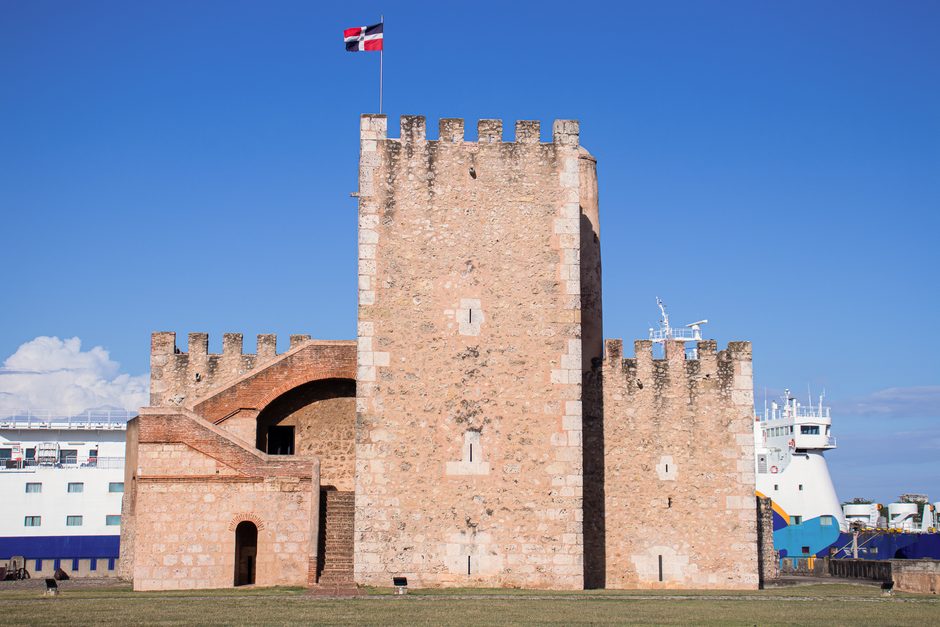
Erected between 1510 and 1514, the Alcázar de Colón served as the vice-regal seat for Diego Columbus—son of Christopher—and his noble Castilian wife, María de Toledo. Hewn from golden coralline limestone without a single iron nail, the fortified residence showcases a pivotal architectural fusion of Mudéjar craftsmanship, Isabelline Gothic vaults, and nascent Spanish Renaissance symmetry. From these stone halls overlooking the Ozama River, Spanish governors deliberated imperial policy and dispatched consequential expeditions that charted the mainland Americas, including those led by Hernán Cortés and Vasco Núñez de Balboa. Stepping off the sun-bleached stones of Plaza de España, visitors pass beneath deep, five-bay double loggias engineered to channel the Caribbean trade winds into the interior. The surviving twenty-two chambers—pared down from an original fifty-five—are arranged with evocative period rigor, displaying sixteenth-century Flemish tapestries, carved walnut four-poster beds, and hammered silver reliquaries. Walking across cool terracotta tiles, you experience the stark sensory contrast between blinding tropical light and the hushed, shaded austerity of the court. Leaning against the second-story balustrade, the textured coral walls framing views of the river, the modern city melts away into the physical origins of early colonial rule.