 New added
El Tatio Geysers
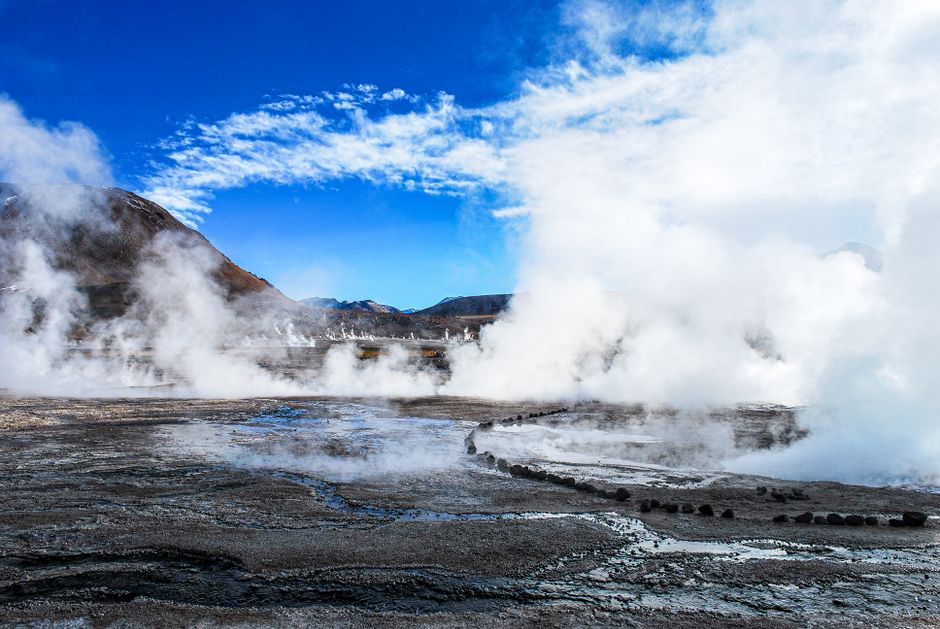
Perched 4,320 meters above sea level within the volcanic spine of the high Andes, El Tatio draws its name from the Kunza language of the indigenous Lickanantay, translating to "the grandfather who cries." Long revered by native pastoralists as a sacred, breathing manifestation of subterranean spirits, this volatile caldera later challenged twentieth-century industrial ambitions. In the 1920s and again during 1960s state-sponsored exploration by CORFO and the United Nations, engineers drilled deep into the crust to harness geothermal power, only to abandon the project when the corrosive brine destroyed their machinery. Spanning over ten square kilometers, the basin contains more than 80 active geysers and hundreds of boiling fumaroles, preserving its status as the largest geothermal field in the Southern Hemisphere. Visitors encounter a primeval spectacle best witnessed in the biting, sub-zero dawn, when subterranean water hits the freezing Altiplano air. Colossal plumes of pressurized vapor erupt up to ten meters high, hissing rhythmically against the silence of the high desert. Mineral-rich runoffs paint the barren ground in surreal aprons of rust-red iron, sulfurous yellow, and chalky white silica sinter. The earth trembles softly underfoot as slate-gray mud pots burble violently beside shallow thermal channels. Moving through the dense, sulfur-scented steam, travelers feel the dramatic shock between the numbing mountain cold and the sudden, radiant heat escaping from the core of the Andes.