
 New added
1 / 2
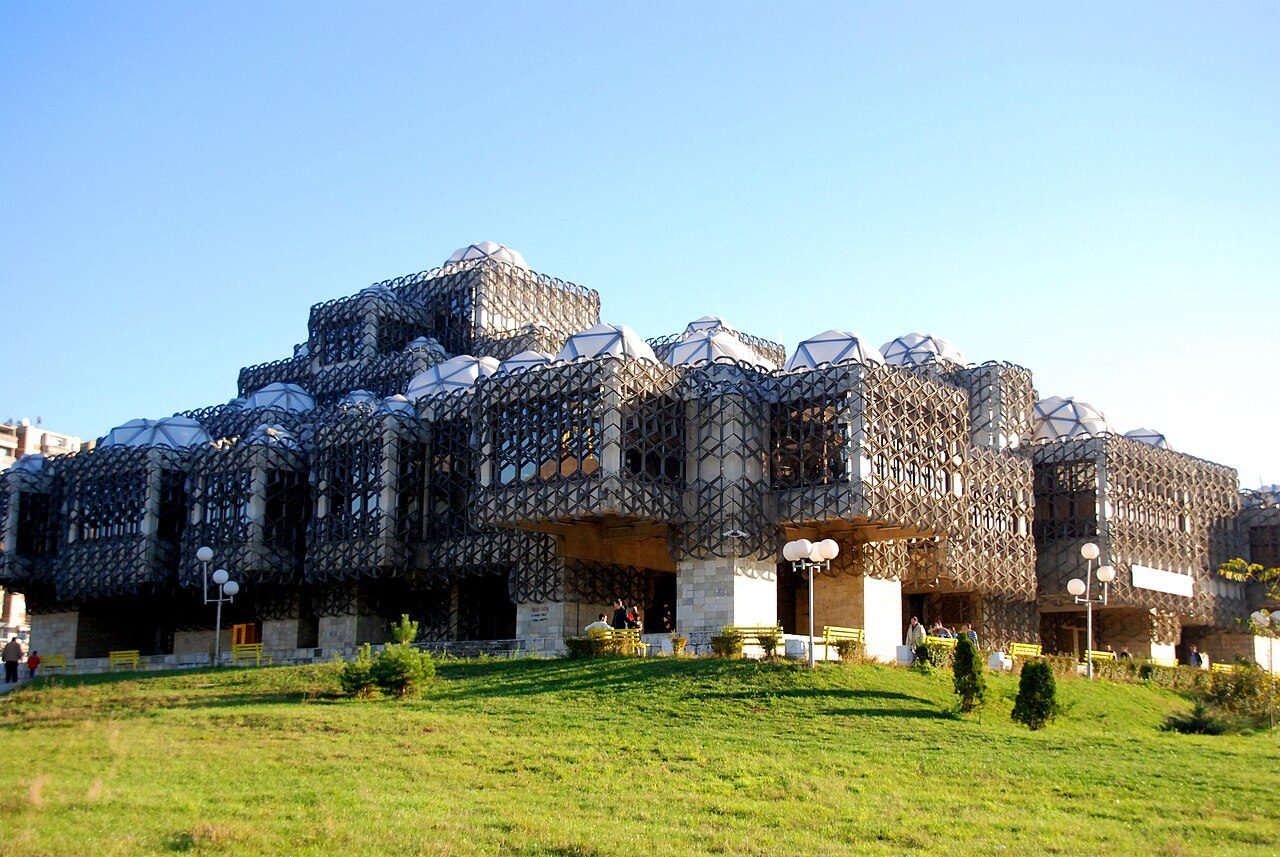
National Library of Kosovo
Designed by Croatian architect Andrija Mutnjaković and inaugurated in November 1982, this Yugoslav-era monument merges unapologetic Brutalism with regional Byzantine and Ottoman idioms. Its exterior presents a striking architectural riddle: 99 translucent acrylic domes crown an asymmetrical cascade of concrete cubes, all enveloped in a heavy, hand-cast aluminum fishnet lattice. While the mesh resembles protective chainmail, Mutnjaković conceived it as an homage to Ottoman *mashrabiya* screens, diffusing the Balkan sun into soft interior light. The building’s tumultuous history echoes Kosovo’s recent past, having served as an artillery depot and military command post during the 1999 conflict before returning to its academic purpose. Standing at the threshold of the grand atrium, visitors leave behind Pristina's bustling university district and step onto sweeping marble mosaics laid out in intricate geometric rosettes. Light filters from the largest central dome high above, casting pale geometric shadows across raw exposed aggregate and rich timber accents. The silence here is punctuated only by turning pages, as students and scholars fill the subterranean amphitheater-style reading rooms beneath original acoustic baffles. To wander through these vaulted halls, which house over two million preserved texts, is to experience a radical fortress of knowledge that feels simultaneously ancient, dystopian, and profoundly resilient.
More in Pristina
Photo credits (3)
- Arianselmani, CC BY-SA 3.0, via Wikimedia Commons
- Robot8A, CC BY-SA 4.0, via Wikimedia Commons
- Diego Delso, CC BY-SA 3.0, via Wikimedia Commons