 New added
Bryggen Bergen
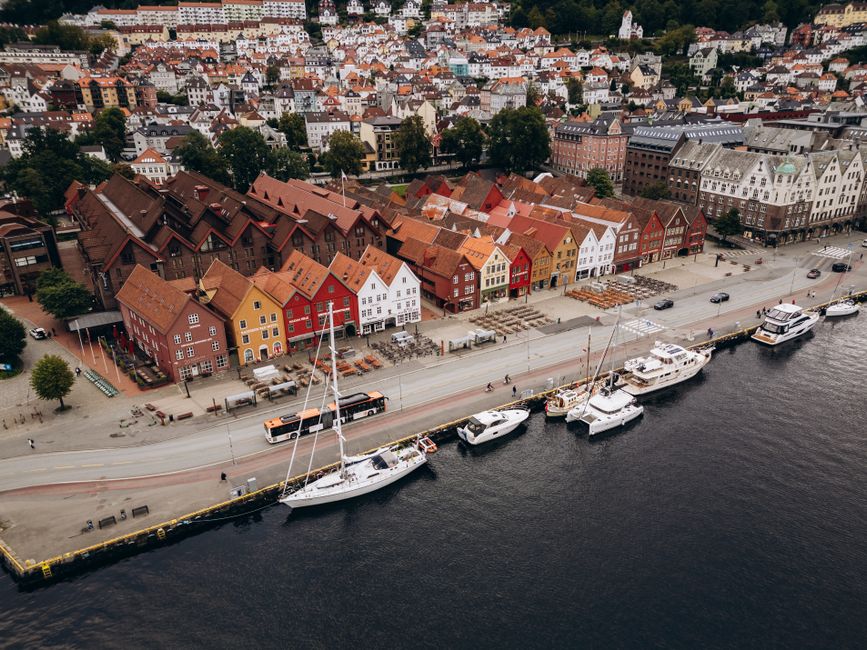
Established around 1360 as a crucial commercial enclave of the Hanseatic League, Bryggen served for centuries as the North Sea epicenter of the lucrative dried stockfish and grain trades. Following a catastrophic fire in 1702, the quarter was faithfully reconstructed along its original medieval foundations, preserving an extraordinary vernacular of interlocking wooden log construction. Today, a striking rhythm of steep, gabled facades faces the waters of Vågen harbor, painted in historic coats of iron-ore red, ochre yellow, and stark white. Settling unevenly into the marshy waterfront over centuries, these three-story timber tenements tilt at precarious angles against one another like weathered books on a shelf. Ducking into the narrow wooden alleyways running between the buildings, you leave the harbor breeze behind for the dense, resinous aroma of pine tar and aged cedar. Footsteps creak along raised plank gangways, where medieval crane hoists and iron pulleys still protrude from upper loft windows once used to pack salted cod into barrels. Within this shadowed labyrinth of leaning galleries, former merchant counting houses and communal halls now shelter silversmith ateliers, textile workshops, and tucked-away cafes. Running a hand along the rough-hewn log walls reveals original merchant marks carved into the beams by German traders six centuries ago.