 New added
Tivoli Gardens Copenhagen
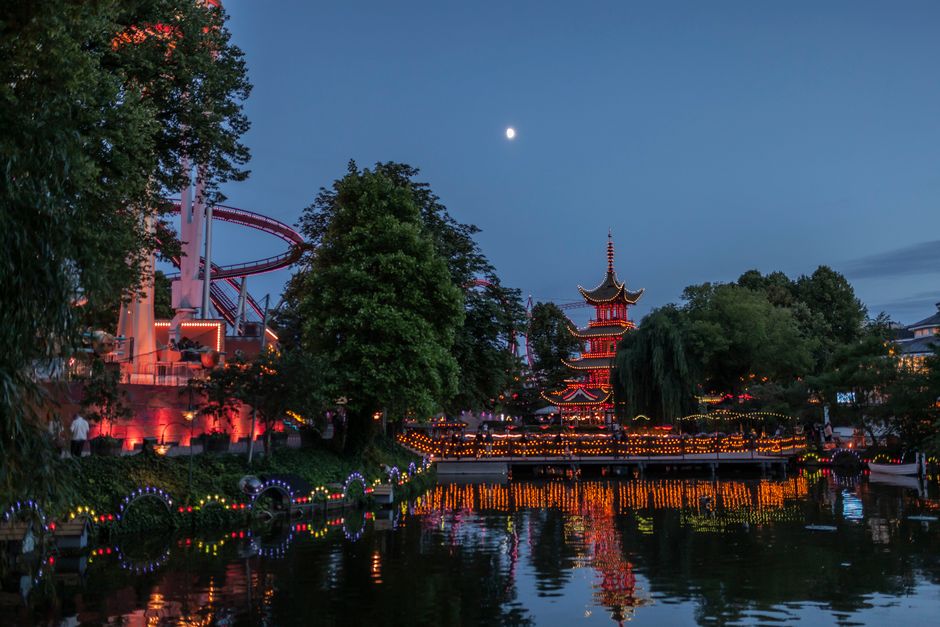
When founder Georg Carstensen persuaded King Christian VIII to grant a charter along Copenhagen’s fortified ramparts in 1843, he famously argued that "when the people amuse themselves, they do not think about politics." Today, Tivoli endures as an evolving nineteenth-century pleasure garden where romantic landscape design meets theatrical orientalism. Its architectural centerpiece, the Moorish Palace, gleams with stark white colonnades, scalloped arches, and illuminated onion domes. Just across the formal lawns stands Vilhelm Dahlerup’s 1874 Pantomime Theatre—a whimsical Chinese-style pagoda where a mechanical peacock unfurls its fan of painted tail feathers to reveal the commedia dell'arte stage. These very pavilions and exotic groves famously inspired Hans Christian Andersen to pen his 1843 fairy tale, *The Nightingale*. Crossing the threshold from Vesterbrogade, visitors trade the modern city for a twilight reverie lit by more than 100,000 custom-designed incandescent bulbs mirrored on Tivoli Lake. The air smells intensely of caramelized sugar and warm *brændte mandler* (roasted cinnamon almonds). Beneath weeping willows, the mechanical clatter and joyful shrieks of *Rutschebanen*—a 1914 timber coaster still controlled by an onboard brakeman—blend with the sharp brass and snare cadence of the Tivoli Youth Guard marching in scarlet tunics and bearskin caps. Standing amid the manicured tulip beds and nostalgic carousels, travelers encounter a rare, perfectly preserved bridge between Denmark’s Golden Age and modern Nordic whimsy.