
 New added
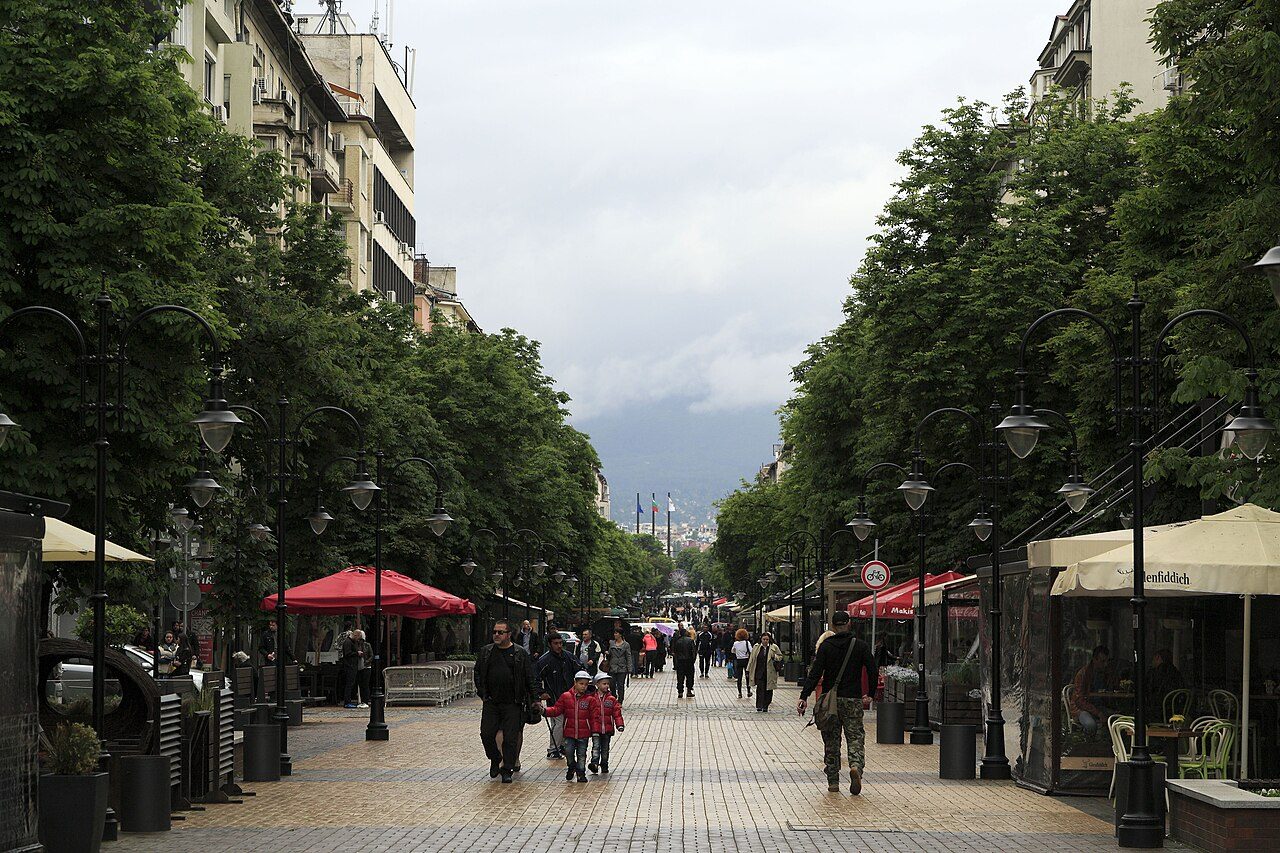
Vitosha Boulevard
Tracing a route redesigned in the wake of Bulgaria’s 1878 Liberation, Vitosha Boulevard—affectionately known as *Vitoshka*—evolved from a muddy Ottoman lane into Sofia’s premier European showcase. The promenade’s visual character is defined by early 20th-century ambition, lined with Viennese Secessionist and Neo-Baroque townhouses painted in muted ochre, sage, and dusky rose. Intricate wrought-iron balconies, sculpted cartouches, and mansard cornices recall the interwar modernization of the Bulgarian Tsardom. The boulevard sits between two distinct ideological anchors: to the north rises the copper-domed neo-Byzantine St. Nedelya Cathedral, site of the tragic 1925 assassination attempt, while the southern end opens toward the monumental late-Soviet geometry of the National Palace of Culture (NDK). Strolling the pedestrianized flagstones, you are greeted by one of Eastern Europe’s most arresting urban vistas: the jagged, snow-dusted mass of Mount Vitosha rising dramatically as a natural backdrop framed directly between the rooftops. Retro cast-iron streetlamps and flower-draped kiosks punctuate the walkway, while the aroma of spiced *banitsa* pastries and roasted coffee drifts from sidewalk cafés. The clink of porcelain cups and the melodies of street violinists cut through the ambient chatter as locals linger beneath striped terrace awnings, anchoring Sofia’s unhurried Mediterranean-style café ritual against the crisp alpine air flowing down from the peak.
More in Sofia
Photo credits (3)
- Falk2, CC BY-SA 4.0, via Wikimedia Commons
- Nikolai Karaneschev, CC BY 3.0, via Wikimedia Commons
- Todor Bozhinov / Тодор Божинов, CC BY-SA 3.0, via Wikimedia Commons