
Wroclaw
Spreading across twelve islands on the Odra River in Lower Silesia, Wroclaw moves to the rhythm of water and university life. Walking its cobblestones reveals a rich blend of architectural eras, where quiet riverside embankments suddenly open onto grand public plazas. Over one hundred bridges tie the city together, giving its streetscape an intimate character shaped by water reflections and riverside willows. Established in the tenth century by Bohemian Duke Vratislaus and subsequently influenced by Polish, Habsburg, and Prussian governance before 1945, the city wears its layered past openly. On Ostrów Tumski, the oldest quarter, twin spires of the Gothic Cathedral of Saint John the Baptist rise above gas-lit lanes. Westward, the expansive Rynek showcases the ornate gables and astronomical clock of the late-Gothic Old Town Hall, while north of the center, Max Berg’s 1913 Centennial Hall demonstrates pioneering early-twentieth-century concrete engineering. Daily routines gravitate toward Hala Targowa, a 1908 covered market where vendors sell smoked cheeses, pickled cucumbers, and plates of steaming pierogi beneath concrete arches. Across the pavement, travelers encounter hundreds of small bronze dwarfs, whimsical sculptures rooted in the Orange Alternative, a satirical 1980s anti-communist protest movement. May through September brings long daylight hours ideal for walking, and Wroclaw’s dense tram network provides simple, reliable transit when exploring neighborhoods further from the center.
Read more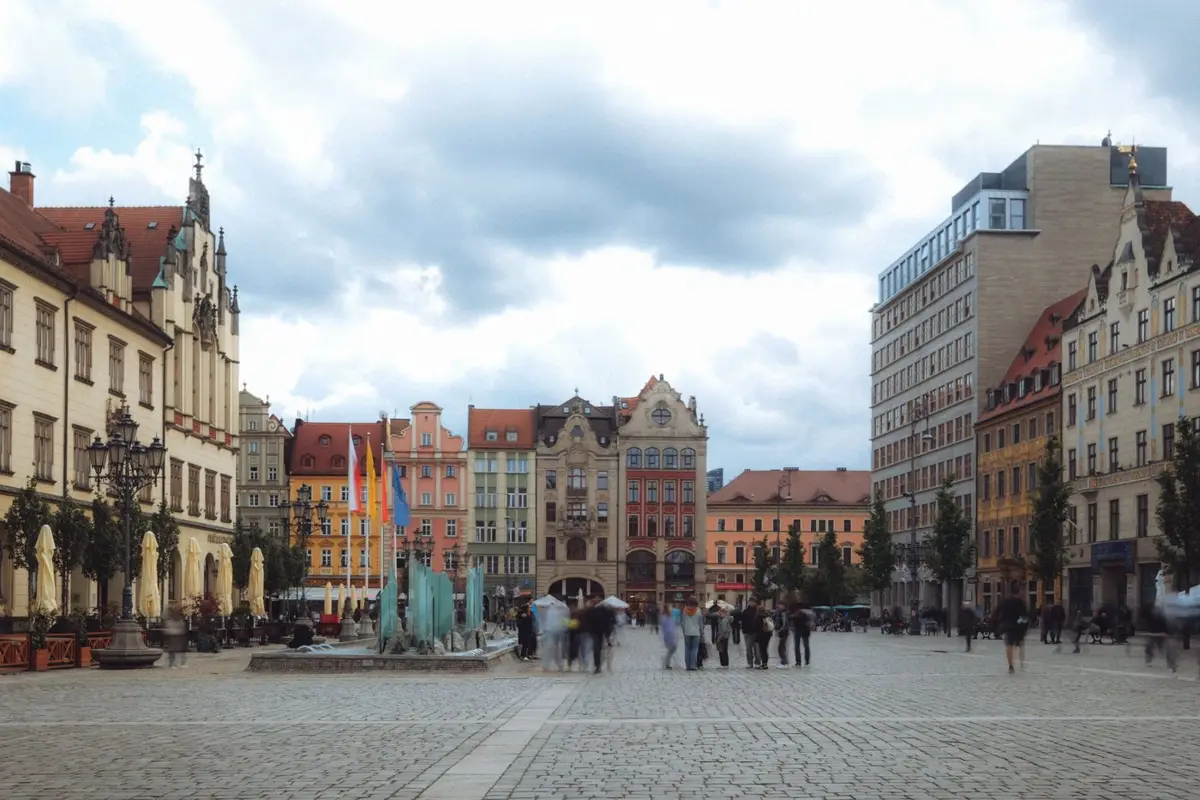
What's on in Wroclaw
One of Europe's most picturesque Christmas markets, filling Wrocław's Main Market Square with wooden chalets, festive illuminations, and regional gastronomy.
Official infoEvents are collected automatically from the web. Dates can change, so please check the official information before you travel.