Vik
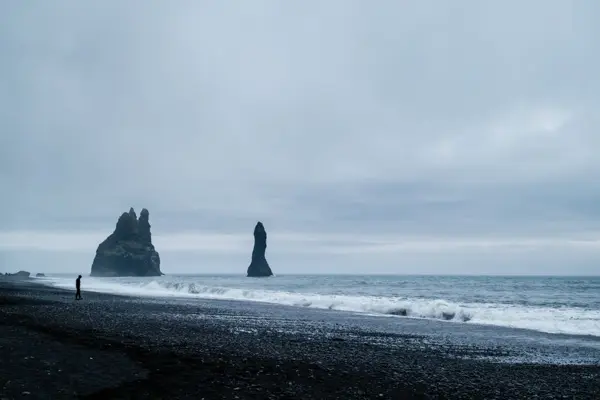
Vík í Mýrdal sits at the southernmost tip of Iceland, wedged between the crashing North Atlantic surf and the towering green slopes of Mount Reynisfjall. Walking down its handful of quiet streets means feeling the immediate presence of raw geology: salty sea wind sweeps across black basalt gravel, northern fulmars wheel across steep cliff ledges overhead, and the massive ice cap of Mýrdalsjökull looms silently to the north. Established as a trading post in 1887, Vík developed as an isolated outpost shaped by harsh coastal elements. Up on the hillside stands Víkurkirkja, a red-roofed church built in 1934 that serves as an emergency shelter should the nearby subglacial Katla volcano erupt. Down near the shore, the Brydebúð warehouse, constructed in 1895, houses the Kötlusetur heritage museum, documenting the area volcanic history. Just beyond the village edge lie the Reynisdrangar sea stacks, sharp basalt pillars rising straight from the surf, and the dark sweep of Reynisfjara beach with its towering columnar basalt cliffs. Evenings revolve around hearty bowls of traditional lamb soup and craft beer brewed at Smiðjan Brugghús, while the local wool center Víkurprjón preserves the region knitting heritage. During the summer solstice, residents celebrate under the midnight sun with coastal bonfires and accordion music. The village itself is small enough to navigate entirely on foot, though a rental car is vital for reaching trailheads. Visit the shoreline in the early morning before nine to experience the coast before the wind picks up and day-tour buses arrive from Reykjavík.
Read more