
Pretoria
Pretoria rests in a warm, sheltered valley flanked by the low ridges of the Magaliesberg mountains in Gauteng, with the Apies River winding through its center. Walking its wide streets feels calm and unhurried compared to neighboring Johannesburg. The rhythm is bureaucratic and academic, shaped by sprawling embassies, university grounds, and expansive public lawns, all sheltered beneath a vast canopy of jacaranda trees that shade the pavement. Established in 1855 by Marthinus Pretorius, the city preserves layered chapters of South African history. Church Square anchors the center, bordered by the late-Victorian Palace of Justice where Nelson Mandela stood trial in 1964. Rising above the city on Meintjieskop, Sir Herbert Baker’s sandstone Union Buildings house the executive government, looking out over terraced gardens and a nine-meter bronze likeness of Mandela. Across the southern hills stands the granite monolith of the Voortrekker Monument, while the eastern quarter of Hazelwood offers a sharp contrast, filled with modern design stores and open-air sidewalk bistros. Daily life revolves around braais and morning markets. On weekends, residents gather at the Hazel Food Market in Menlo Park for spiced biltong, fresh sourdough, and syrupy koeksisters. The most rewarding time to arrive is October, when spring turns the tree-lined avenues into tunnels of lilac blossoms. The easiest way to travel is by taking the high-speed Gautrain into Hatfield station, using registered rideshare applications from there to navigate between sights and residential dining hubs.
Read more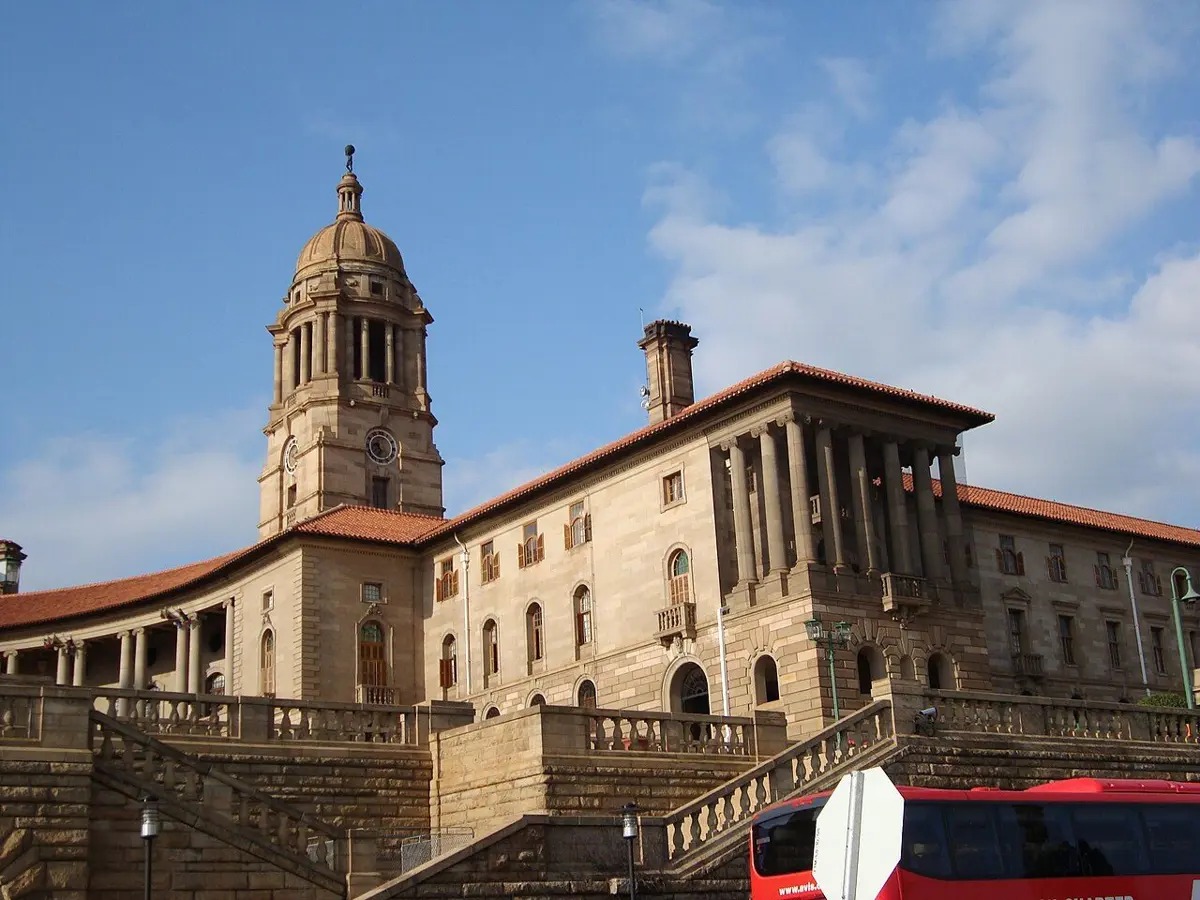
What to see in Pretoria
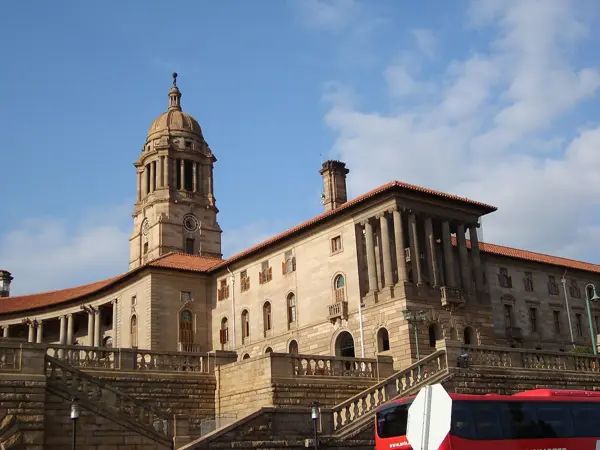
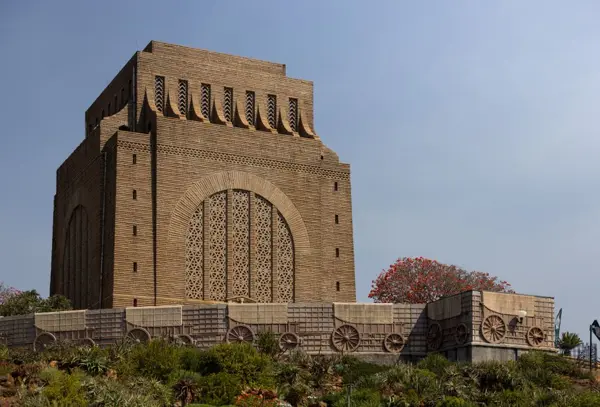
Photo credits (3)
- Utilizator:Țetcu Mircea Rareș at ro.wikipedia, CC BY-SA 2.5, via Wikimedia Commons
- JMK, CC BY-SA 3.0, via Wikimedia Commons
- JMK, CC BY-SA 4.0, via Wikimedia Commons