Monaco-Ville
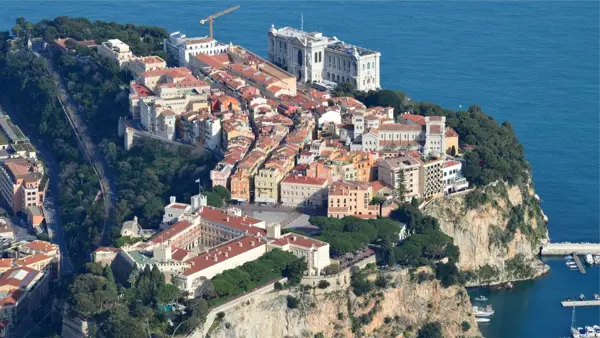
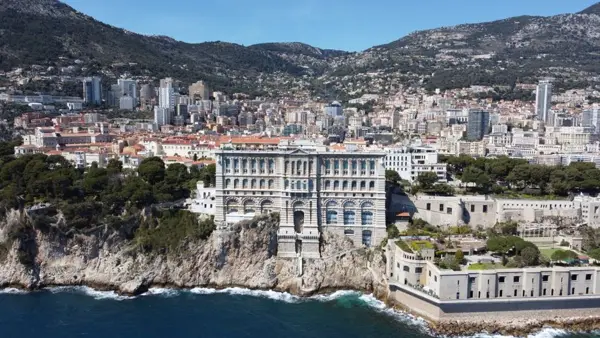
Perched on a sheer limestone headland known as Le Rocher, Monaco-Ville projects directly into the Mediterranean along the French Riviera, framed by the steep slopes of the Maritime Alps. Walking its pedestrianized alleys feels remarkably peaceful compared to the bustling superyacht harbor below. Tall, pastel-painted residences line narrow passages that open onto fortified ramparts, where sea air mixes with the scent of maritime pines and sea views stretch east toward Italy. The district became the seat of the Grimaldi dynasty in 1297, when François Grimaldi seized the Genoese fortress atop the rock. That stronghold evolved into the Prince's Palace, recognizable by its crenelated towers and Italianate Renaissance courtyard. A short walk along the ramparts leads to Saint Nicholas Cathedral, constructed from pale La Turbie limestone in 1875, which houses the tombs of past princes and Princess Grace. Further east, the Oceanographic Museum, inaugurated by Prince Albert I in 1910, perches dramatically on the cliff face, showcasing historic marine research and deep-sea specimens within a monumental neoclassical structure. Locals still gather at small neighborhood bakeries for barbagiuan, a crisp, deep-fried pastry filled with Swiss chard, ricotta, and herbs, eaten in abundance during Monaco National Day celebrations on November 19. Because tour groups concentrate around the palace for the changing of the guard ceremony at midday, the best time to wander the lanes is late afternoon or early evening. Access is easiest on foot via the brick-paved Rampe Major path from Place d'Armes, or through the public elevators cut into the rock face from Port Hercule.
Read more