
Kashan
Perched on the arid fringe where the Dasht-e Kavir desert meets the eastern slopes of the Karkas Mountains, Kashan greets travelers with dust-colored adobe walls and subterranean calm. Walking through its historic core feels like navigating a network of sun-baked mud-brick lanes, where heavy timber doors conceal deep courtyards cooled by badgirs, traditional windcatchers drawing in mountain air. Human settlement here reaches back over seven millennia at the Tepe Sialk mounds, though the town reached its architectural peak during the Safavid and Qajar eras. In the central quarters, the nineteenth-century Tabatabaei House reveals intricate stucco reliefs and sunken courtyards built to escape the desert heat. Nearby, the symmetrical Agha Bozorg Mosque integrates a sunken theological school below a vaulted brick dome. On the southwestern outskirts lies Fin Garden, a green enclave fed by the ancient Sulaymaniyah Spring and the 1852 site of prime minister Amir Kabir's assassination. Daily rhythm centers on the historic covered bazaar, renowned for the soaring stalactite dome of Timcheh-ye Amin od-Dowleh and bowls of abgoosht-e loobia, a local lamb and white bean stew. Each May, the annual rosewater distillation brings carts of Damask roses from nearby mountain villages straight to the market stills. Visit during April or May to catch this harvest, navigating the compact historic quarters entirely on foot and using local taxis for trips to outlying gardens.
Read more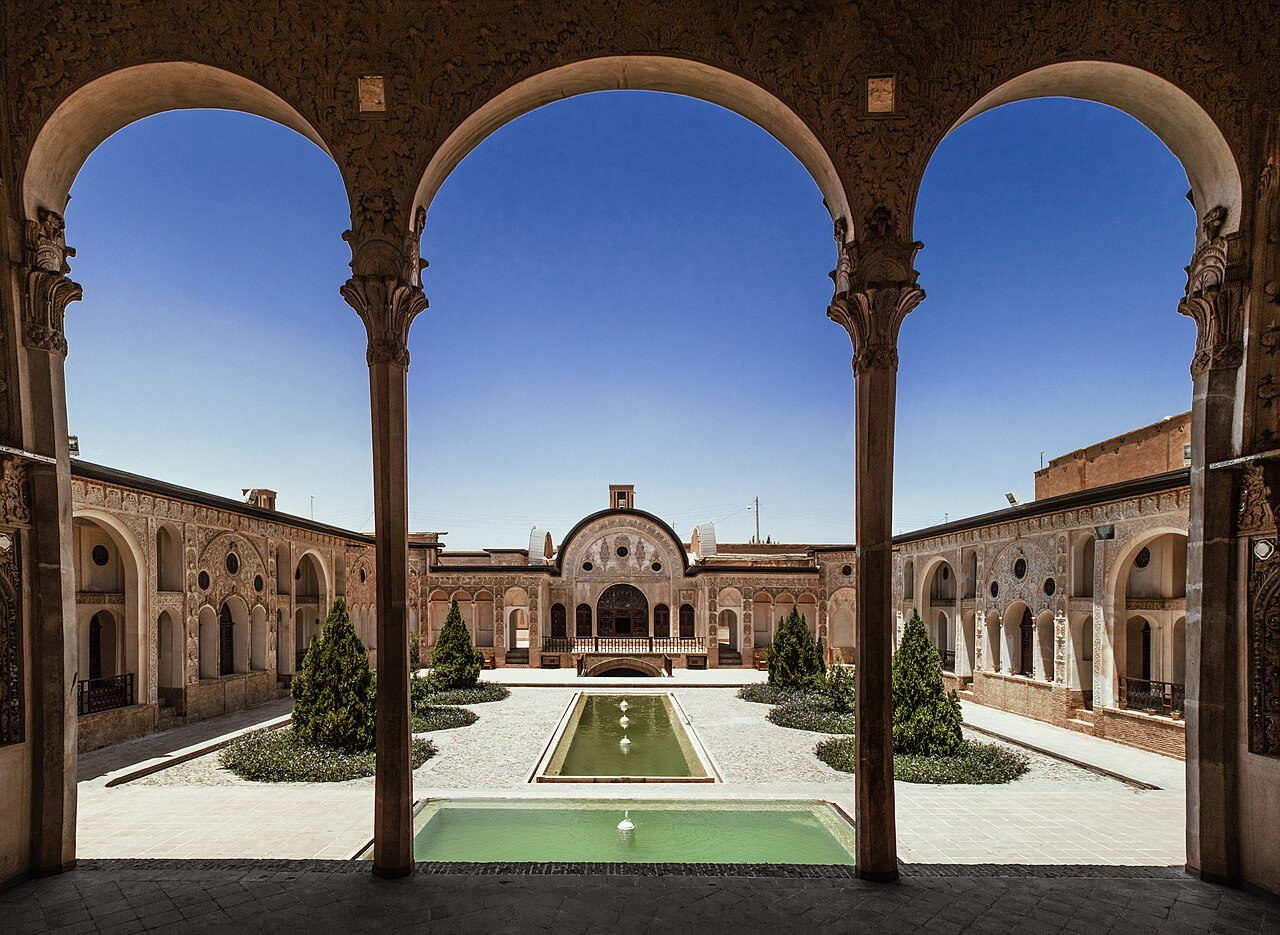
What to see in Kashan
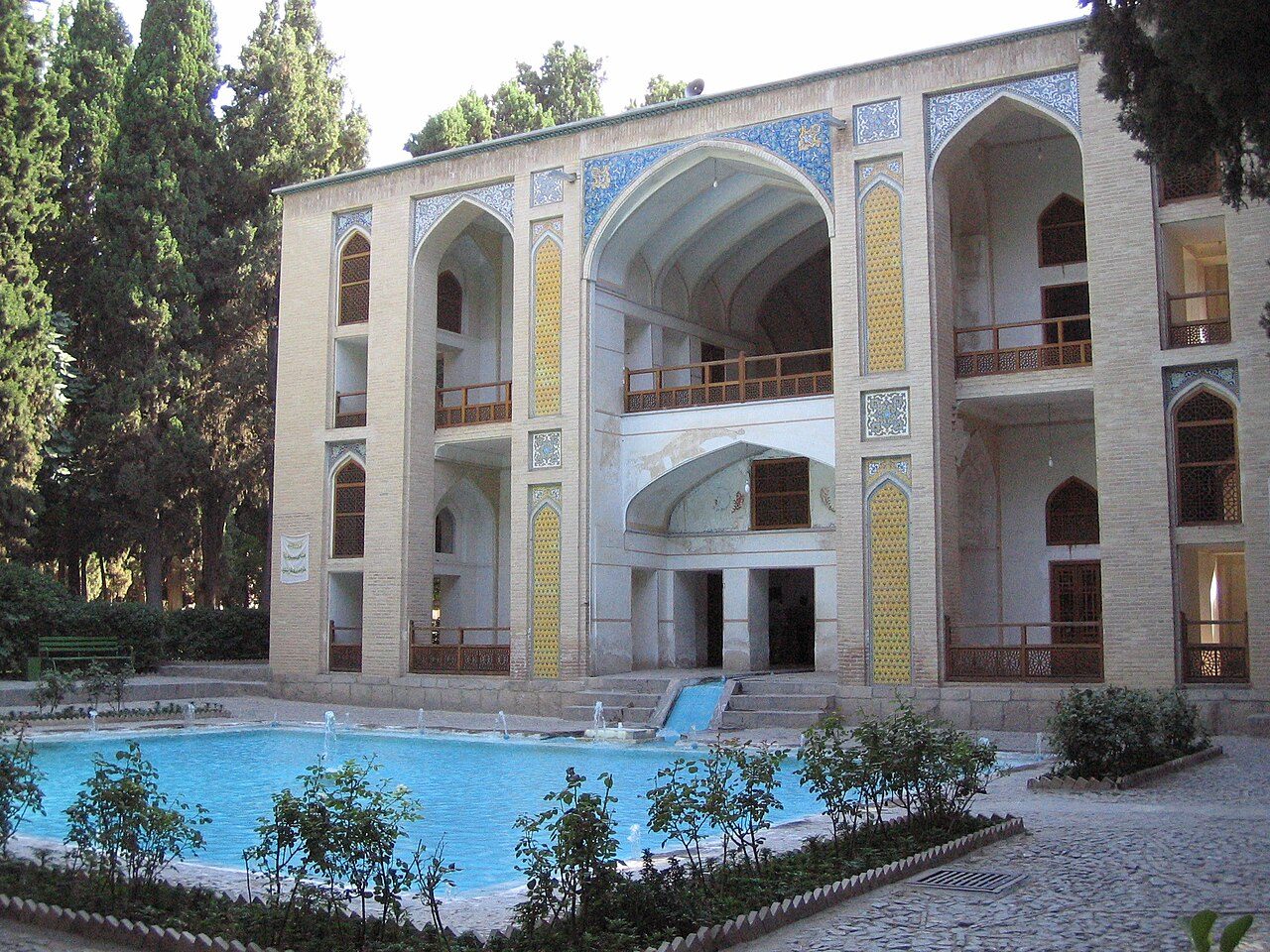
Photo credits (3)
- Baharyahya, CC BY-SA 4.0, via Wikimedia Commons
- Unknown author, CC BY-SA 2.5, via Wikimedia Commons
- Parsa 2au, CC BY-SA 4.0, via Wikimedia Commons