Karakol
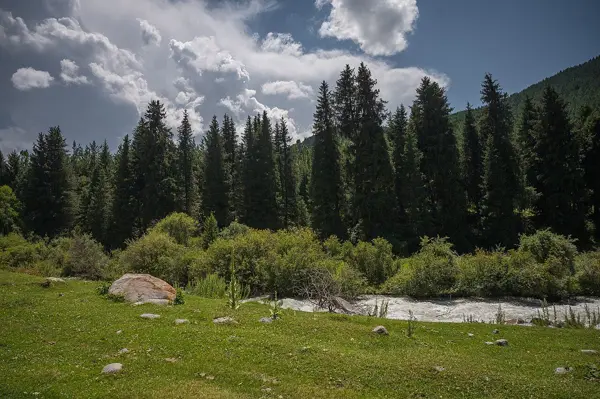
Karakol sits near the eastern edge of Lake Issyk-Kul, pinned against the jagged foothills of the Terskey Alatoo range. Walking its wide, unhurried grid feels distinctly like exploring a high-altitude frontier outpost. Tall poplars shade the cracked sidewalks, and irrigation channels trace dirt alleys bordered by whitewashed brick cottages and vintage Russian gingerbread houses with pastel blue window frames. Founded in 1869 as a Russian imperial garrison, the town absorbed varied cultural enclaves that shaped its architecture. The 1895 Holy Trinity Cathedral stands surrounded by gardens, its intricate wooden eaves and green onion domes famously assembled without metal nails. A short walk away, the 1910 Dungan Mosque showcases the craftsmanship of Chinese Muslim refugees, constructed like a Buddhist temple with curved dragon beam-ends and bright yellow and red eaves. Just north along the lake road, a dedicated museum marks the burial site of explorer Nikolai Przhevalsky, who died here in 1888 during his Central Asian surveys. Local food centers on ashlan-fu, a cold Dungan bowl of sliced starch and wheat noodles steeped in a tangy, garlicky vinegar broth and paired with deep-fried potato pies. On Sunday mornings at dawn, the livestock market outside town fills with herders in felt ak-kalpak hats negotiating horse and fat-tailed sheep sales through silent finger-grips hidden inside sheepskin sleeves. Plan your trip between July and September for snow-free alpine trails, and explore the compact center on foot or via ubiquitous shared marshrutka minibuses.
Read more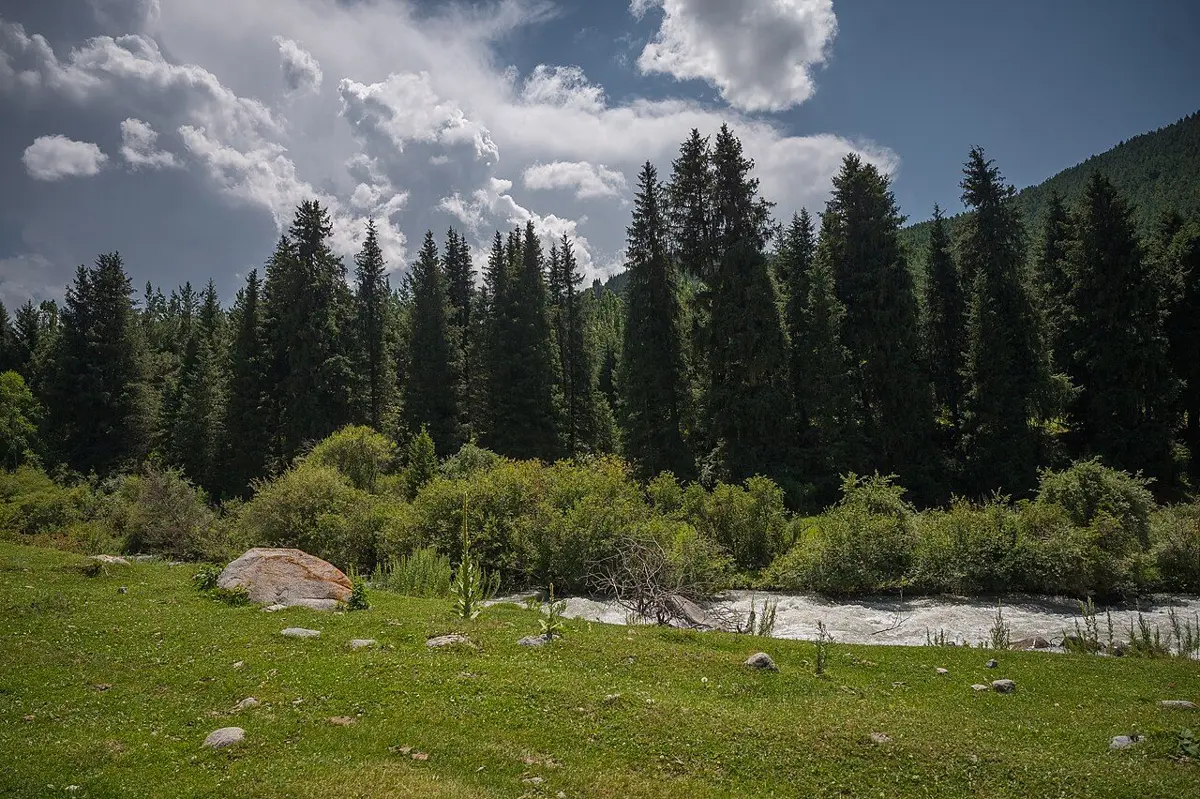
What's on in Karakol
Three-day electronic music festival in the snow-capped Tian Shan mountains featuring international DJs and winter outdoor activities.
Official infoEvents are collected automatically from the web. Dates can change, so please check the official information before you travel.