Jeju Island
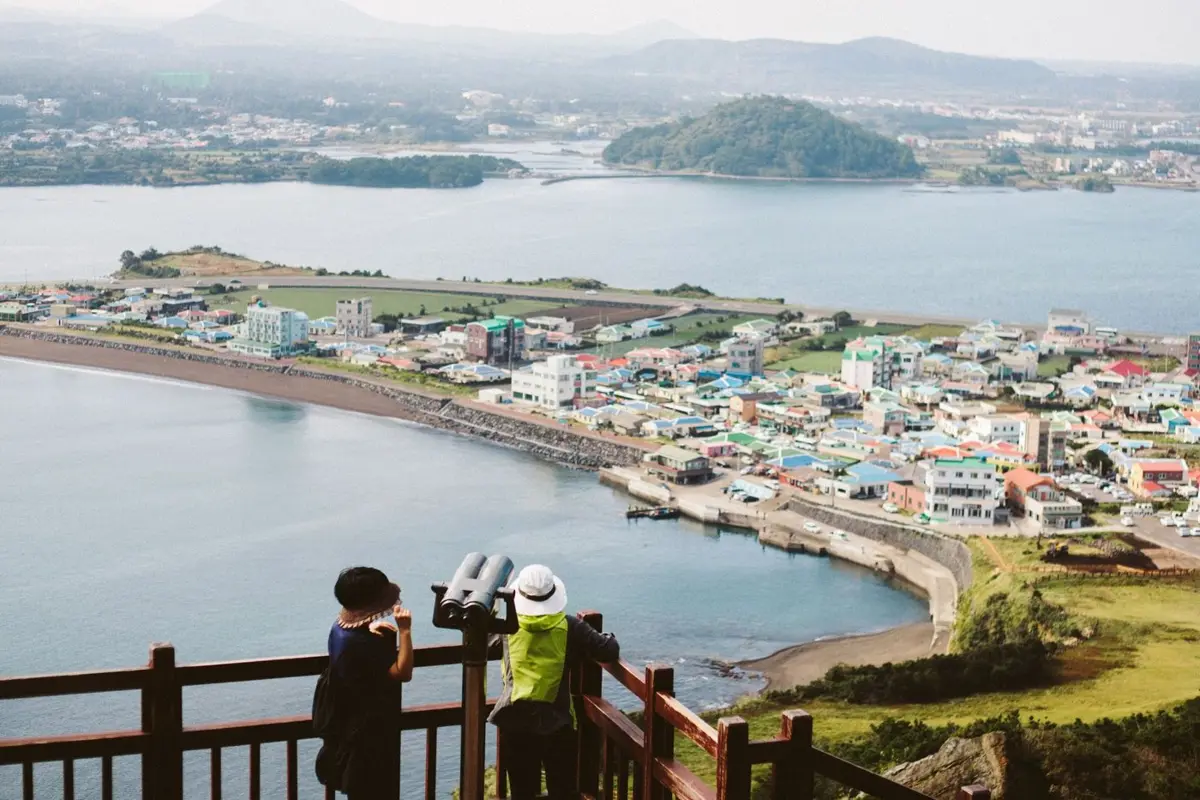
Rising out of the Korea Strait south of the mainland, Jeju is defined by black volcanic earth, persistent sea winds, and the broad slopes of Hallasan anchored at its center. Walking the coastal Olle trails, travelers tread past dark basalt walls that border bright tangerine orchards, with the crash of surf echoing against jagged rock shelves. The air smells of salt and pine, creating an atmosphere shaped entirely by cooling magma and restless tides. Long governed independently as the Tamna Kingdom before formal incorporation into the Joseon Dynasty in 1404, the island preserves an ancient, windswept heritage. On the eastern shore, the dramatic tuff cone of Seongsan Ilchulbong rises sheer above the ocean, formed by hydrovolcanic eruptions thousands of years ago. Inland, the cavernous chambers of Manjanggul Cave shelter massive multi-tiered lava columns, while the low thatched houses of Seongeup Folk Village demonstrate how residents historically engineered stone windbreaks against brutal typhoons. Daily life revolves around the sea and market tables. In the busy alleys of Dongmun Traditional Market, vendors grill thick cuts of local black pork over coals and pack crates of sweet hallabong citrus. Offshore, you can still spot the haenyeo, Jeju’s revered female divers who harvest abalone and sea cucumber without breathing equipment, preserving a centuries-old communal trade. Renting a car is the most reliable way to navigate between scattered coastal hamlets, and October is the ideal travel window, offering clear skies and slopes covered in silvery eulalia grass.
Read more