Coimbra
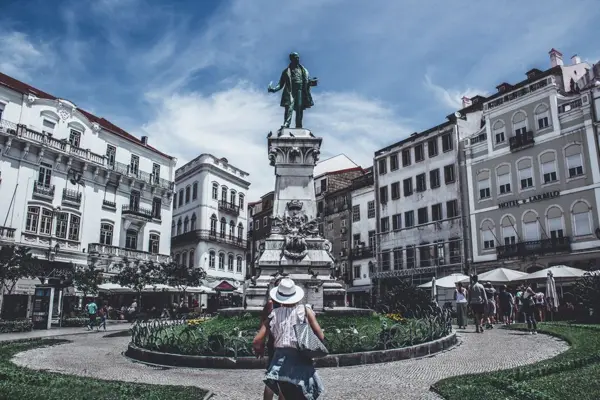
Rising sharply above the Mondego River in central Portugal, Coimbra balances academic prestige with provincial grit. Navigating the historic center requires scaling steep, stair-stitched alleys paved with slick limestone cobbles, where laundry hangs between terracotta facades and the resonance of Portuguese guitars drifts from student residences. It is an intensely vertical city, crowned by a hilltop academy and grounded by broad, shaded riverbanks. Selected as the kingdom capital in 1139 by King Afonso Henriques, the city preserves its medieval bones. High on the ridge, the University of Coimbra, established in 1290, houses the baroque Biblioteca Joanina, where a resident colony of bats protects eighteenth-century vellum books from wood-boring insects. Farther down the slope stand the crenellated fortress walls of the twelfth-century Sé Velha and the Arco de Almedina, an intact Moorish archway that opens into the lower quarter beside the royal Monastery of Santa Cruz. Locals gather at Mercado D. Pedro V for goat cheeses and almond-filled pastéis de Santa Clara, while taverns serve earthen bowls of chanfana, a wine-braised goat stew. Evenings belong to Coimbra fado, a solemn acoustic ballad tradition sung exclusively by men in black wool capes, culminating every May in the weeklong Queima das Fitas festival. Avoid driving the labyrinthine lanes; instead, explore on foot wearing grip-soled shoes, ideally during late spring or autumn when cool breezes ease the steep uphill climbs.
Read more