Bordeaux
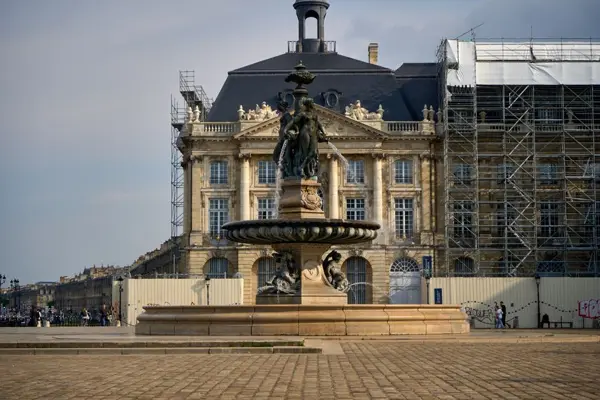
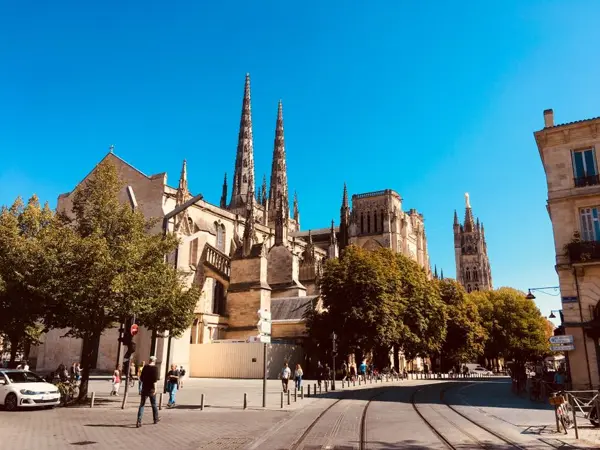
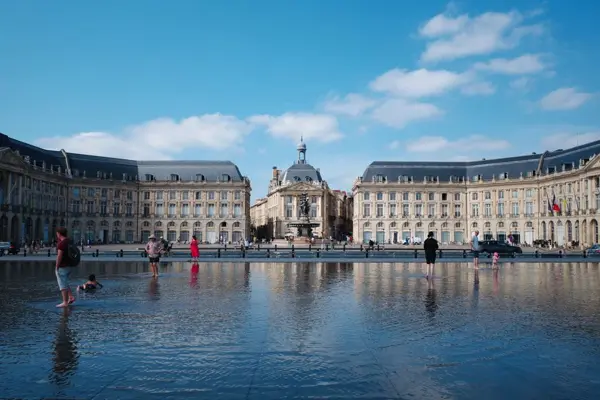
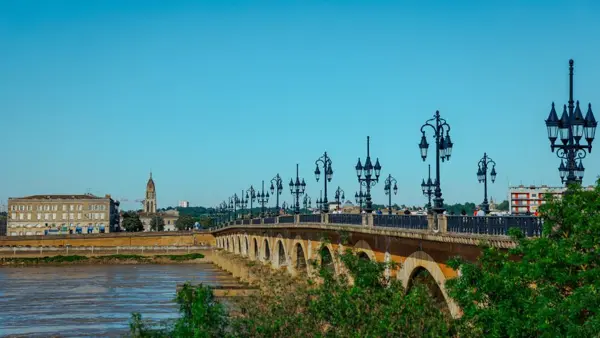
Bordeaux curls along a crescent bend of the Garonne River in southwestern France, an hour east of the Atlantic coast. Walking through the city reveals pale-gold limestone architecture carved during the eighteenth-century Enlightenment, when maritime trade enriched local merchants. Neoclassical facades line the riverfront, while an extensive pedestrian center invites wandering past wrought-iron balconies, bustling cafe terraces, and leafy public squares. Settled as Roman Burdigala and later held by the English following Eleanor of Aquitaine’s 1152 marriage, the port preserves distinct historical pockets. In the medieval Saint-Pierre district, cobbled alleys wind toward Gothic spires. Along the river, the symmetrical Place de la Bourse reflects in the granite basin of the Miroir d'eau, installed in 2006. Northward lies the Chartrons quarter, where wine merchants built cellars and residences in the seventeenth century, while the 1780 Grand Théâtre commands the Place de la Comédie with twelve monumental Corinthian columns. Local routine revolves around market stalls and regional bottles. Residents crowd the Marché des Capucins on weekend mornings to pair Arcachon basin oysters with crisp white wine, finishing with caramelized, rum-scented canelé pastries. Early autumn brings the energy of the grape harvest, celebrated riverside during the Bordeaux Fête le Vin festival. Because the city center is entirely flat, travel on foot or via the smooth tram network, timing walks for late afternoon when sunset illuminates the stone riverfront.
Read more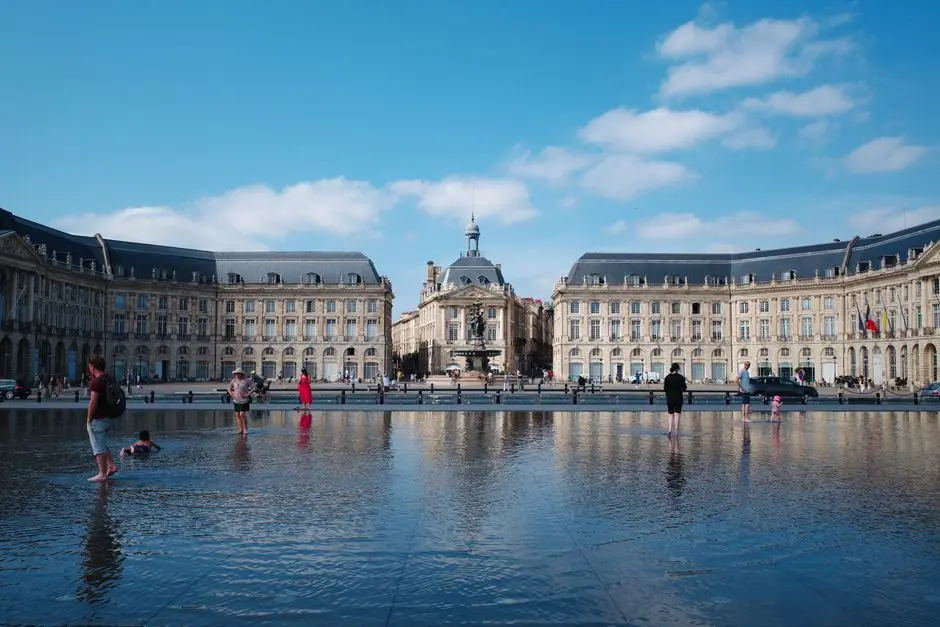
What's on in Bordeaux
Bordeaux's primary holiday market sets up dozens of wooden chalets with regional craft gifts, hot wine, local delicacies, and entertainment.
Official infoEvents are collected automatically from the web. Dates can change, so please check the official information before you travel.