
Bethlehem
Cradled in the Judean Hills south of Jerusalem, Bethlehem unfolds across terraced limestone ridges overlooking the desert descending toward the Dead Sea. Walking its winding stairways feels intimate and grounded, carrying scents of crushed mint, woodsmoke, and fresh taboon bread. Whitewashed Ottoman-era stone houses with arched doorways flank narrow alleys, where everyday Palestinian life hums steadily alongside centuries of continuous Christian and Muslim heritage. Dating to Canaanite times, the town became a major center of world history in 327 CE when Emperor Constantine commissioned the Church of the Nativity. Inside, sixth-century floor mosaics lie beneath heavy stone colonnades and the lantern-lit Grotto of the Nativity. Uphill, Star Street, an ancient pilgrimage route lined with quiet residential quarters, opens into central Manger Square. Nearby, the chalk-white Milk Grotto chapel draws visitors seeking peace, while the towering concrete separation wall on the northern perimeter, covered in murals by Banksy and local painters, reflects the town's modern political reality. Daily life congregates around the bustling fruit and vegetable market off Paul VI Street, where vendors sell wild sage, pickled olives, and warm sesame ka'ak bread stuffed with spiced falafel. Autumn is marked by the olive harvest, when communal presses run day and night and tables feature fresh oil and onion-rich msakhan flatbreads. Spring and late autumn offer cool, pleasant weather for exploring on foot, which is the only practical way to navigate the compact historical core, though yellow shared taxis easily connect travelers to neighboring Beit Sahour and Beit Jala.
Read more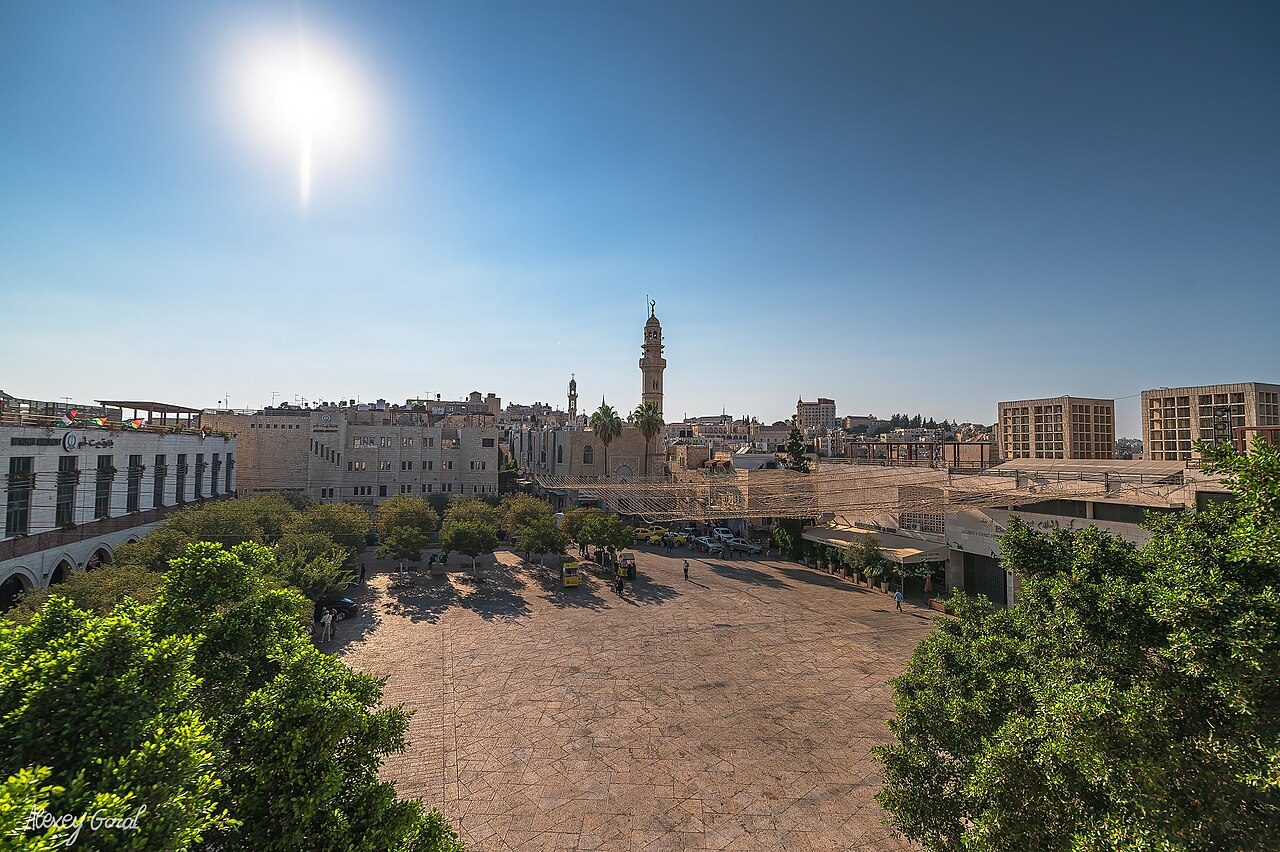
What to see in Bethlehem
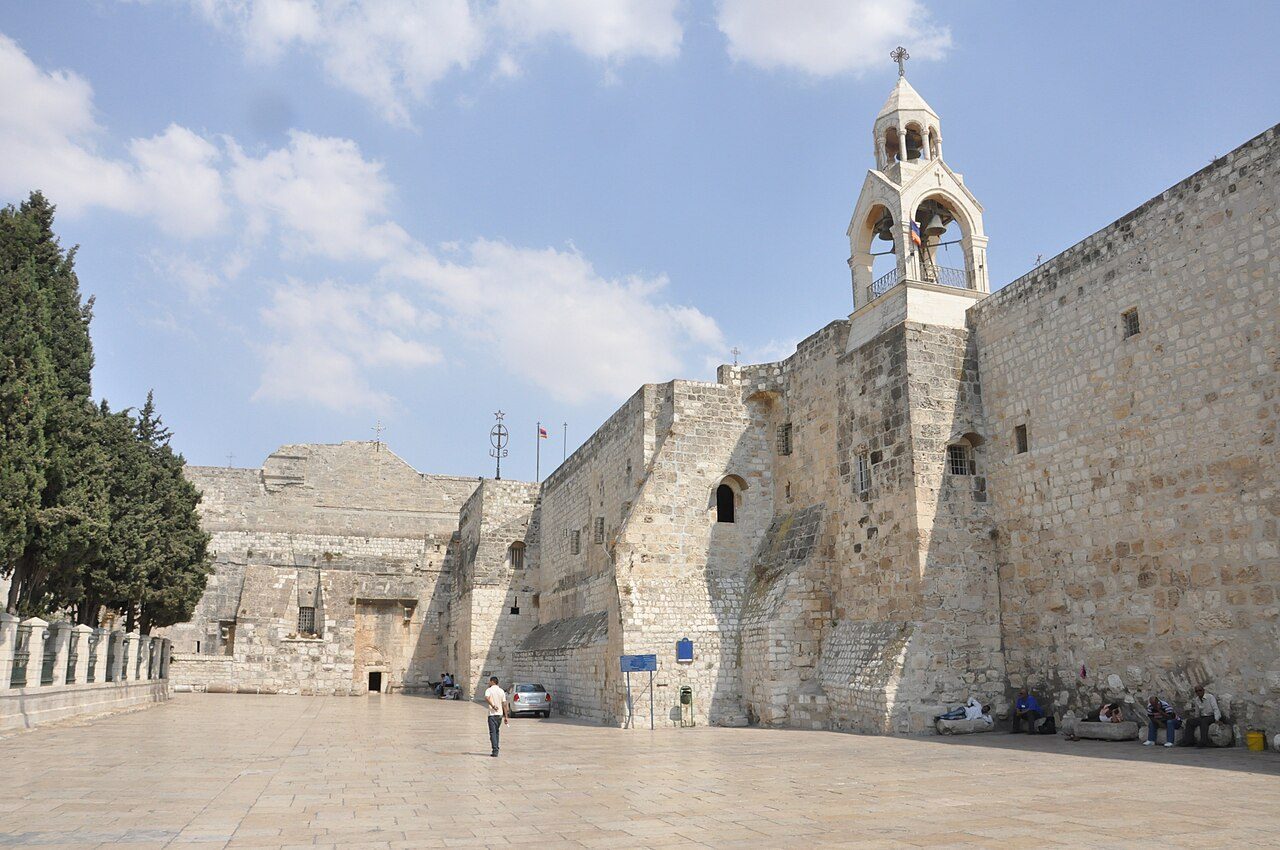
Photo credits (2)
- Alexey Goral, CC BY-SA 4.0, via Wikimedia Commons
- Neil Ward, CC BY 2.0, via Wikimedia Commons