Al Khor
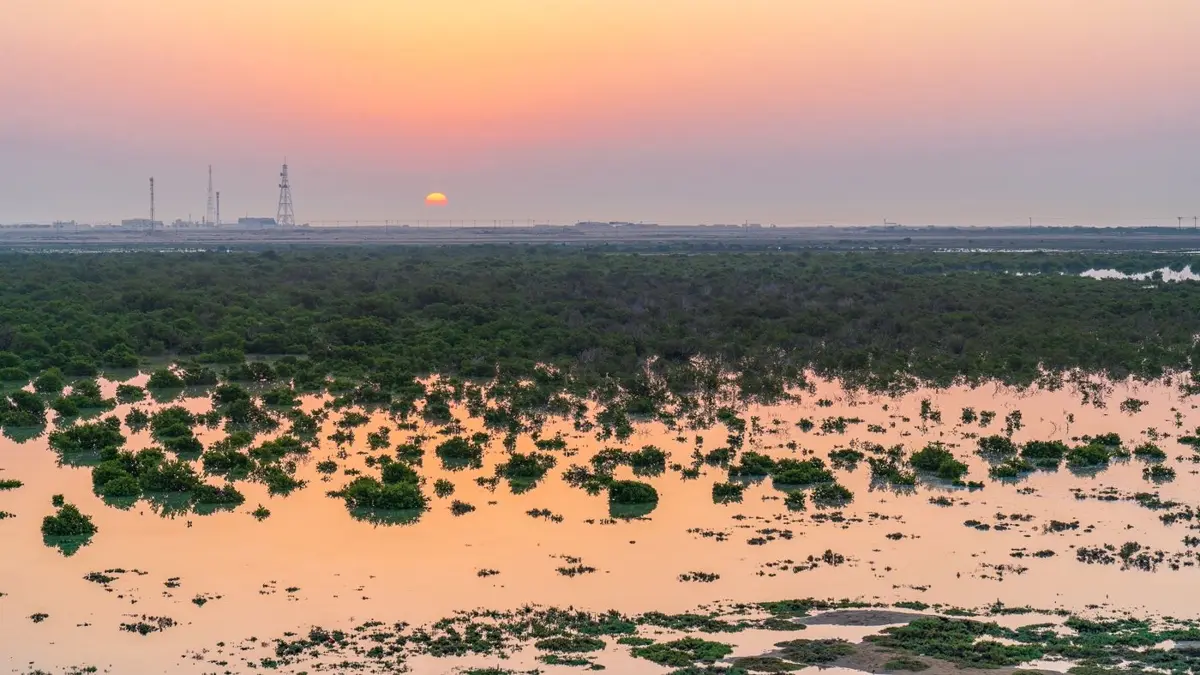
Perched along a shallow inlet on the northeastern coast of Qatar, Al Khor trades the vertical glass of Doha for quiet maritime rhythms. A walk along the stone-paved corniche brings the clatter of rigging against wooden dhows, the brine of tidal flats, and views across shallow waters where flamingos feed in the shallows during winter. Historically sustained by pearl diving, the town grew during the eighteenth century under the Al Muhannadi tribe, drawn to the fresh waters of Ain Hleetan Well. Three cylindrical stone watchtowers built around 1900 still stand guard over this original settlement. Just north of the town center lies Jazirat bin Ghannim, commonly called Purple Island, where archaeological digs revealed Kassite-era dye production sites dating to the second millennium BC, now accessible via a footbridge over dense mangrove channels. On the town edge, Al Bayt Stadium interprets this coastal heritage on a grand scale, shaped like the giant black-and-white woven tents used by nomadic Bedouins. Daily life revolves around the waterfront fish market, where morning auctions yield fresh catches of hammour, kingfish, and prawns that local cafeterias fry with turmeric and dried lime. Visiting between November and March offers mild temperatures for kayaking the mangroves, particularly in late afternoon when the desert heat recedes. Reaching Al Khor is straightforward by rental car along the coastal highway from Doha, though travelers relying on public transit can take the metro to Lusail and transfer to northern bus lines.
Read more