
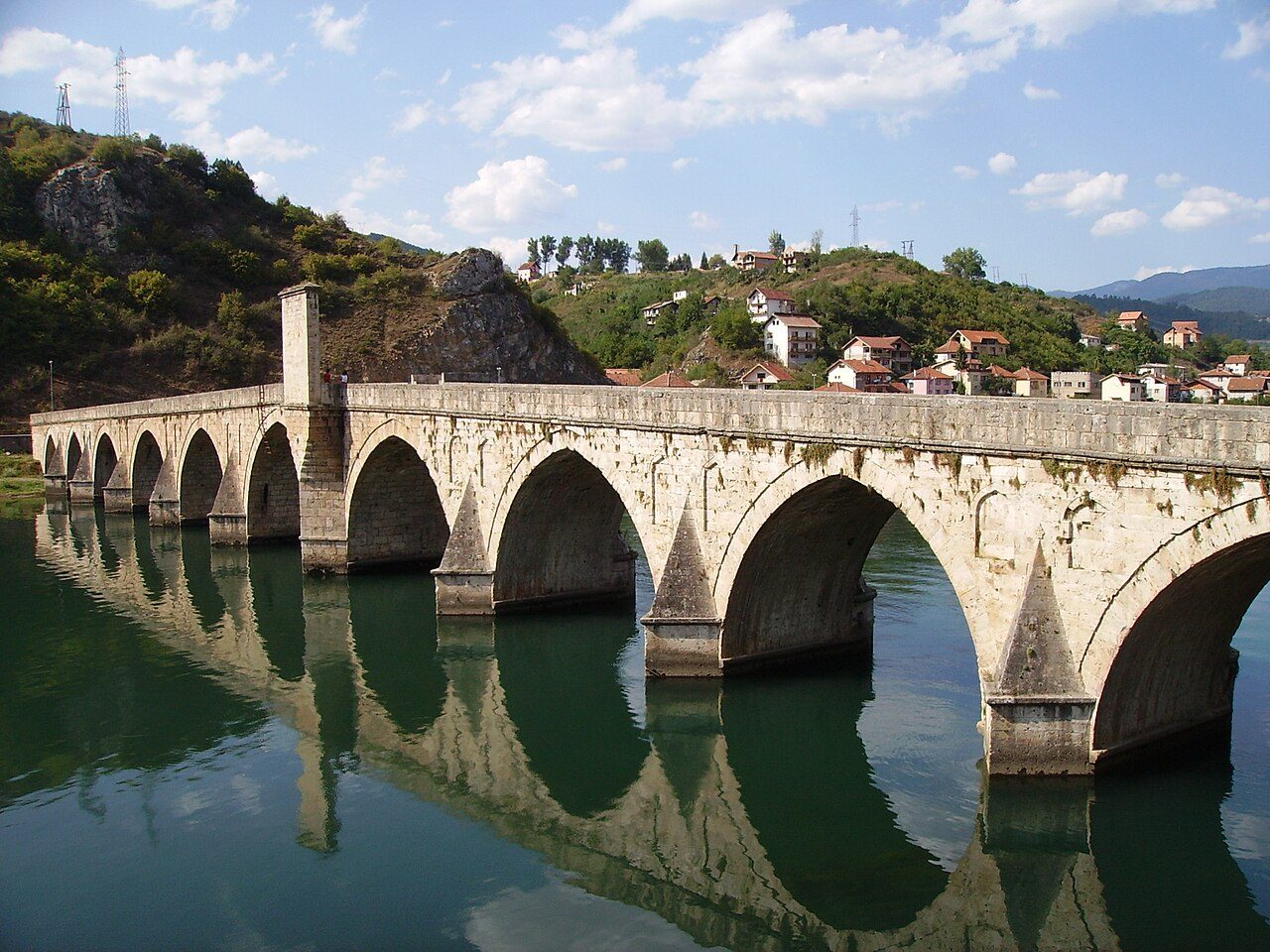
Mehmed Pasa Sokolovic Bridge
Commissioned in 1571 by Ottoman Grand Vizier Mehmed Paša Sokolović—who had been taken from the nearby hills as a boy through the *devshirme* levy—this monumental crossing represents the zenith of classical Ottoman civil engineering. Designed by the court architect Mimar Sinan and completed in 1577, the bridge hurdles the emerald Drina River upon eleven sweeping masonry arches chiseled from pale limestone and volcanic tuff. Surviving centuries of catastrophic floods and wartime detonations, its weathered pylons served as the narrative spine for Ivo Andrić’s Nobel Prize–winning novel, *The Bridge on the Drina*, cementing the span as a poignant symbol of Balkan resilience and fracture. Pacing along the polished flagstones, visitors encounter the bridge's historic social nexus at its midpoint: the *kapija*. Here, the parapet widens into twin stone terraces flanked by a raised marble portal bearing crisp dedicatory inscriptions in calligraphic Ottoman Turkish. Sitting on these ancient stone benches, or *sofas*, travelers can gaze down at the swirling turquoise depths below, framed by the sheer limestone gorge of eastern Bosnia. The cool alpine breeze sweeping off the water carries the echo of the town's layered past, offering an immediate, tactile connection to centuries of merchants, poets, and soldiers who lingered on this very platform.