
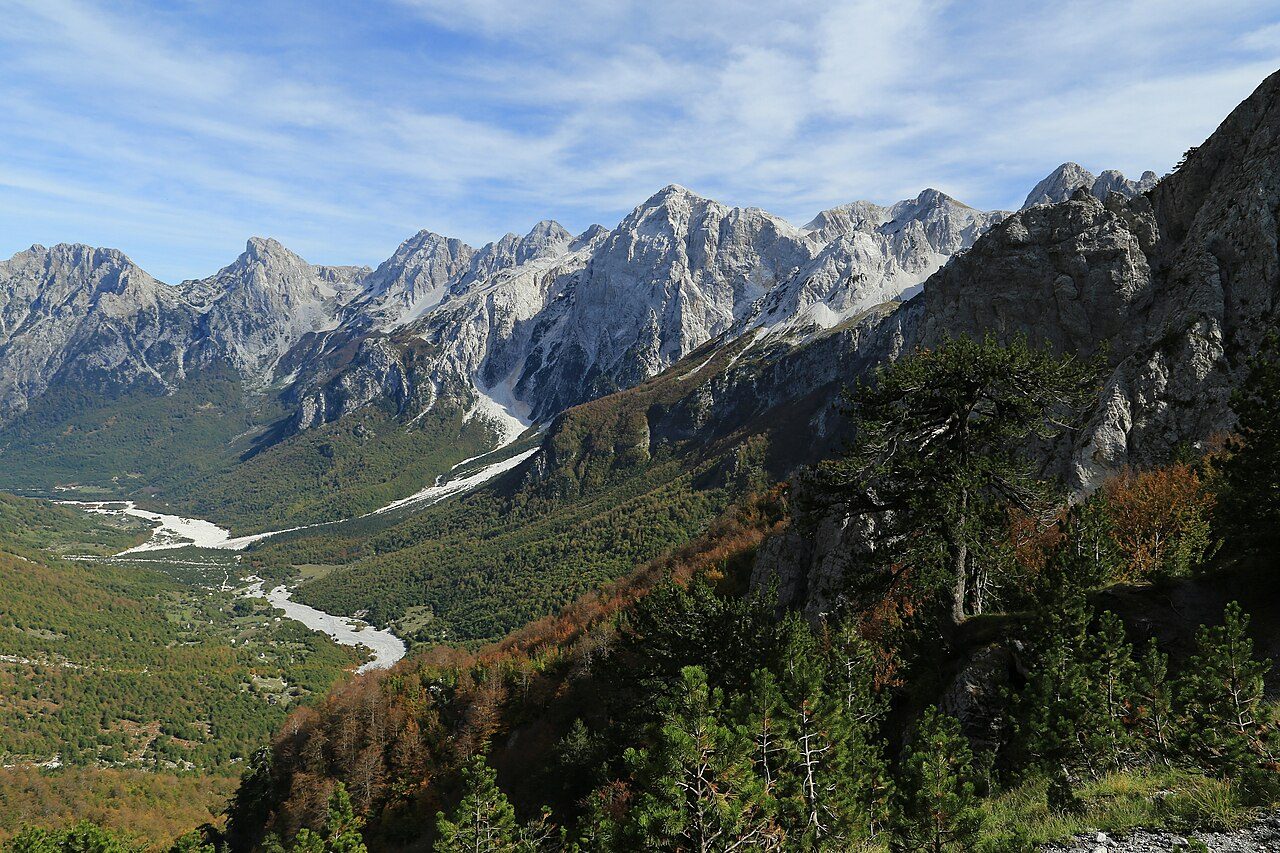
Valbona Valley
Carved deep into the jagged limestone of the Accursed Mountains, Valbona Valley unfolds beneath the imposing 2,694-meter pyramid of Maja Jezercë. For centuries, this glacial trough operated under the unwritten customary laws of the 15th-century *Kanun of Lekë Dukagjini*, sheltering fiercely autonomous northern clans who resisted Ottoman imperial tax collectors. Scattered across terraced meadows, traditional *kullas*—fortified stone dwellings featuring three-story defensive masonry, wooden balconies, and narrow rifle slits (*frëngji*)—stand as austere architectural monuments to centuries of Highland clan warfare. First formally protected in 1996, the landscape harbors virgin beech forests and an unbroken pastoral tradition that traces back through medieval Albanian history. Ascending the 1,795-meter Valbona Pass connecting this valley to neighboring Theth, hikers crunch across loose white dolomite scree framed by alpine scrub and dwarf pines. Reaching the crest, a sudden drop reveals the valley basin below, sliced through by the crystalline, electric-turquoise ribbon of the Valbona River. Standing in the sun-bleached valley bed, the air smells of crushed pine needles and woodsmoke drifting from slate-roofed stone farmsteads. Bronze cowbells echo off sheer, thousand-meter vertical cliffs, immersing travelers in a sensory realm of raw, pale-gray rock faces, icy meltwater springs, and dramatic isolation untamed by modern infrastructure.
