
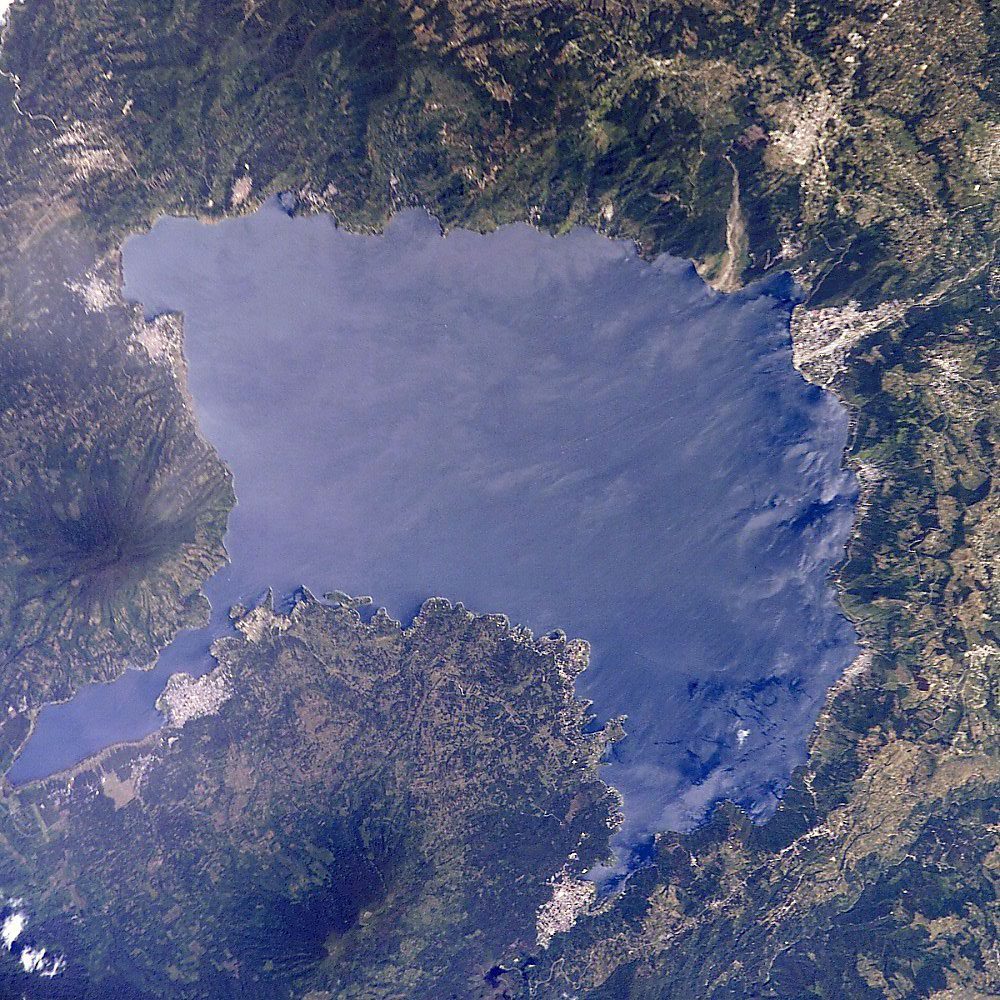
Lake Atitlan
Cradled inside a colossal caldera blown open 84,000 years ago by the catastrophic Los Chocoyos eruption, this 1,000-foot-deep expanse of indigo water sits locked behind the monolithic ramparts of three stratovolcanoes: Atitlán, Tolimán, and San Pedro. From the shores of Panajachel, the regional gateway since Spanish conquistador Pedro de Alvarado allied with the Kaqchikel Maya here in 1524, the landscape appears almost impossibly vertical. The town’s historical anchor, the 1567 Church of Saint Francis of Assisi, displays a weather-beaten Renaissance-plateresque stone facade, its carved niches harboring colonial saints that stand in stark, austere contrast to the jade-green volcanic ridges towering directly behind the bell tower. Stepping onto Panajachel’s wooden public docks, you are met with the brisk alpine air cut with the aroma of roasting highland Bourbon coffee and copal incense drifting from lakeshore shrines. Small fiberglass *lanchas* bob violently against the piers as the *Xocomil*—a fierce, sacred midday wind named by the Tz'utujil to signify the washing away of sins—churns the glassy surface into white-crested chop. Leaving the water to navigate the stone alleys of Calle Santander, the senses collide with brilliant bursts of local craftsmanship: heavy backstrap-loomed *huipiles* woven with geometric cosmic serpents in natural cochineal reds and indigo blues, worn by Maya vendors whose ancestors navigated these exact waters centuries before the caldera had a Spanish name.