
Tikal
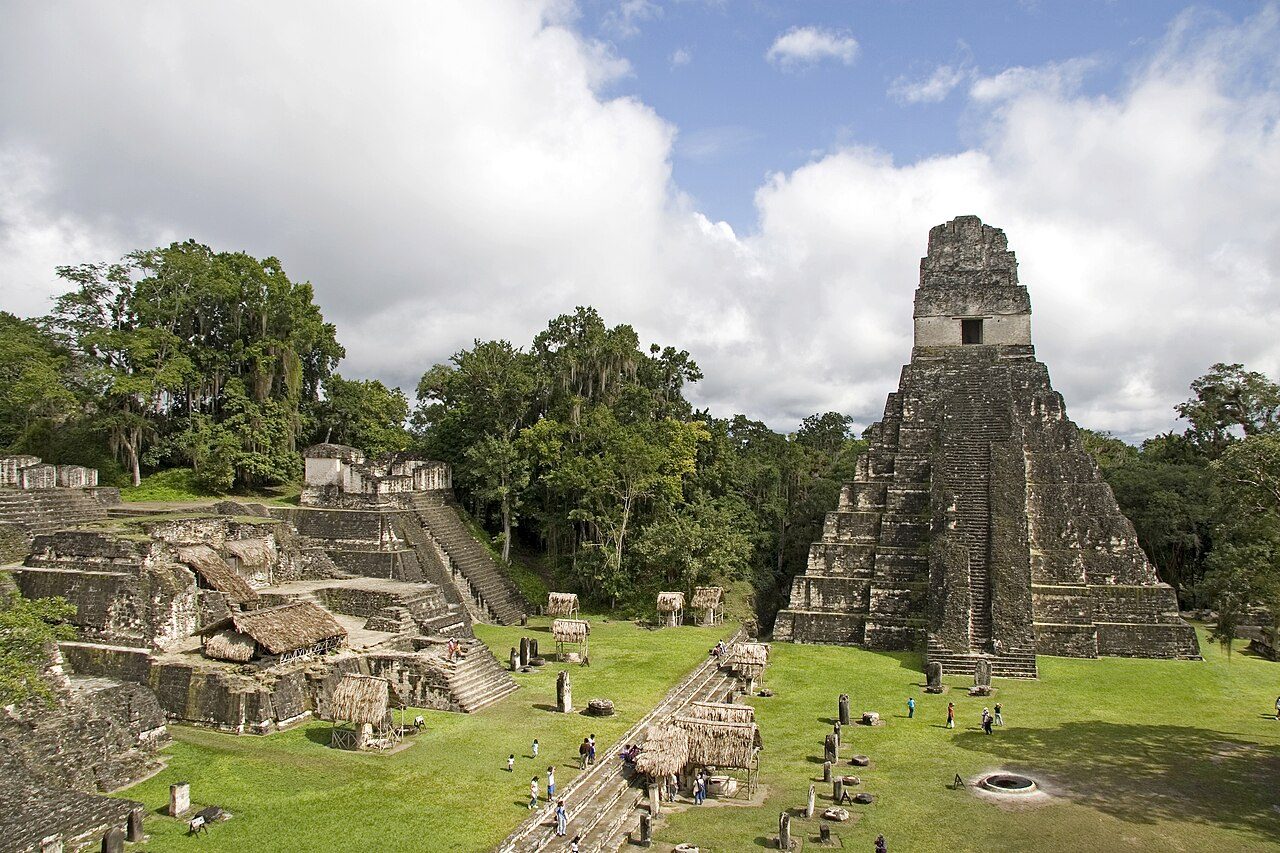
Rising out of the dense rainforest canopy of the Petén Basin, the limestone colossi of Tikal—known anciently as Yax Mutal—mark the zenith of Classic Maya civilization. Between the 6th and 8th centuries AD, under the reign of formidable dynasts like Jasaw Chan K'awiil I, the city perfected the soaring Petén architectural style, characterized by sheer, stepped pyramids topped with imposing stone roof combs. In the Great Plaza, Temple I (the Temple of the Great Jaguar) vaults 47 meters upward, its nine terraced platforms symbolizing the levels of the Maya underworld. Directly opposite sits Temple II, framing a ritual core flanked by the labyrinthine palaces, stairways, and interconnected courtyards of the Central Acropolis, where royal courts administered an empire of over 60,000 people. Standing within the plazas at dawn, visitors confront an otherworldly sensory landscape. The guttural, prehistoric roars of hidden howler monkeys echo across the damp limestone, mingling with the screech of keel-billed toucans in the mahogany trees. Ascending the wooden scaffolding of Temple IV—the site’s loftiest summit at 65 meters—travelers emerge above the mist-cloaked jungle to see the jagged roof combs of neighboring temples puncturing an emerald horizon just as they did over a millennium ago. Below, navigating ancient *sacbeob* (raised limestone causeways), you can trace your fingers across weathered, moss-flecked stelae carved with intricate hieroglyphs that still record the wars and coronations of the Maya kings.