
Manuel Antonio National Park
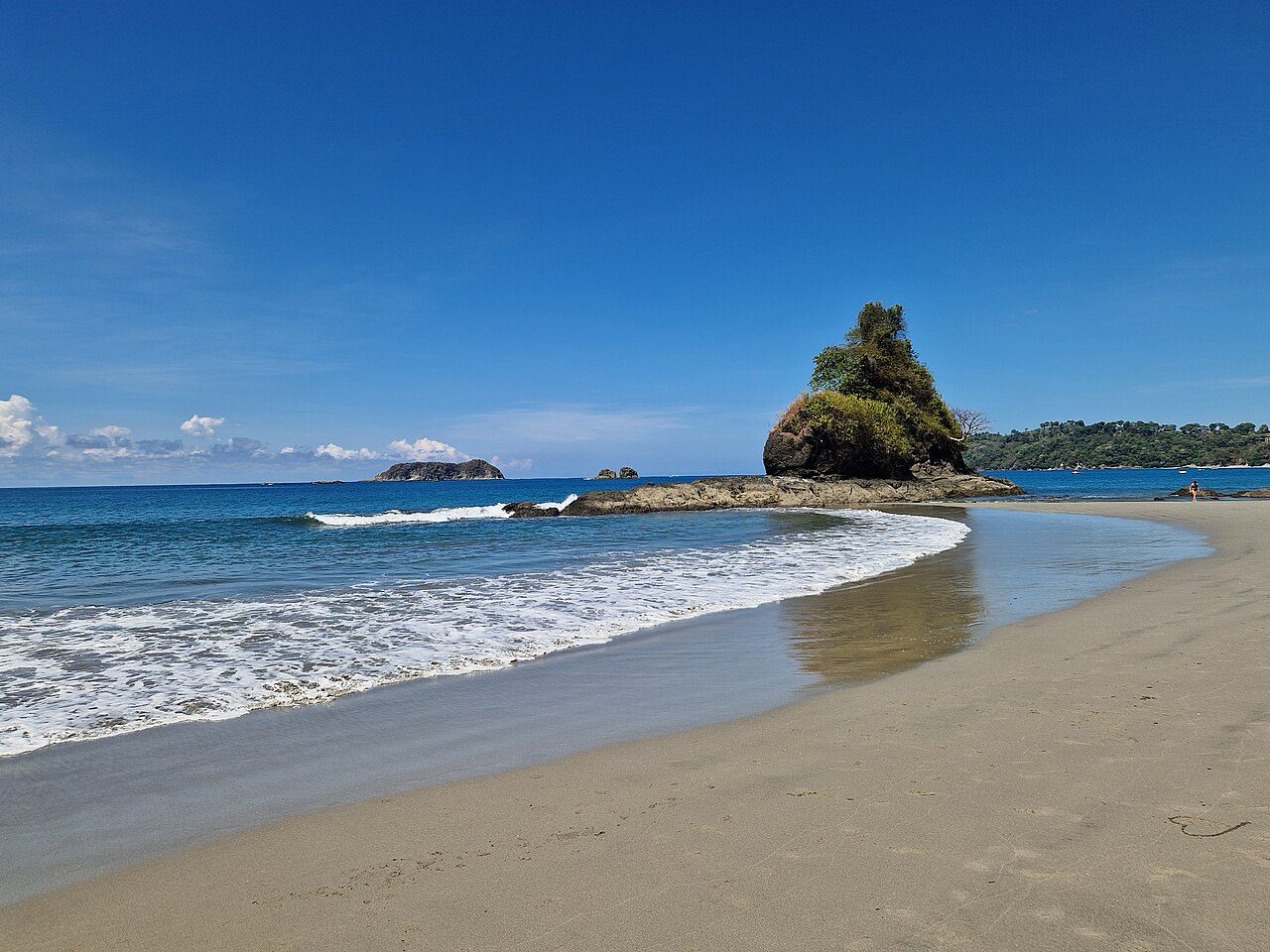
Long before its gazetting as a protected reserve in November 1972, this Pacific headland was the ancestral territory of the indigenous Quepoa people. The park owes its modern existence to fierce grassroots resistance; in the late 1960s, local Quepos residents and civic activists tore down armed gates and illegal fences erected by foreign landowners who sought to privatize the coastline. Geologically, the park’s defining anchor is Punta Catedral, an imposing ridge formed by a natural tombolo—an ancient offshore island fused to the mainland by millennia of accumulated sediment—which divides the ocean into the twin crescent amphitheatres of Playa Espadilla Sur and Playa Manuel Antonio. Wandering the elevated timber walkways of the Perezoso Trail, travelers plunge into a sweltering maritime rainforest where the scent of decomposing leaf mulch collides with sea salt. Three-toed sloths hang suspended like mossy knots in the crook of silver cecropia trees, while the guttural bellows of mantled howler monkeys reverberate through the high canopy. Emerging from the green thicket, the forest yields abruptly to blinding white sands strewn with drift-almond seeds. Pacific breakers crash against exposed basalt tide pools, and agile white-faced capuchins scamper through the low-hanging branches just feet above the tide line, watching travelers navigate the transition between raw jungle and pristine open sea.