
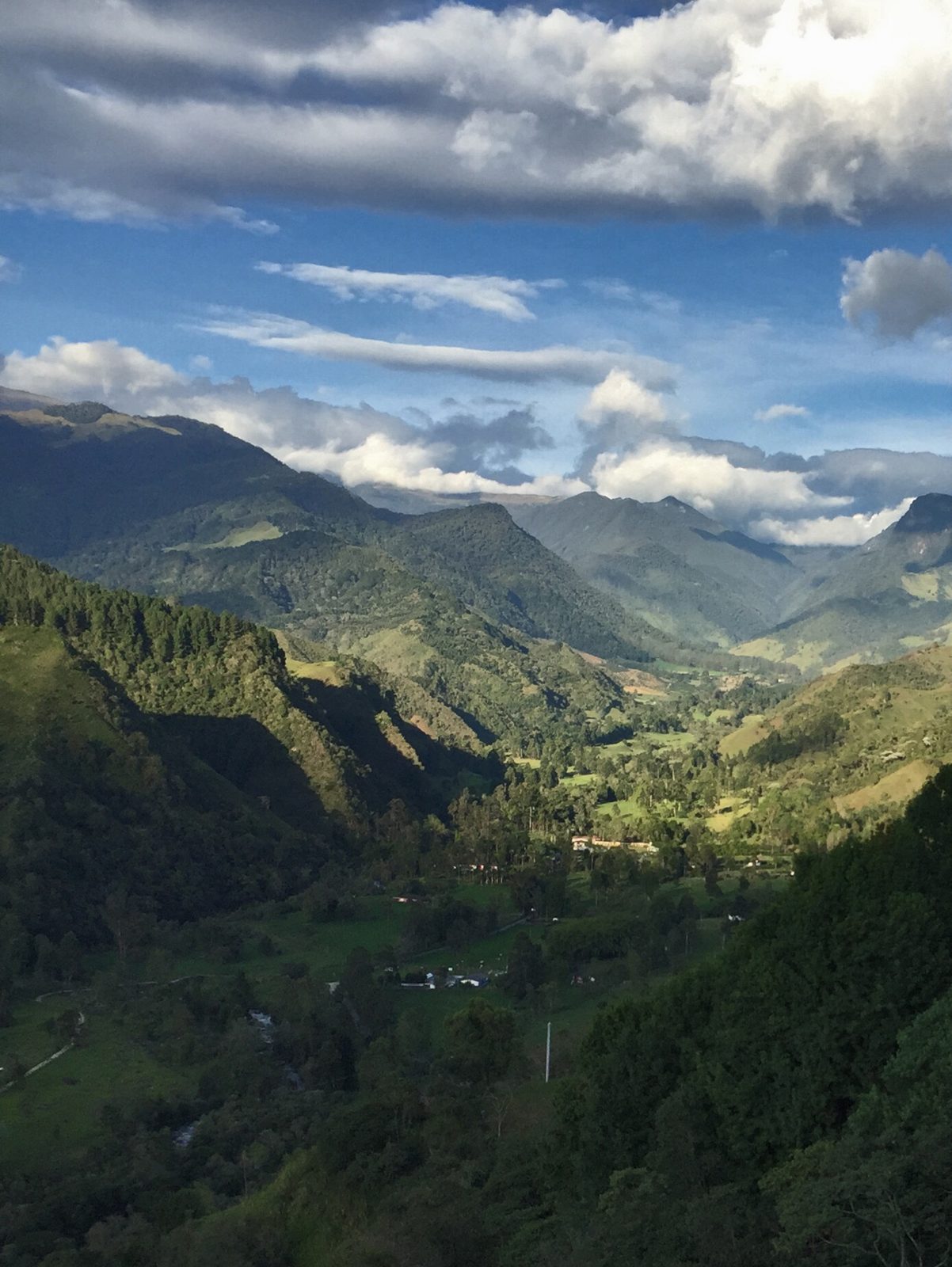
Cocora Valley
Cradled within Colombia’s Central Cordillera just above the colonial township of Salento, the Cocora Valley preserves both an ancient Indigenous legacy and crucial ecological history. Named after the Quimbaya princess Cocora—meaning "star of water"—the valley borders the historic Camino Real, an arduous transit route surveyed by Prussian naturalist Alexander von Humboldt in 1801 and crossed by Simón Bolívar’s liberation forces in 1830. After decades of clear-cutting for pastureland threatened the native flora, the Colombian government enacted Law 61 in 1985, shielding the valley and canonizing the Quindío wax palm (*Ceroxylon quindiuense*) as the definitive national tree. Standing on the valley floor, travelers gaze upward at a surreal, prehistoric skyline where smooth, limestone-colored palm trunks shoot up to sixty meters into the Andean atmosphere. Dense cloud forest clings to the surrounding peaks of Los Nevados National Natural Park, funneling cool, damp mountain mist that continuously blankets and reveals the verdant slopes. The experience is intensely sensory: the scent of wet pasture and loam hangs heavy in the thin air, punctured only by the screech of endangered yellow-eared parrots. Hikers navigate muddy paths and swinging suspension bridges over the rushing Quindío River, following trails past grazing cattle toward the high cloud-forest sanctuary of Acaime, where iridescent hummingbirds dart against an amphitheater of towering, sky-scraping palms.
Photo credits (1)
- Angela Calle and Daniel Di Palma, CC BY-SA 4.0, via Wikimedia Commons