
Sumidero Canyon
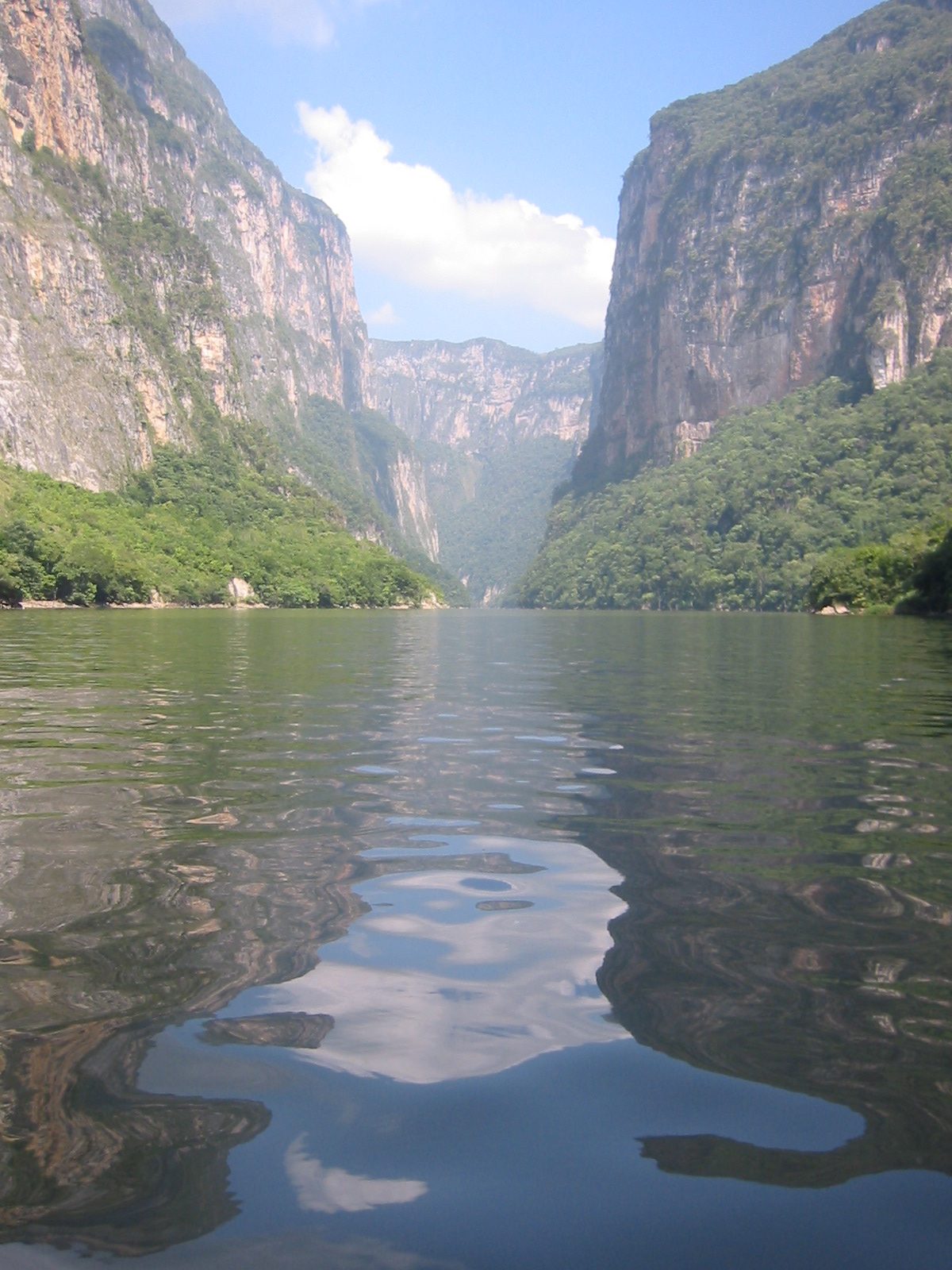
Carved over thirty-five million years by the churning Grijalva River, the staggering vertical limestone walls of Sumidero Canyon sheer upward more than 1,000 meters into the Chiapas sky. This colossal geological chasm preserves a defining moment of Indigenous resistance: in 1532, cornered Chiapaneca warriors famously chose to leap from the dizzying precipices of the Tepetchia cliff rather than yield to the invading forces of Spanish conquistador Diego de Mazariegos. Today, this profound act of defiance remains immortalized on the Chiapas state coat of arms, underscoring the canyon’s enduring status as a sacred bastion of regional identity. Skimming across the emerald-hued water by motorboat, visitors are swallowed by the canyon’s cool, shadowed depths, where raw stone faces dwarf every perspective. The air turns damp and resounds with cascading mountain runoff, most dramatically at the *Árbol de Navidad* (Christmas Tree)—a towering, 35-meter cliff formation coated in vibrant weeping moss that mimics draped pine boughs over a natural cascade. Further downriver, the boat slows beside the *Cueva de Colores*, a natural grotto painted in vivid pinks and ochres by magnesium and potassium deposits, sheltering a revered shrine to the Virgin of Guadalupe. Along the secluded sandbars, sunbathing American crocodiles slide silently into the wake, while spider monkeys rustle through the dense tropical canopy clinging to the rock face high above.
Photo credits (1)
- Tjeerd Wiersma from Amsterdam, The Netherlands, CC BY 2.0, via Wikimedia Commons