
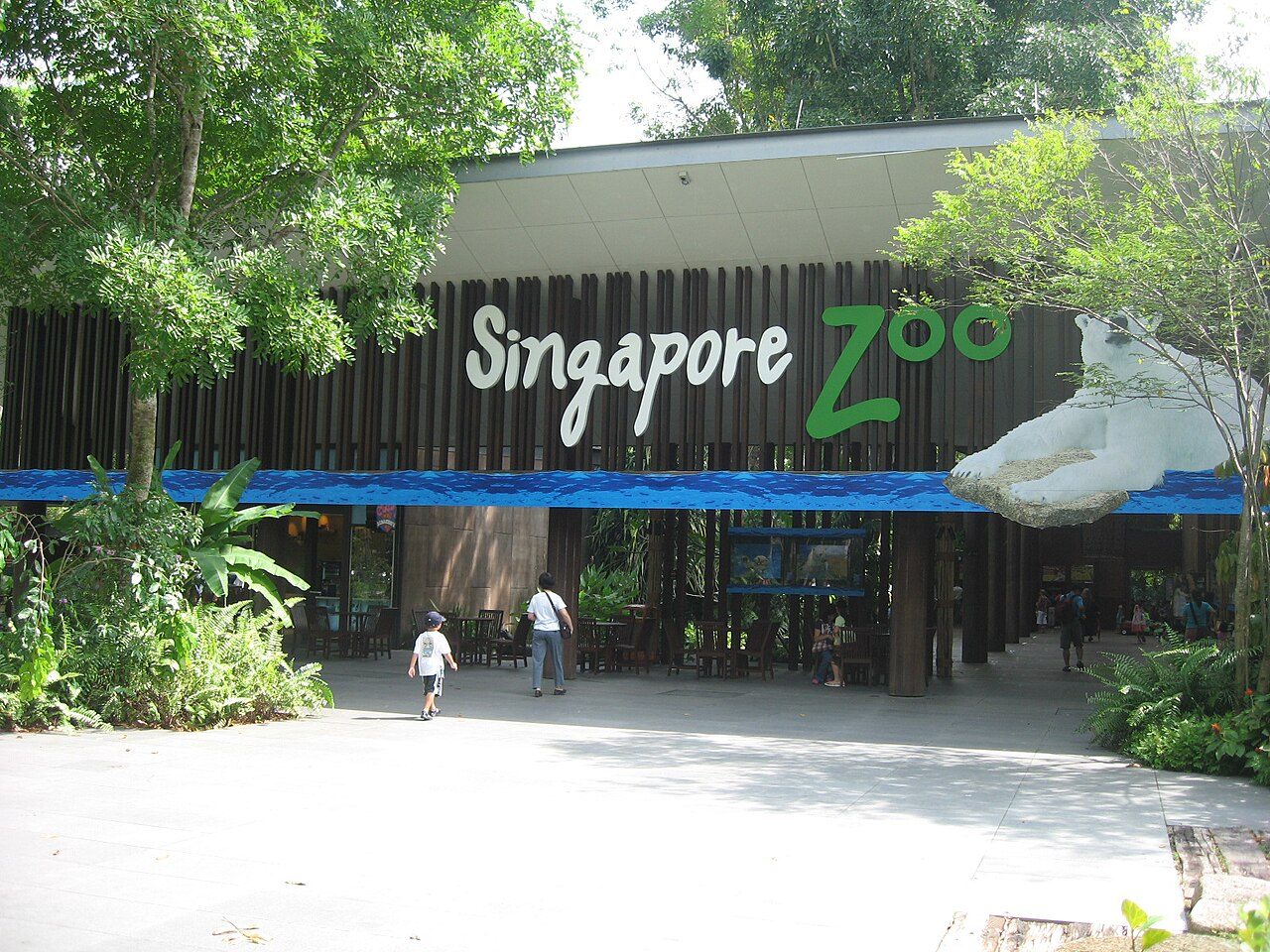
Singapore Zoo
Conceived in 1968 by Dr. Ong Swee Law and officially opened in June 1973, the Singapore Zoo pioneered the world-renowned "open concept" in zoological design. Shunning Victorian-era iron bars, Sri Lankan zoo designer Lyn de Alwis integrated concealed wet moats, sunken dry ditches, and dense vegetative screens into 28 hectares of the Mandai rainforest. This architectural philosophy reflected post-independence Singapore’s ambition to balance rapid urban modernization with tropical preservation, creating an internationally benchmarked landscape where natural topography dictated animal enclosures rather than concrete cages. Wandering the raised ironwood boardwalks skirting the reservoir fringes of Upper Seletar, travelers plunge into an atmosphere thick with humid damp loam, chorus-pitch cicadas, and the territorial shrieks of white-faced sven-monkeys. Above, free-ranging Sumatran orangutans traverse natural vines suspended across the forest canopy, their reddish fur catching dappled equatorial sunlight. Further along, the tiered crimson-rock amphitheater of the Great Rift Valley replicates the crags of Ethiopia, bustling with dozens of hamadryas baboons, while submerged glass galleries beneath the riverine exhibits let you observe pygmy hippos gliding effortlessly underwater—erasing any perceived boundary between observer and jungle.
More in Singapore
Photo credits (2)
- No machine-readable author provided. Terence assumed (based on copyright claims)., CC BY 2.5, via Wikimedia Commons
- Terence Ong at the English Wikipedia ., CC BY 2.5, via Wikimedia Commons