
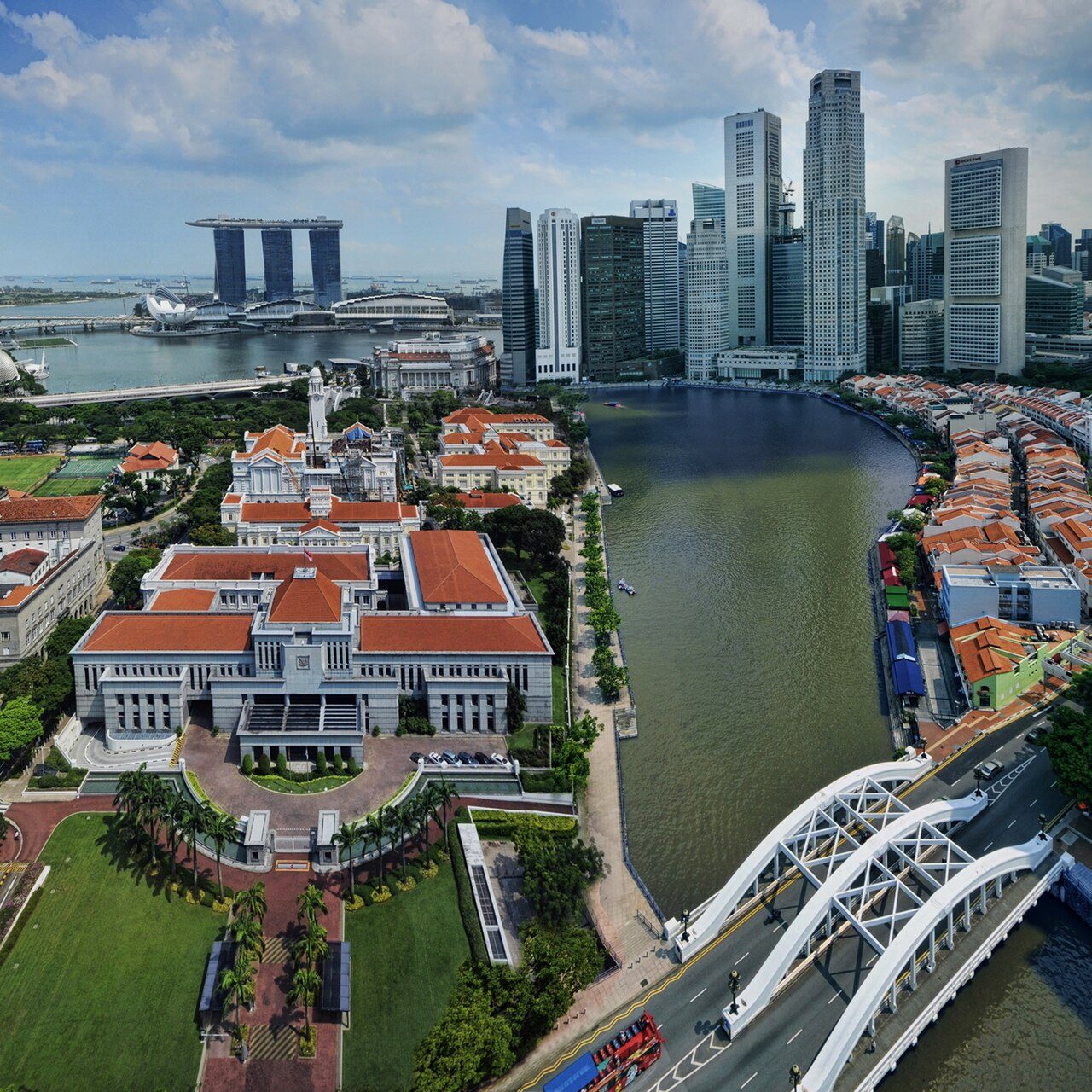
Chinatown, Singapore
Laid out under Sir Stamford Raffles’s 1822 Jackson Plan as the designated settlement for Singapore’s early Chinese immigrant workforce, this enclave—historically dubbed *Kreta Ayer* ("bullock-cart water")—preserves a dense tapestry of Straits Eclectic architecture. Narrow corridors along Pagoda and Trengganu Streets showcase two- and three-story shophouses distinguished by shaded five-foot arcades, French louvered shutters, Corinthian-style pilasters, and glazed Majolica tiles in peacock greens and ochres. Anchoring South Bridge Road stands the monumental Tang-dynasty-inspired Buddha Tooth Relic Temple, defined by sweeping vermilion eaves and a 3,500-kilogram solid gold stupa chamber, which contrasts directly with the multi-tiered, vividly sculpted *gopuram* of the neighboring 1827 Sri Mariamman Temple. Wandering beneath canopies of suspended scarlet lanterns, you encounter a layered sensory landscape where thick coils of sandalwood incense fuse with the caramelized char of grilled *bak kwa* (sweet pork jerky) and bitter medicinal roots simmering in traditional herbal dispensaries. The sharp clatter of ivory mahjong tiles drifts down from second-story clan association windows, puncturing the hum of patrons bargaining over fine porcelain and loose-leaf puerh tea. Beneath contemporary neon, uneven granite kerbstones and centuries-old brick thresholds remain worn smooth by generations of rickshaw pullers and Samsui laborers, leaving an immediate, tangible trace of the city-state's working-class genesis.
More in Singapore
Photo credits (2)
- William Cho ., CC BY-SA 2.0, via Wikimedia Commons
- Terence Ong at the English Wikipedia ., CC BY 2.5, via Wikimedia Commons