
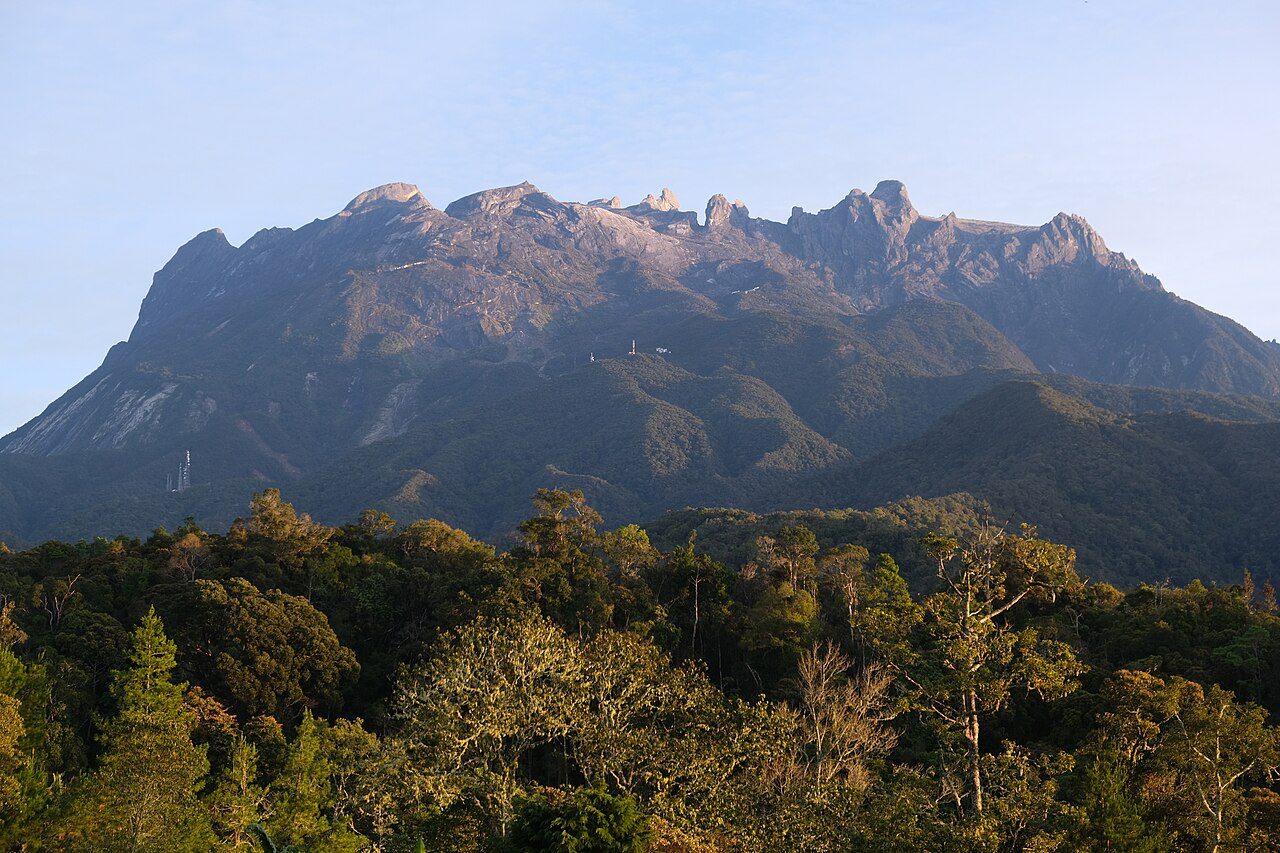
Mount Kinabalu
For the indigenous Kadazan-Dusun people, this colossal granodiorite monolith is *Aki Nabalu*—the sacred resting place of ancestral spirits. British colonial administrator Sir Hugh Low made the first documented ascent of its upper plateau in March 1851, lending his name to the 4,095.2-meter summit of Low’s Peak. Geologically young at just millions of years old, the mountain was sculpted by Pleistocene glaciers that sheared away soft rock to expose dramatic, jagged spires. Prominent features include the iconic triangular horn of South Peak and the fractured crags of Donkey Ears Peak, which pierce the sky above mist-cloaked botanical zones harboring endemic *Nepenthes rajah* pitcher plants and twisted sub-alpine rhododendrons. Reaching the summit ridge before dawn, climbers emerge from the dense cloud forest onto an otherworldly, pale gray expanse of sheer, glacier-scraped stone. The traveler encounters a punishing pre-dawn wind and thin alpine air, gripping safety ropes bolted directly into the bedrock while navigating the vast, empty plateau. At the apex of Low’s Peak, the sunrise casts the mountain’s colossal, razor-sharp pyramidal shadow westward across a churning sea of clouds, while immediately below, the dizzying precipice of Low’s Gully plunges more than a thousand vertical meters into primordial mist.