
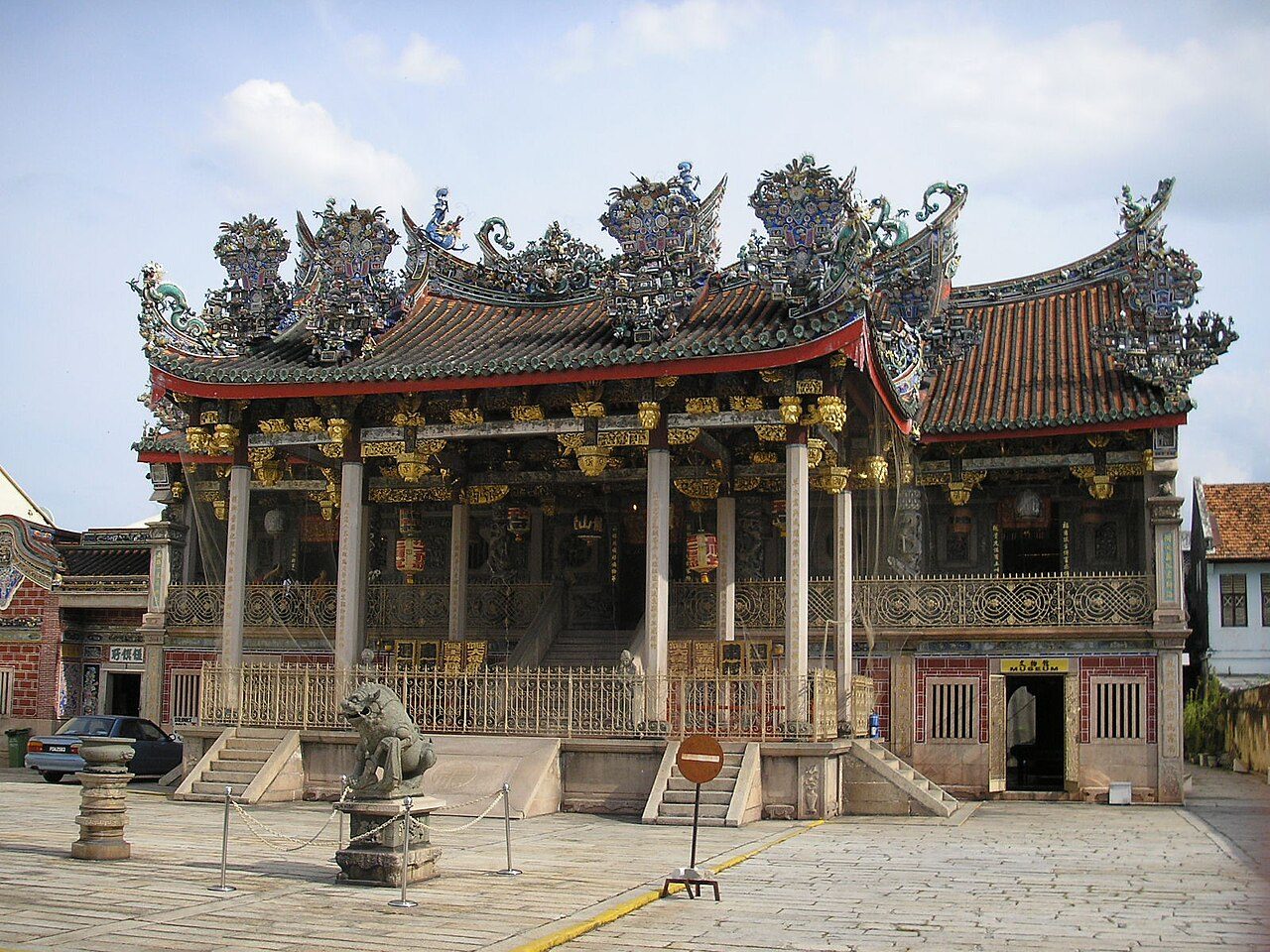
Khoo Kongsi
Tucked behind the unassuming shophouses of George Town’s Cannon Square, Leong San Tong Khoo Kongsi unfolds as a magnificent hidden citadel of Hokkien heritage. Commissioned by the affluent Khoo clan—immigrants tracing their lineage to Sin Kang village in China’s Fujian province—the current complex was completed in 1906. An earlier, exceptionally extravagant version burnt to the ground on the eve of its completion in 1901, a blaze clan elders whispered was divine retribution for audaciously rivaling the Imperial Palace in Beijing. Rebuilt on a subtly moderated scale by master craftsmen summoned directly from southern China, this architectural triumph of Southern Min design anchored the spiritual, social, and political ascendancy of Penang's 19th-century Chinese diaspora. Emerging onto the paved granite courtyard, visitors confront a raised, double-tiered pavilion crowned by sweeping swallowtail eaves and an undulating ridge laden with *jianci*—vibrant cut-and-paste ceramic mosaics of writhing dragons, phoenixes, and celestial protectors. Ascending the stone balustrades, the smell of burning sandalwood guides the senses into the gilded prayer pavilion. Inside, blinding vermilion lacquer gives way to pierced wooden lintels, twenty-four carved panels illustrating scenes of filial piety, and gold-leaf altars dedicated to Tua Pek Kong and ancestral tablets. Beneath the cavernous timber beamwork, thirty-six hand-painted murals of celestial generals glare down at visitors, preserving an atmosphere of fierce clannish devotion and unapologetic merchant wealth.
More in Penang
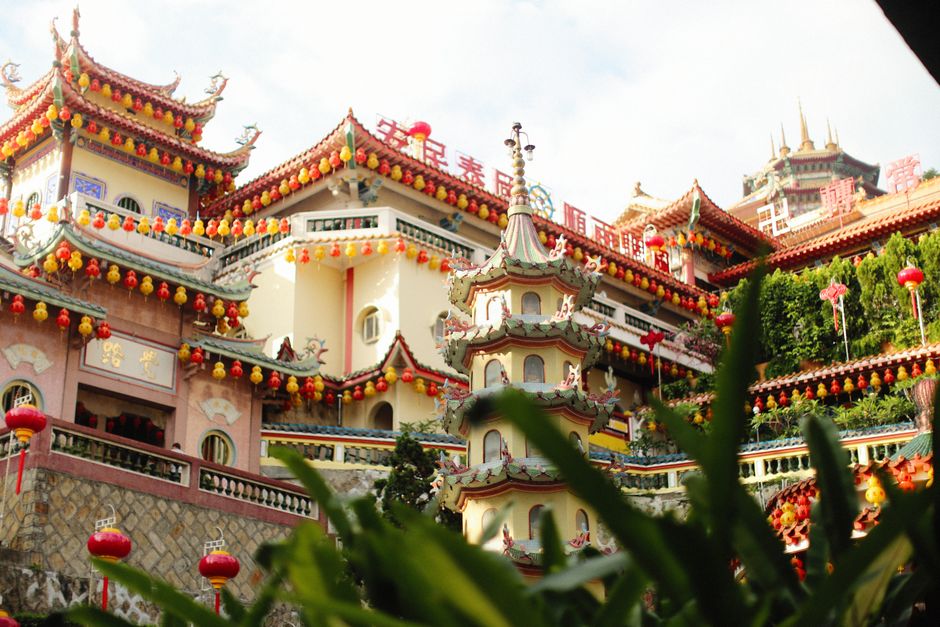
Photo credits (2)
- Gryffindor, Public domain, via Wikimedia Commons
- Graystravels, CC BY-SA 4.0, via Wikimedia Commons