
Ijen
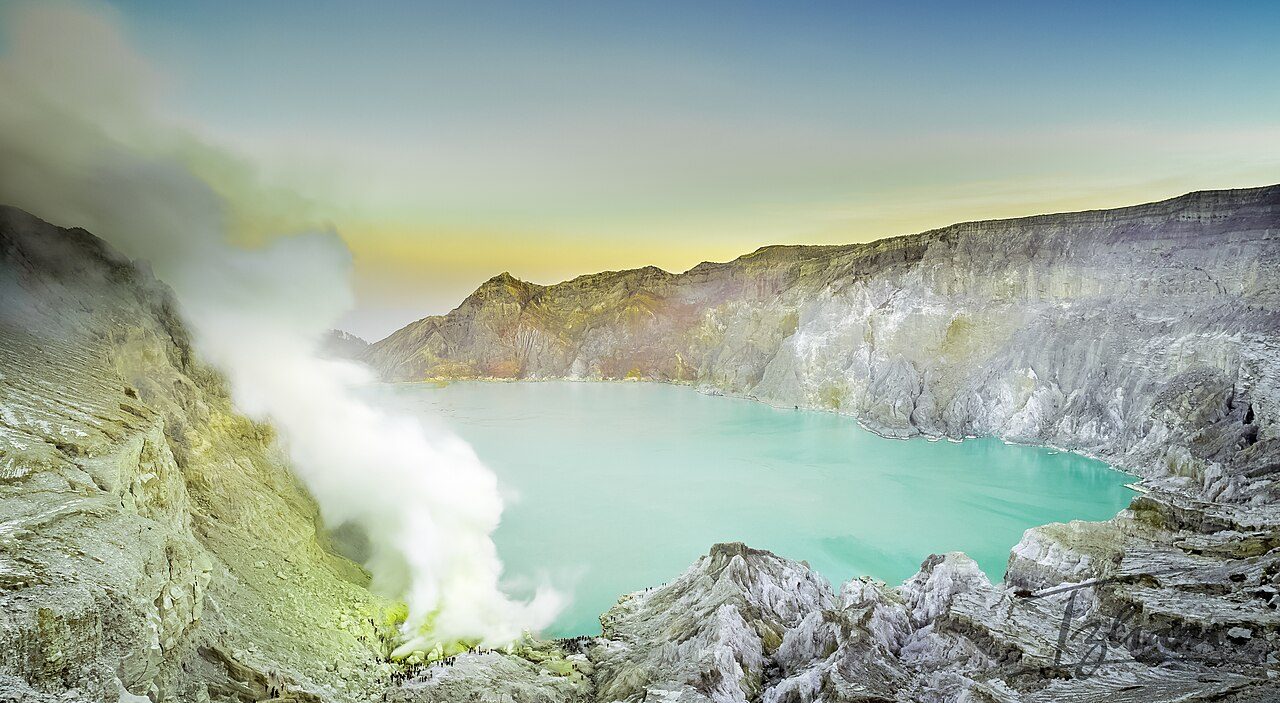
Carved into the rugged spine of eastern Java, the Ijen caldera complex acquired its present, volatile geometry following a catastrophic series of eruptions in 1817. At the heart of this volcanic amphitheater lies the world’s largest hyper-acidic crater lake, a turquoise-hued basin with a pH plunging below 0.5, flanked by bleached, weather-beaten cliffs. Since Dutch colonial prospectors surveyed the caldera's mineral wealth—later formalized into artisanal operations under PT Candi Ngrimbi in 1968—the crater has served as the grueling epicenter of manual sulfur extraction. Here, generations of miners continue to harvest raw elemental sulfur directly from roaring solfataras without mechanized aid. Descending into the crater’s 200-meter-deep abyss in the pre-dawn blackness, travelers enter a primeval sensory crucible. Through respirator masks, visitors witness the glow of electric-blue flames, an eerie phenomenon sparked when high-pressure sulfur gases vent at temperatures exceeding 600°C and ignite upon contact with air, cascading down rocky fissures like liquid neon. As twilight fades, the ethereal blue gives way to a scorched landscape dominated by vibrant canary-yellow sulfur stalactites and ceramic condensing pipes. The air carries an acrid, metallic sting while travelers step aside for miners hauling shoulder poles laden with up to 90 kilograms of solidified sulfur, their silhouetted forms navigating treacherous switchbacks against the vast, steaming expanse of milky-cyan water.