
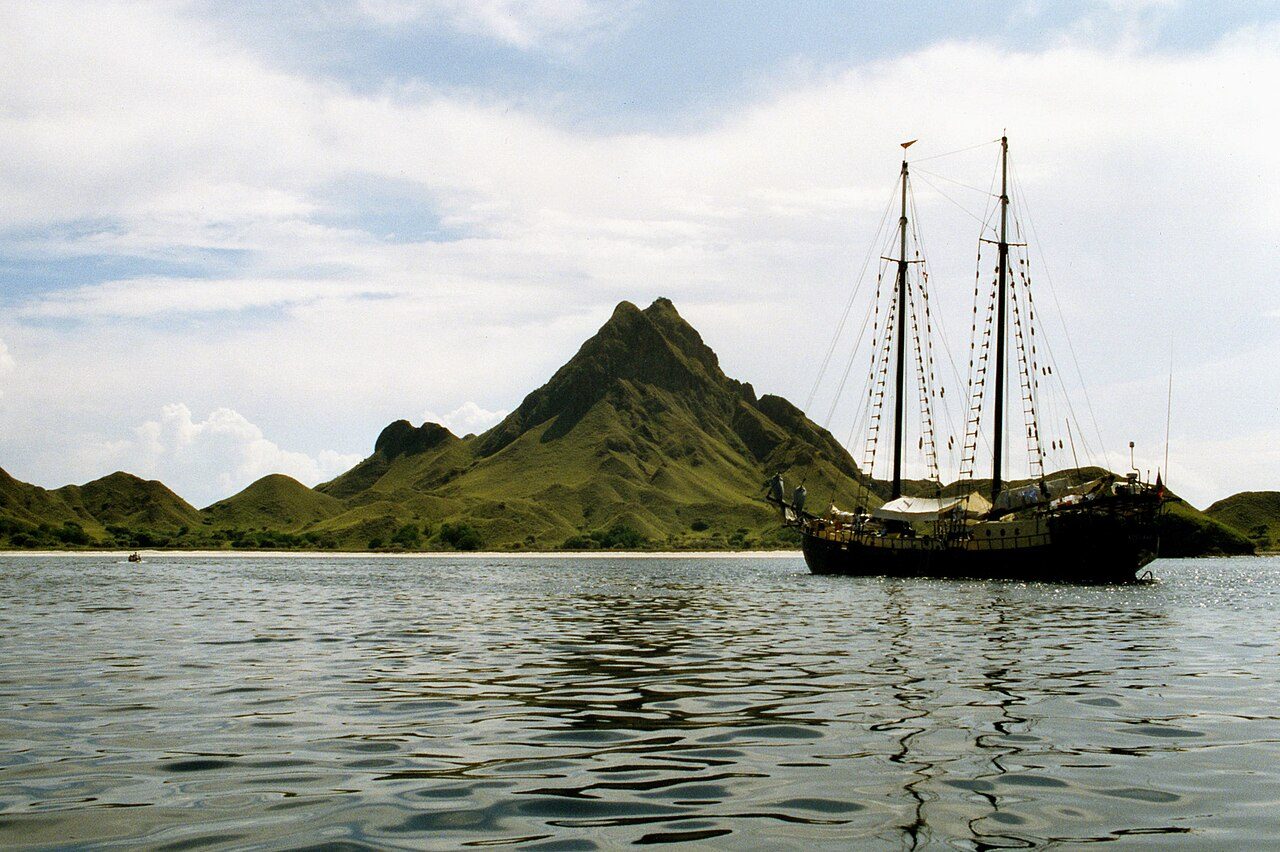
Padar Island
Rising from the sapphire currents of the Flores Sea as a jagged volcanic spine, Padar Island preserves the raw geological drama of the Lesser Sunda archipelago. Incorporated into Komodo National Park upon its establishment in 1980 and granted UNESCO World Heritage status in 1991, this landmass was traditionally navigated by the seafaring Ata Modo people, who respected its perilous maritime rip tides. While neighboring Komodo and Rinca remain stalked by the world’s largest lizards, Padar saw its resident *Varanus komodoensis* population vanish in the late twentieth century following severe deer poaching, leaving its arid, windswept savanna to evolve into a dramatic, predator-free sanctuary of steep gorges and eroded calderas. Ascending the 818 stone-and-timber steps before sunrise, travelers reach a knife-edge ridge where the land drops away into an extraordinary visual anomaly: three distinct crescent bays sweeping out in contrasting hues of pearl white, charcoal volcanic black, and pale blush pink, the latter tinted by pulverised red coral and microscopic *Foraminifera*. Standing upon the sun-bleached crest, visitors encounter howling gales funneling through the Sape Strait, gazing out across emerald-to-ochre savannah slopes that crash dramatically into labyrinthine coral shoals and swirling turquoise shallows.
Photo credits (1)
- anoldent from Asheville, NC, USA, CC BY-SA 2.0, via Wikimedia Commons