
Komodo National Park
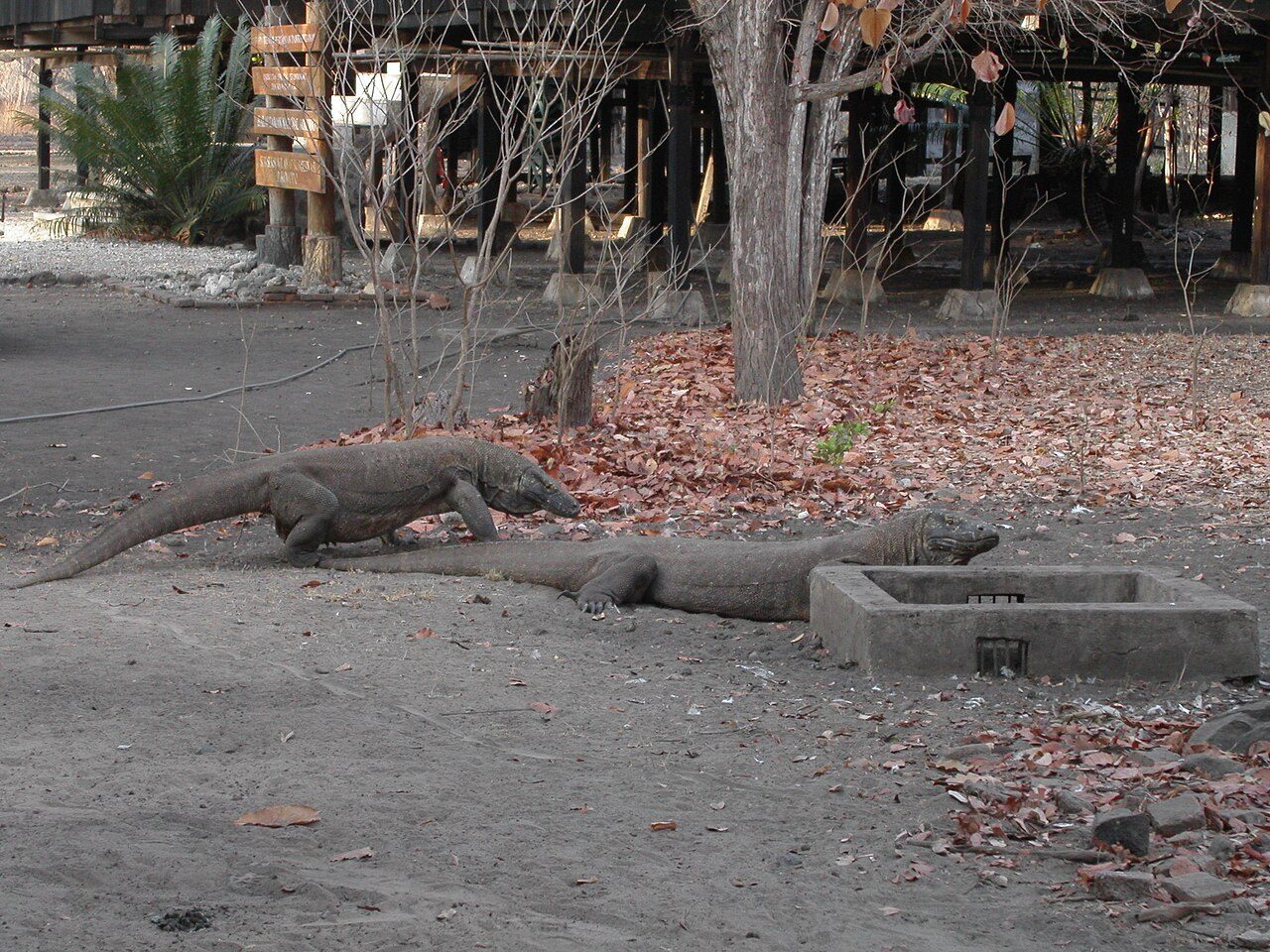
In 1910, colonial Dutch lieutenant J.K.H. van Steyn van Hensbroek investigated seafaring rumors of "land crocodiles," prompting scientist Peter Ouwens to formally classify *Varanus komodoensis* in 1912. Long before European discovery, however, the indigenous Ata Modo people coexisted with the apex monitors, revering them as spiritual twin siblings born of the mythical dragon princess Putri Naga. Officially established in 1980 and inscribed as a UNESCO World Heritage site in 1991, the park protects an isolated ecosystem bridging the Sunda and Sahul continental shelves. The landscape unfurls as a primordial archipelago of jagged volcanic peaks, parched savannas studded with lontar palms, and steep oceanic trenches flushed by the churning, nutrient-rich currents of the Indonesian Throughflow. Standing on the summit ridge of Padar Island, travelers look down upon three dramatic crescent bays displaying white, charcoal-black, and coral-blush sands tinted by pulverized red *Tubipora musica* organ-pipe coral. On the arid plains of Komodo and Rinca, the equatorial heat radiates off dry scrub where visitors walk under the watchful eye of local rangers. Encountering a dragon in this dusty wilderness is an arresting sensory experience: the immense, armor-scaled reptile lies coiled in the shade of tamarind trees before stirring with an ominous, guttural hiss, its foot-long, forked yellow tongue flickering out to taste the salty breeze. Just offshore, turquoise shallows plunge into cobalt depths where giant manta rays drift through vibrant reefs, providing a stark, teeming contrast to the sun-bleached terrain above.