
Kuta Beach
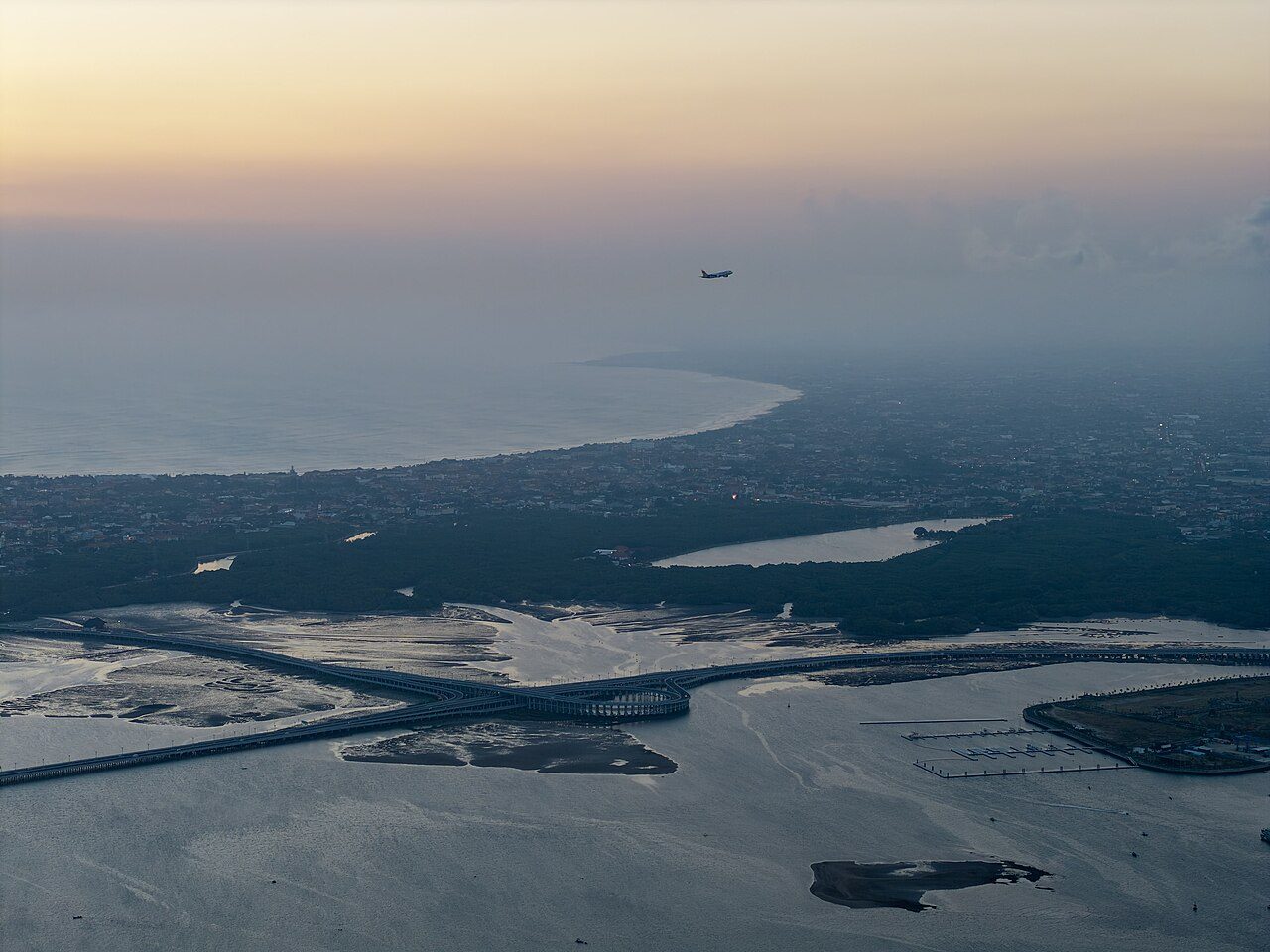
Long before modern resorts lined the southern Balinese coast, this broad shoreline served as a nineteenth-century maritime trading hub orchestrated by Danish merchant Mads Lange in 1839. Kuta’s modern recreation culture crystallized in 1936, when American surfer Robert Koke established the original Kuta Beach Hotel, carving the initial wave-riding tracks into the Indian Ocean swells. Today, classical Balinese masonry anchors the coastal perimeter: a sweeping, low parapet of red volcanic brick punctuated by ornate *candi bentar* (split gateways) separates the bustle of Jalan Pantai Kuta from the shoreline, shaded by thick groves of sea hibiscus, frangipani, and broad-leafed ketapang trees. Passing through the stone portals, travelers encounter a two-kilometer crescent of firm, grey-gold sand vibrating with the rhythmic crash of rolling shorebreaks. The sensory environment is immediate and thick—the briny heat of the equatorial wind, the persistent hum of surf wax being scraped across fiberglass, and the sharp scent of clove-infused *kretek* cigarettes carried on the sea breeze. As the afternoon tide recedes across wide, mirror-like tidal flats, the sky shifts into a heavy palette of burnt amber and violet, throwing the silhouettes of dozens of board-paddlers into sharp relief against the fading horizon.