
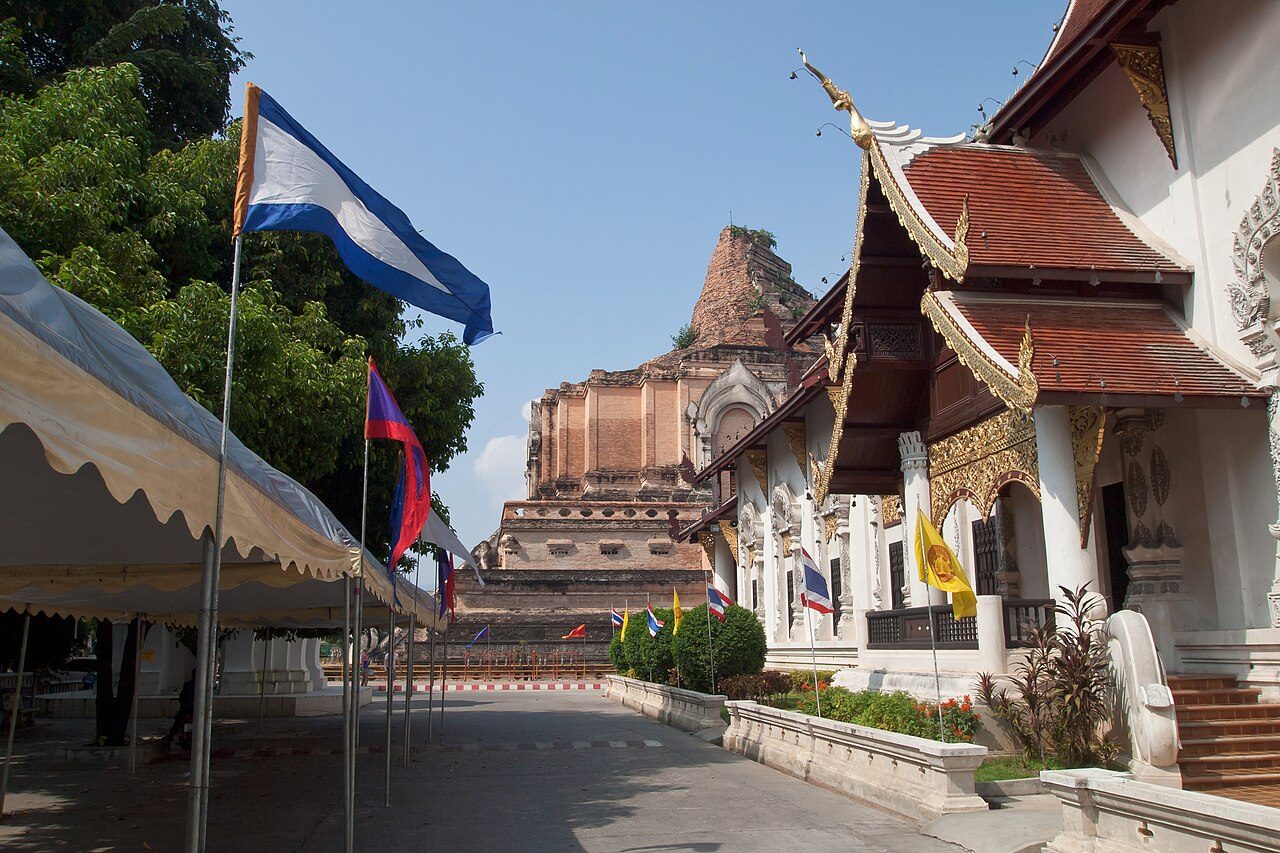
Wat Chedi Luang
Commissioned in 1391 by King Saen Muang Ma to inter his father’s ashes, this colossal brick chedi once soared over eighty meters into the northern sky, reigning as the architectural pinnacle of the Lanna Kingdom. By 1468, King Tilokaraj expanded the structure and enshrined Siam’s most sacred relic, the Emerald Buddha, within its eastern niche, where it rested for eighty years before being moved to Luang Prabang. Even after a catastrophic earthquake sheared off its crown in 1545, the truncated pyramid retained an imposing gravity. Its blackened terracotta tiers, weathered by centuries of monsoon rains, are flanked by dramatic five-headed naga serpents whose coiled stone bodies guard the steep, non-functional staircases. Circling the terrace, travelers encounter a formidable frieze of elephant buttresses protruding from the southern plinth, their time-worn stone trunks and ears emerging directly from the masonry. The surrounding flagstones carry the faint scent of burning sandalwood and crushed frangipani blossoms, cut through by the rhythmic hum of afternoon chanting echoing from the adjacent teakwood assembly hall. In the courtyard shade cast by an ancient, sacred dipterocarp tree, visitors routinely linger in open-air pavilions for informal conversations with saffron-robed novice monks, trading cultural perspectives in the shadow of Chiang Mai’s most monumental ruin.
More in Chiang Mai
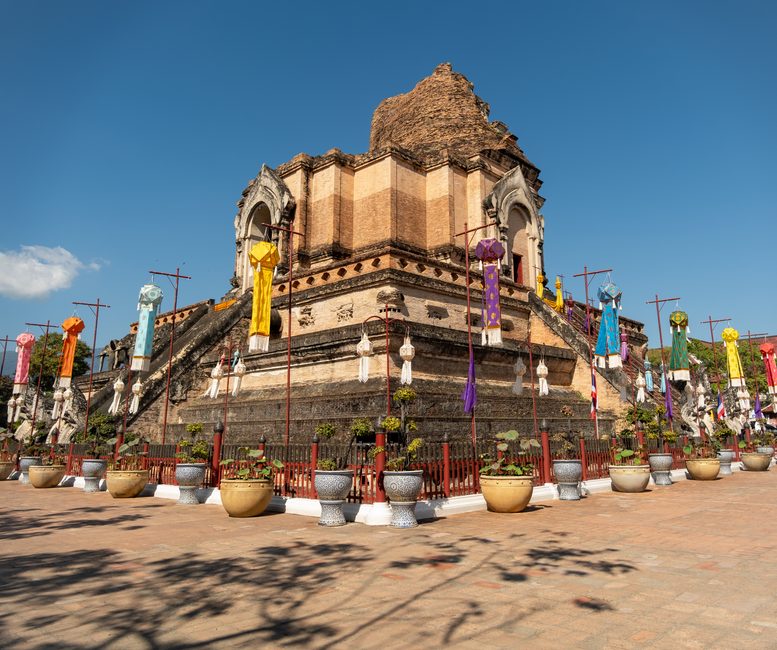
Photo credits (3)
- Vyacheslav Argenberg, CC BY 4.0, via Wikimedia Commons
- Stefan Fussan, CC BY-SA 3.0, via Wikimedia Commons
- Vyacheslav Argenberg, CC BY 4.0, via Wikimedia Commons